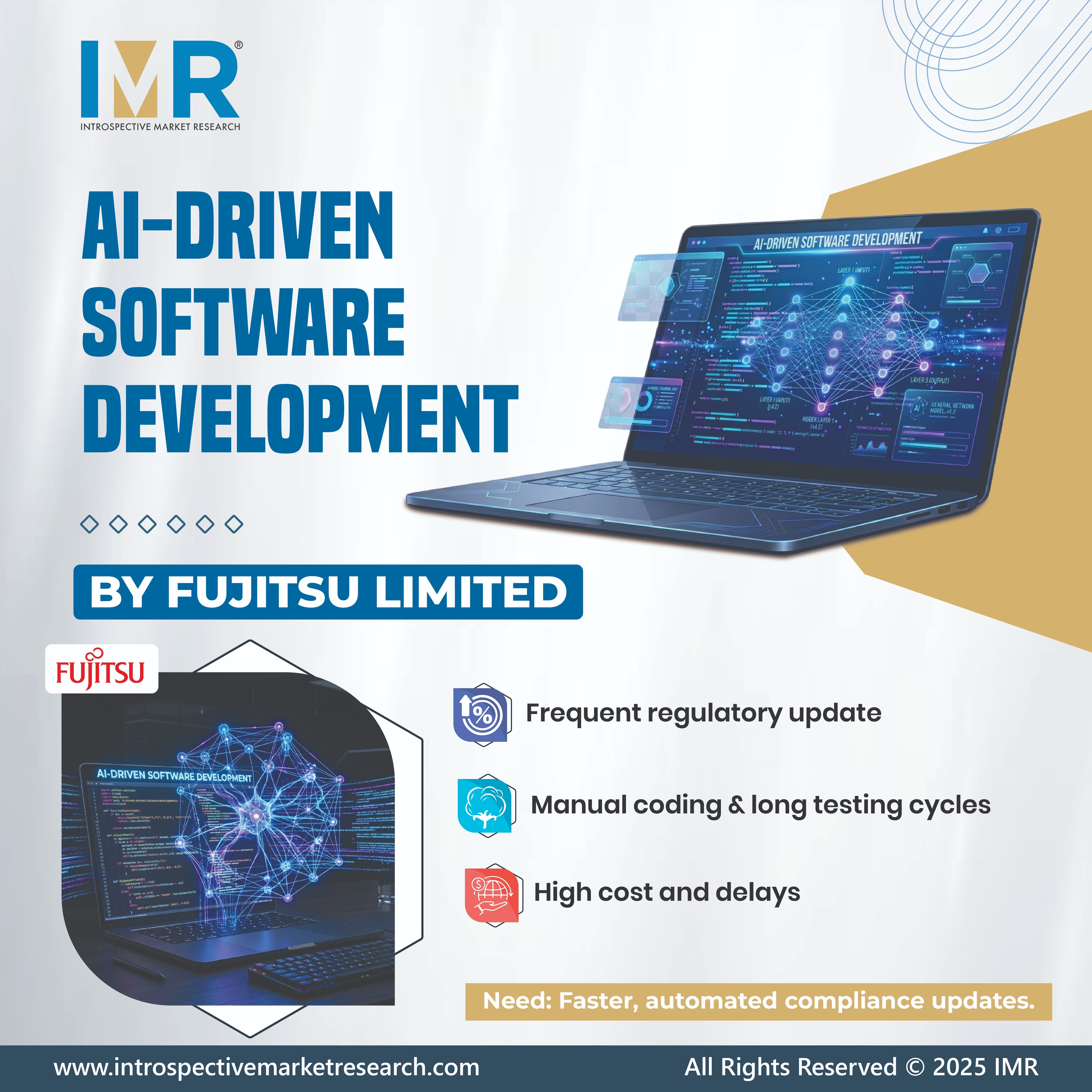
Organizations in healthcare and government sectors must frequently update their software systems to comply with changing legal and regulatory requirements, including periodic medical fee revisions. Traditionally, these updates require significant manual development effort, long testing cycles, and rigorous verification processes, which often lead to higher costs, delayed implementation, and operational inefficiencies. As regulatory changes become more frequent and complex, there is an increasing need for faster, more scalable, and automated software development solutions.
Objective
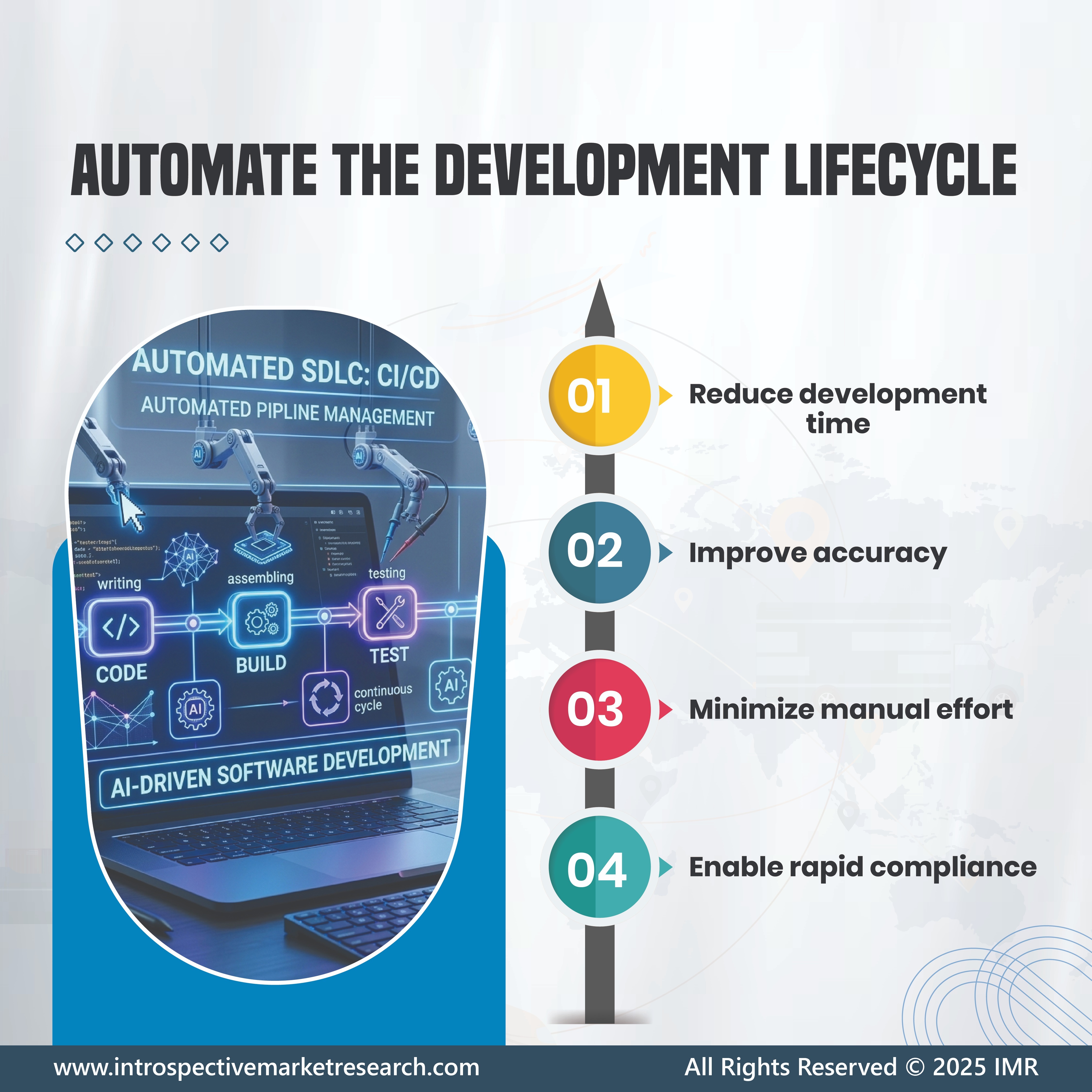
The primary objective was to design an AI-powered platform capable of automating the end-to-end software development lifecycle for regulatory updates.
The initiative aimed to:
- Reduce development timelines significantly.
- Minimize manual intervention across development stages.
- Improve accuracy in interpreting and implementing regulatory changes.
- Enable faster and more reliable compliance across multiple software products.
Solution / Approach
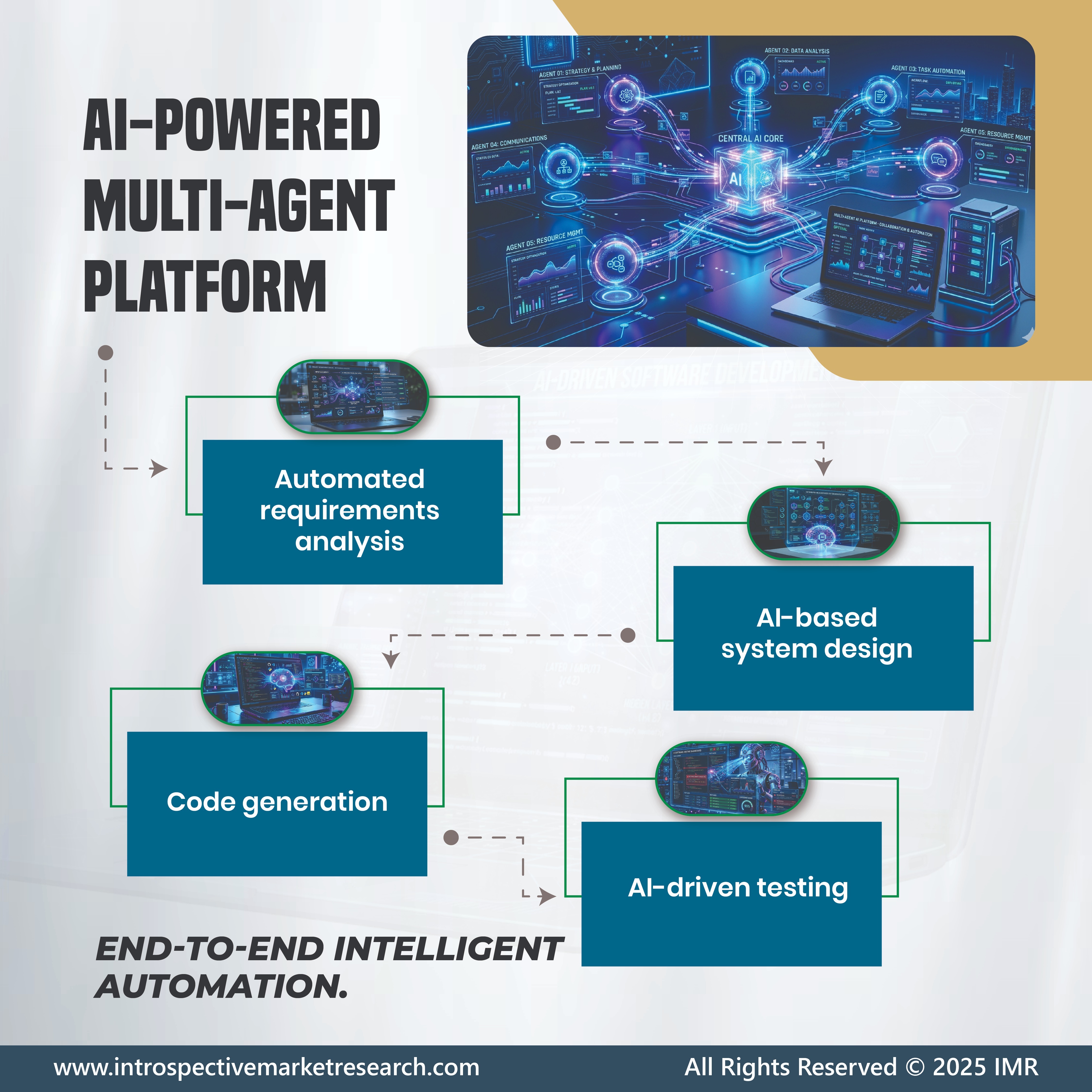
To address these challenges, Fujitsu developed an AI-Driven Software Development Platform built on a multi-agent AI architecture supported by AI-Ready Engineering principles. The platform automates critical stages of software development, ensuring consistency and scalability.
Key capabilities of the platform include:
- Automated requirements analysis based on regulatory change requests.
- AI-assisted system design and architecture generation.
- Automated code generation aligned with compliance rules.
- Integration testing and validation performed by AI agents.
By embedding intelligence into each phase of development, the platform significantly reduces manual workload while improving accuracy, speed, and reliability.
Implementation
The platform was deployed in Japan in January 2026 to support updates required by the 2026 medical fee revisions. The rollout strategy included large-scale system coverage and structured validation.
Implementation highlights include:
- Planned revision of all 67 types of medical and government business software products by the end of fiscal year 2026.
- A proof-of-concept conducted during the 2024 medical fee revisions.
- Identification and evaluation of approximately 300 regulatory change requests.
This phased approach ensured both practical validation and readiness for full-scale deployment.
Key Results
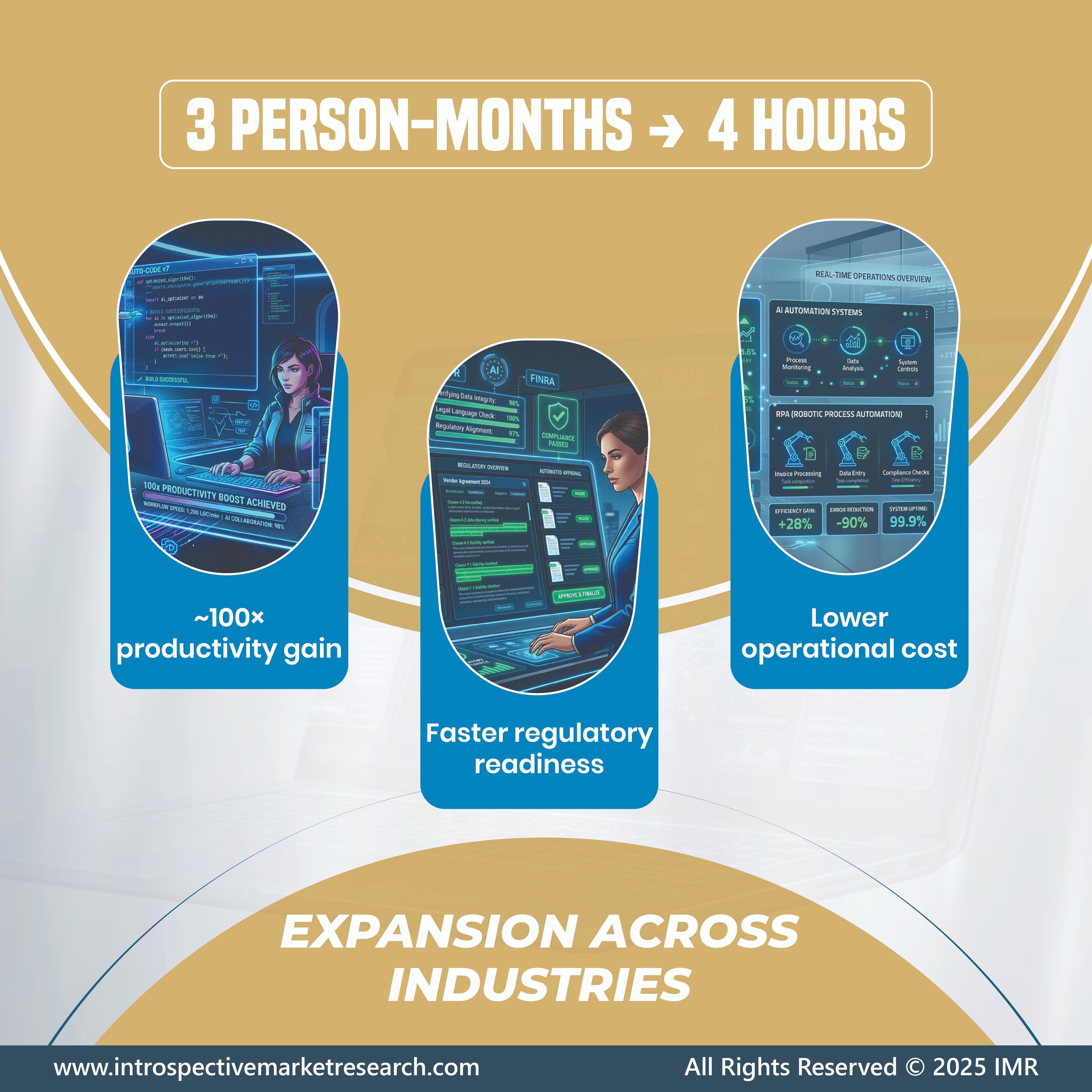
The evaluation demonstrated substantial productivity improvements compared to traditional development methods. In one representative case, a software update that previously required three person-months of development was completed in just four hours using the AI-driven platform.
- Major outcomes observed were:
- Nearly 100-fold productivity improvement.
- Significant reduction in development cycle time.
- Improved accuracy in implementation and testing.
- Faster readiness for regulatory compliance.
Benefits / Impact
The platform generated measurable benefits across multiple dimensions:
-
Operational Benefits:
- Streamlined development workflows.
- Reduced manual coding and testing efforts.
- Faster turnaround for regulatory updates.
-
Financial Benefits:
- Lower operational and maintenance costs.
- Reduced need for large development teams during revisions.
-
Strategic Benefits:
- Scalable framework adaptable to multiple industries.
- Enhanced technological competitiveness in regulated sectors.
Future Outlook
Fujitsu plans to expand the platform's use beyond medical and government systems into industries such as finance, manufacturing, retail, and public services. Additionally, the company intends to offer the platform as a service to customers and partner organizations, promoting wider adoption of AI-driven automation in enterprise software development.
Conclusion
The AI-Driven Software Development Platform demonstrates how intelligent automation can transform software maintenance in highly regulated environments. By reducing development timelines from months to hours, improving productivity, and enabling rapid adaptation to regulatory changes, the platform establishes a scalable and efficient model for modern enterprise software development across industries.