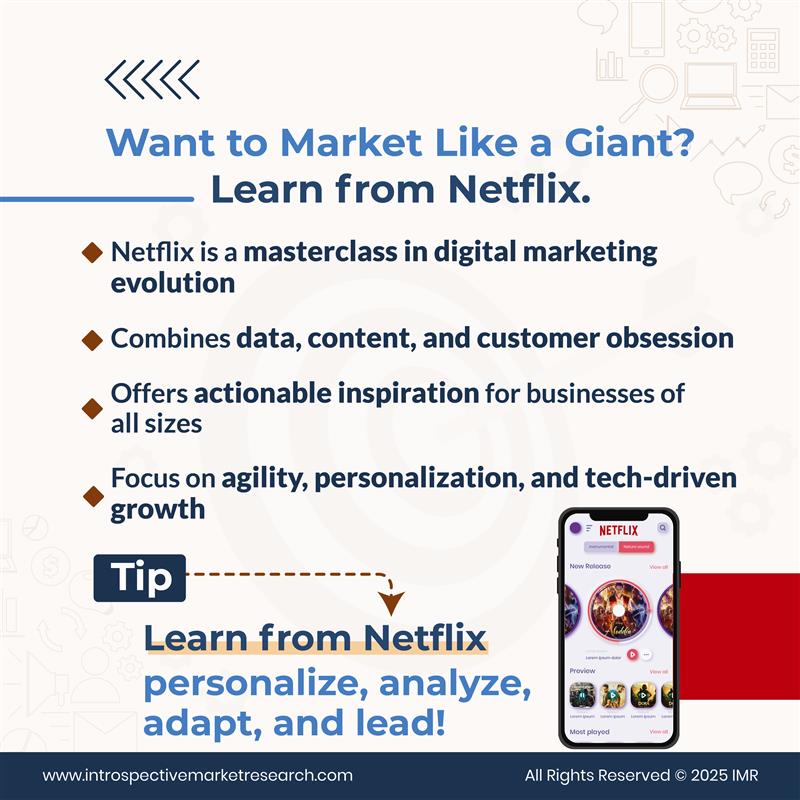
Netflix, originally founded in 1997 as a DVD rental service, has transformed into one of the world’s largest streaming platforms, redefining how audiences consume entertainment. The company’s evolution from physical rentals to digital streaming showcases its ability to adapt, innovate, and lead through customer-focused strategies and technology-driven marketing.
Journey of Transformation:
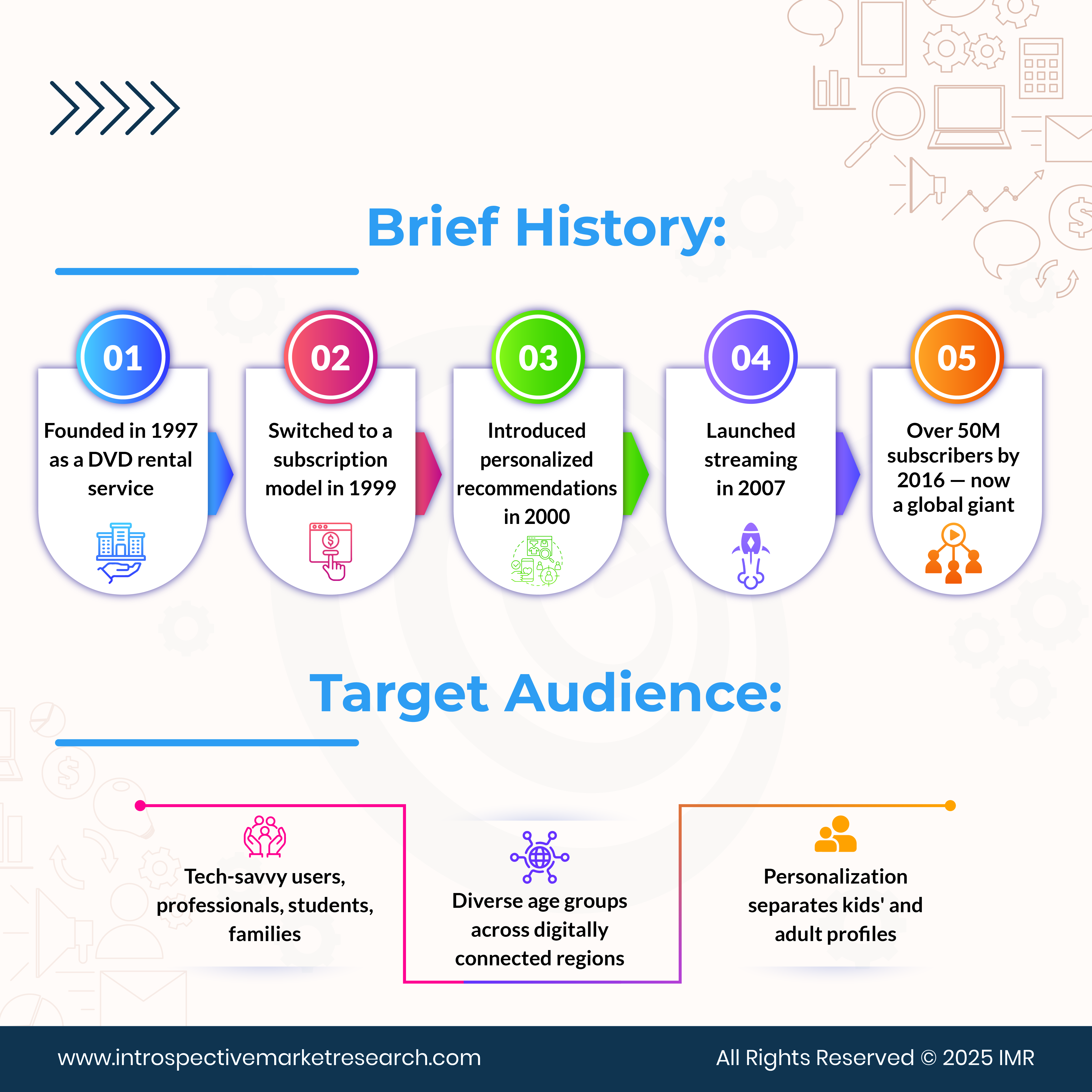
- Founded (1997): Began as a DVD rental-by-mail service.
- Subscription Model (1999): Introduced a monthly subscription plan, eliminating late fees and encouraging user retention.
- Personalization (2000): Launched recommendation algorithms powered by early machine learning, enhancing user satisfaction.
- Streaming Launch (2007): Shifted from physical media to digital streaming, setting a new industry benchmark.
- Global Expansion (2016 onwards): Reached over 50 million subscribers and expanded to more than 190 countries.
Netflix’s journey represents a successful adaptation to changing consumer habits, blending content strategy, technology, and marketing excellence.
Target Audience:
Netflix caters to tech-savvy users, students, professionals, and families across diverse age groups and geographies. Its personalization features, such as tailored profiles for kids and adults, ensure a family-friendly yet individualized viewing experience.
Key Marketing Principles:
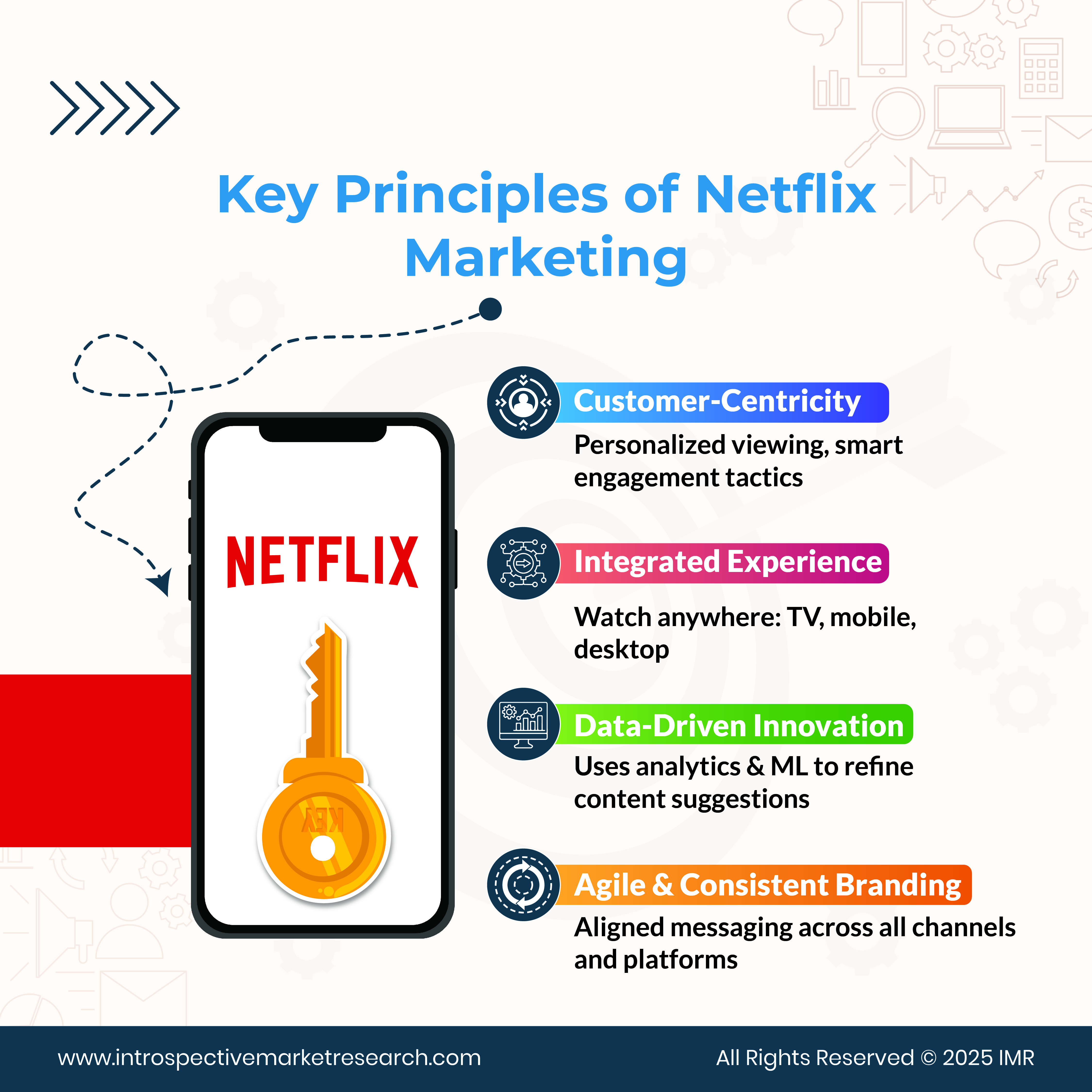
- Customer-Centricity: Focused on understanding viewer preferences through personalized recommendations and engagement tactics.
- Integrated Experience: Seamless access across devices TVs, smartphones, tablets, and desktops ensuring continuity and convenience.
- Data-Driven Innovation: Leverages analytics and machine learning to improve content suggestions and refine user experiences.
- Agile & Consistent Branding: Maintains a unified brand voice and visual identity across all channels, from app interfaces to global campaigns.
Strategies Behind Netflix’s Global Success:
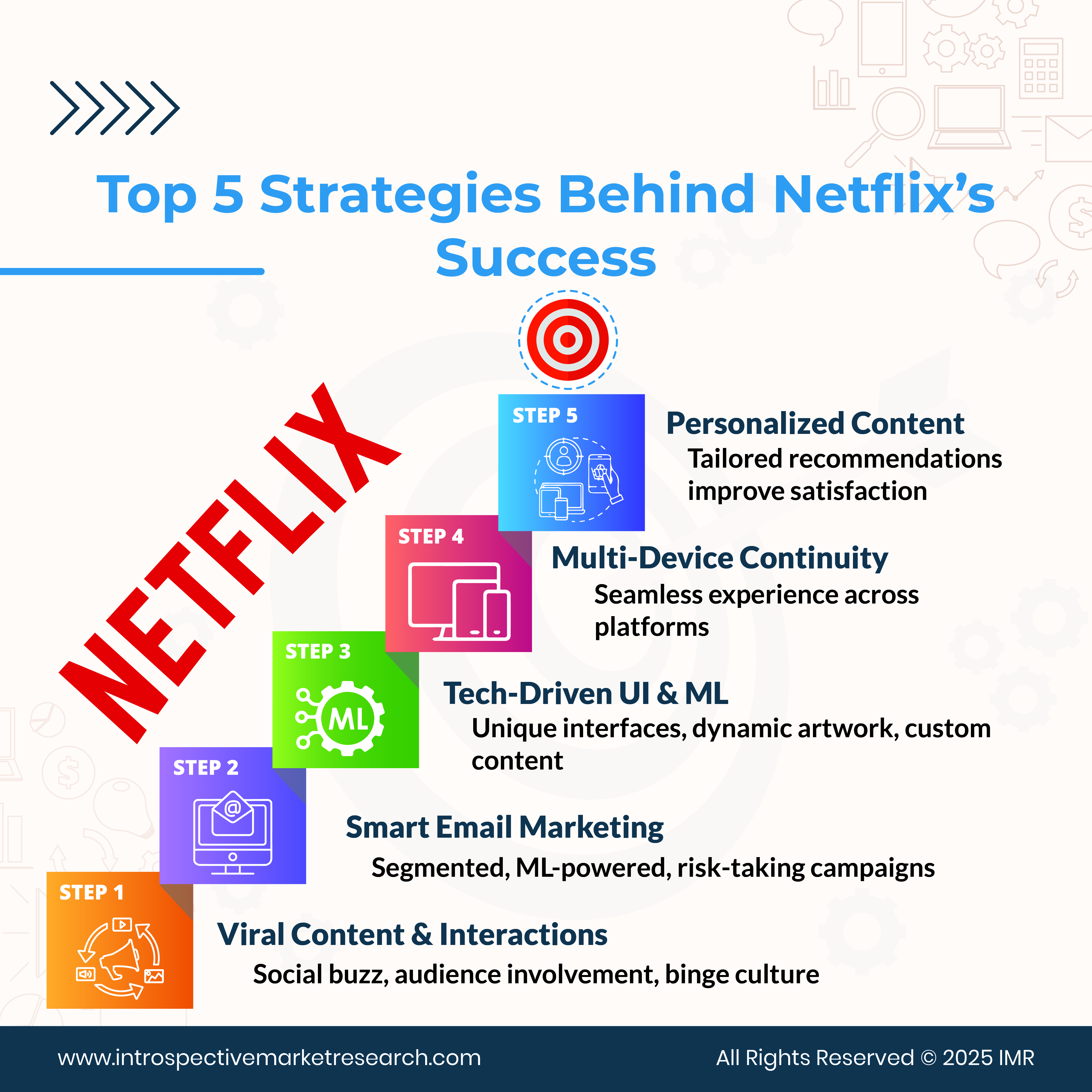
- Personalized Content: Tailored recommendations enhance satisfaction and retention by aligning content with user preferences.
- Multi-Device Continuity: Ensures a unified viewing experience across multiple platforms, reinforcing accessibility and user comfort.
- Technology-Driven Design: Uses dynamic UI elements, adaptive artwork, and predictive algorithms to deliver an engaging user interface.
- Smart Email & Digital Marketing: Employs segmentation and machine learning to create highly personalized, risk-taking campaigns that drive re-engagement.
- Viral and Interactive Campaigns: Harnesses social media buzz, memes, and fan participation to fuel binge culture and organic promotion.
Impact on the Entertainment and Marketing Landscape:
Netflix revolutionized content marketing by combining data, storytelling, and personalization. Its emphasis on customer insights and adaptive marketing has reshaped expectations in the digital age. By continuously experimenting with formats, recommendations, and engagement, Netflix not only retains users but also sets industry trends in brand communication and audience connection.
Conclusion: Netflix stands as a masterclass in digital marketing evolution merging data analytics, creative content, and user obsession to achieve global dominance. Its journey demonstrates the power of personalization, agility, and technology integration in building lasting customer relationships.
Lesson for Businesses:
To “market like Netflix,” organizations must personalize, analyze, adapt, and lead continuously evolving with consumer behavior and technological advancements.