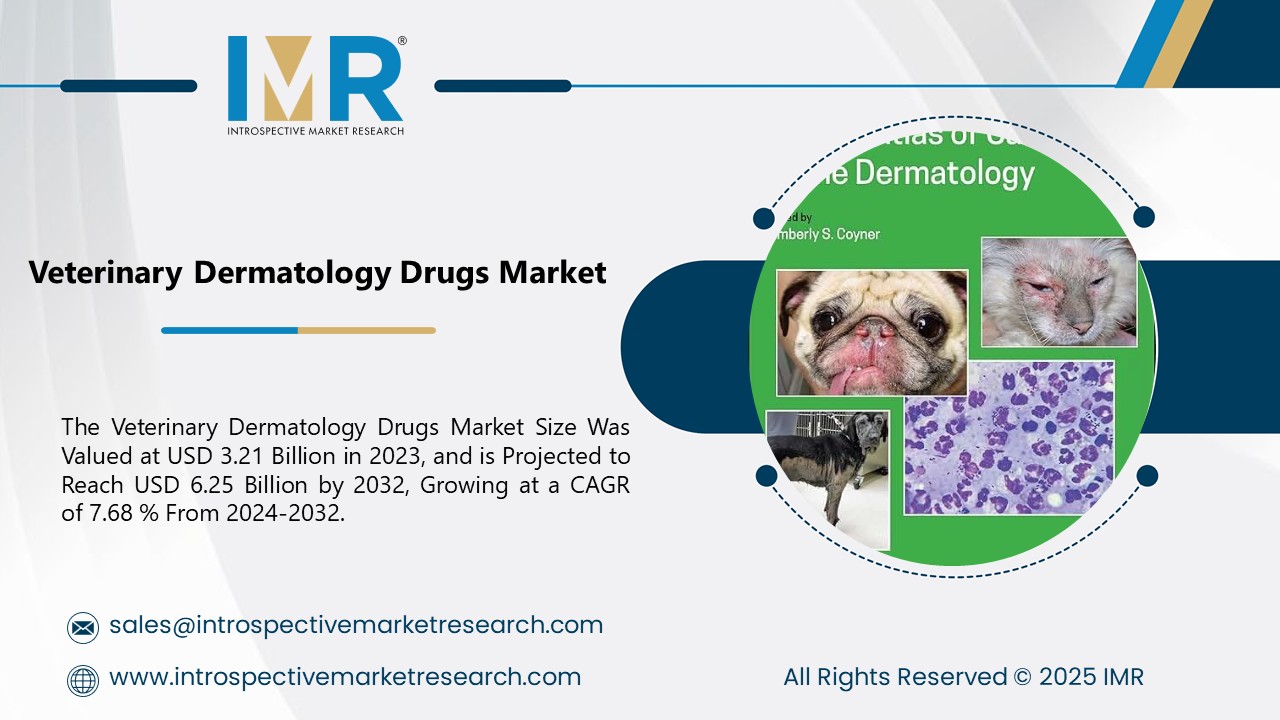
According to a new report published by Introspective Market Research, titled, Veterinary Dermatology Drugs Market by Drug Class, Animal Type, and Route of Administration, The Global Veterinary Dermatology Drugs Market Size Was Valued at USD 3.21 Billion in 2023 and is Projected to Reach USD 6.25 Billion by 2032, Growing at a CAGR of 7.68%. The veterinary dermatology drugs market is experiencing significant expansion, driven by the increasing prevalence of skin conditions in companion animals and the growing awareness among pet owners about animal health. This market encompasses a wide range of pharmaceutical products designed to treat dermatological issues such as allergies, infections (bacterial, fungal, parasitic), inflammatory conditions, and autoimmune diseases affecting pets, particularly dogs and cats. These drugs offer targeted and effective solutions, often superior to traditional home remedies, by addressing the underlying causes of skin ailments.
Advances in veterinary medicine have led to the development of highly effective and safer therapeutic options, including novel anti-inflammatory drugs, antiparasitics, antibiotics, antifungals, and immunomodulators. The escalating humanization of pets, leading to increased spending on pet healthcare, further fuels the demand for advanced dermatological treatments. As pet owners become more proactive in seeking professional veterinary care for their companions' skin health, the market for these specialized drugs continues to grow.
The Veterinary Dermatology Drugs Market is segmented into Drug Class, Animal Type, and Route of Administration. By Drug Class, the market is categorized into (Corticosteroids, Antihistamines, Antibiotics, Antifungals, Parasiticides, and Others). By Animal Type, the market is categorized into (Dogs, Cats, Horses, and Others). By Route of Administration, the market is categorized into (Oral, Topical, Injectable, and Others).
A key growth driver for the veterinary dermatology drugs market is the increasing incidence of dermatological conditions in companion animals, particularly allergies and parasitic infestations. Environmental factors, dietary sensitivities, and genetic predispositions contribute to a rising number of pets suffering from chronic skin issues, such as atopic dermatitis and flea allergy dermatitis. Pet owners are increasingly seeking veterinary intervention for these persistent and discomforting conditions, driving demand for specialized diagnostic services and effective pharmacological treatments to improve their pets' quality of life.
A significant market opportunity lies in the development and introduction of novel, targeted therapies with fewer side effects. As pet owners become more discerning, there is a growing demand for innovative drugs that offer enhanced efficacy and safety profiles, particularly for chronic conditions requiring long-term treatment. Research into biologics, immunotherapies, and advanced drug delivery systems for dermatological conditions presents a substantial opportunity for pharmaceutical companies to capture a larger market share by addressing unmet needs and offering superior alternatives to conventional treatments.
Veterinary Dermatology Drugs Market, Segmentation
The Veterinary Dermatology Drugs Market is segmented on the basis of Drug Class, Animal Type, and Route of Administration.
Drug Class
- The Drug Class segment is further classified into Corticosteroids, Antihistamines, Antibiotics, Antifungals, Parasiticides, and Others. Among these, the Parasiticides sub-segment accounted for the highest market share in 2023. This dominance is attributed to the widespread prevalence of parasitic infestations, such as fleas, ticks, and mites, which are common causes of dermatological issues in pets. Consistent and effective antiparasitic treatments are crucial for prevention and control, driving high demand for these drugs. Ongoing innovations in longer-acting and broader-spectrum parasiticides further bolster this segment's leading position.
Animal Type
- The Animal Type segment is further classified into Dogs, Cats, Horses, and Others. Among these, the Dogs sub-segment accounted for the highest market share in 2023. Dogs are highly susceptible to a wide array of dermatological conditions, including allergies, bacterial infections, and parasitic infestations, more so than other companion animals. Their genetic predispositions to certain skin diseases, combined with their close interaction with humans and the environment, often necessitate frequent veterinary dermatological care. The large global dog population and the high level of emotional investment from owners also contribute significantly to this segment's market leadership.
Some of The Leading/Active Market Players Are-
- Boehringer Ingelheim International GmbH (Germany)
- Ceva Santé Animale (France)
- Dechra Pharmaceuticals PLC (UK)
- Elanco Animal Health Incorporated (USA)
- Merck & Co., Inc. (USA)
- Neogen Corporation (USA)
- Vetoquinol S.A. (France)
- Virbac (France)
- Zoetis Inc. (USA)
- Bayer AG (Germany)
- Chanelle Pharma (Ireland)
- Kruuse A/S (Denmark)
- Norbrook Laboratories Limited (UK)
- Orion Corporation (Finland)
- Vedco, Inc. (USA)
Key Industry Developments
- In April 2023, a leading animal health company launched a new oral immunotherapy treatment for canine atopic dermatitis, marking a significant advancement in managing chronic allergic skin disease in dogs. This innovative drug offers a more convenient and targeted approach compared to traditional corticosteroids, promising improved long-term outcomes and a better quality of life for affected pets.
- In November 2023, a veterinary pharmaceutical firm announced the acquisition of a biotechnology company specializing in microbiome-based therapies for pets. This strategic move aims to expand its portfolio of dermatological solutions by leveraging the potential of the skin microbiome to treat various skin conditions, offering novel, non-antibiotic approaches to managing chronic infections and inflammatory responses.
Key Findings of the Study
- Parasiticides lead the market due to high prevalence of infestations.
- Dogs represent the largest animal type segment due to susceptibility and pet owner spending.
- Rising incidence of pet skin conditions drives market growth.
- Demand for novel, targeted therapies with fewer side effects presents a key opportunity.
- Increased pet humanization and veterinary expenditure fuel market expansion.