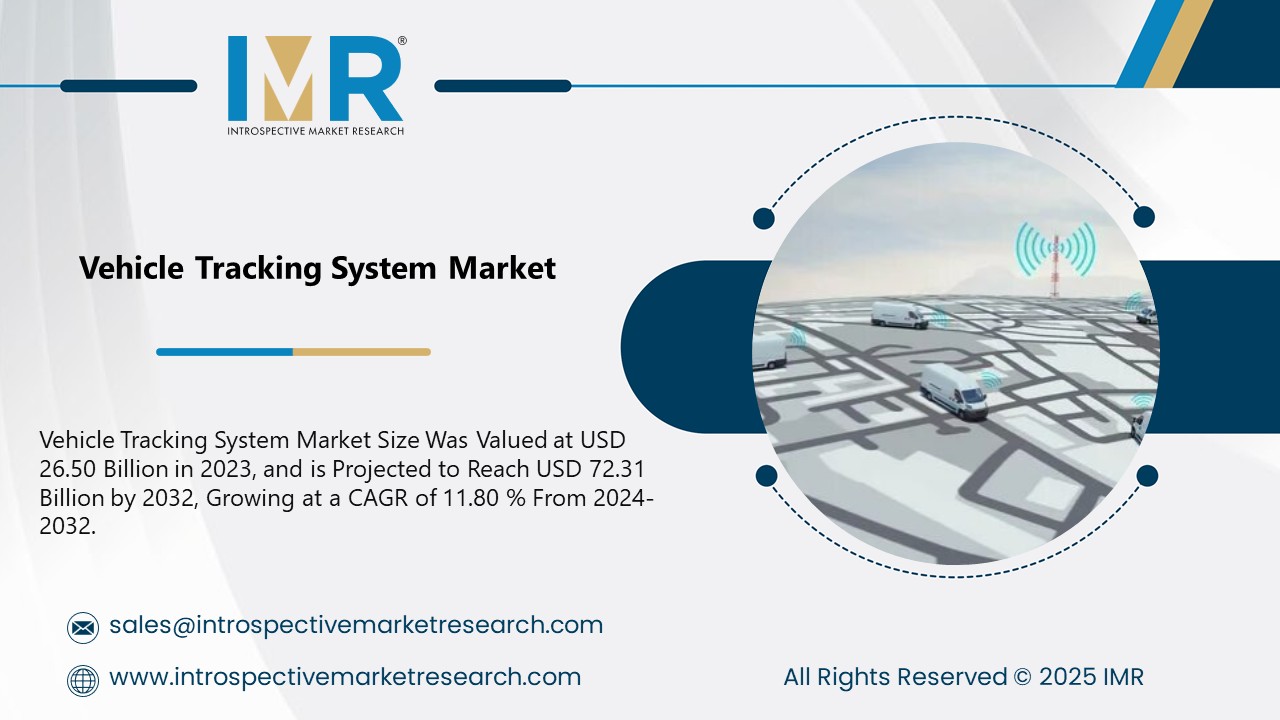
According to a new report published by Introspective Market Research, titled, Vehicle Tracking System Market by Type, Vehicle Type, Component, Application, and End-User, The Global Vehicle Tracking System Market Size Was Valued at USD 26.50 Billion in 2023 and is Projected to Reach USD 72.31 Billion by 2032, Growing at a CAGR of 11.80%. The vehicle tracking system market encompasses a range of technologies and services designed to monitor the location, movement, and status of vehicles. These systems typically utilize GPS (Global Positioning System) technology for real-time positioning, combined with cellular or satellite communication for data transmission. Beyond basic location tracking, modern vehicle tracking systems offer advanced functionalities such as route optimization, fuel monitoring, driver behavior analysis, geofencing, and maintenance alerts, transforming fleet management and personal vehicle security.
These systems offer significant advantages over traditional manual tracking methods, providing unparalleled accuracy, efficiency, and actionable data. For businesses, they enable substantial cost savings through improved fuel efficiency, reduced labor costs, and enhanced asset utilization. In terms of security, they act as a potent deterrent against theft and facilitate rapid recovery of stolen vehicles. Major industries benefiting from vehicle tracking systems include logistics and transportation, construction, government, emergency services, and rental companies, all leveraging these tools to optimize operations, enhance safety, and ensure compliance.
A primary growth driver for the vehicle tracking system market is the escalating demand for operational efficiency and cost optimization in fleet management across diverse industries. Businesses operating vehicle fleets, whether in logistics, transportation, or construction, are constantly seeking ways to reduce fuel consumption, optimize routes, monitor driver performance, and minimize maintenance costs. Vehicle tracking systems provide the real-time data and analytical insights necessary to achieve these objectives, directly leading to increased productivity and significant operational savings. This strong correlation between system adoption and improved fleet economics is a major impetus for market expansion.
A key market opportunity lies in the expanding integration of vehicle tracking systems with advanced telematics, artificial intelligence (AI), and IoT platforms to offer more sophisticated and predictive solutions. As vehicles become increasingly connected, combining tracking data with AI-driven analytics can enable predictive maintenance, personalized insurance models based on driving behavior, and intelligent traffic management systems. Furthermore, integrating these systems into smart city initiatives can enhance public transportation efficiency and emergency response times. This evolution towards smarter, more integrated vehicle intelligence represents a lucrative avenue for innovation and market penetration, offering services beyond basic tracking.
Vehicle Tracking System Market, Segmentation
The Vehicle Tracking System Market is segmented on the basis of Type, Vehicle Type, and Application.
Type
- The Type segment is further classified into Active Tracking System and Passive Tracking System. Among these, the Active Tracking System sub-segment accounted for the highest market share in 2023. Active tracking systems, also known as real-time tracking systems, transmit data continuously, providing immediate updates on a vehicle's location and status. This real-time visibility is crucial for critical applications such as fleet management, emergency services, and high-value asset tracking, where instantaneous information is essential for decision-making, security, and operational efficiency. The ability to monitor vehicles live and respond instantly solidifies its market leadership.
Vehicle Type
- The Vehicle Type segment is further classified into Commercial Vehicles and Passenger Cars. Among these, the Commercial Vehicles sub-segment accounted for the highest market share in 2023. Commercial vehicles, including trucks, vans, and buses, represent the largest end-user group for vehicle tracking systems due to the imperative for efficient fleet management, asset utilization, and regulatory compliance. Companies leverage these systems to optimize routes, reduce fuel costs, monitor driver behavior, and enhance logistics, directly impacting their profitability and service delivery. The operational complexities and cost pressures in commercial fleets drive the high adoption rate.
Some of The Leading/Active Market Players Are-
-
Omnitracs LLC (USA)
-
Verizon Connect (USA)
-
Geotab Inc. (Canada)
-
Trimble Inc. (USA)
-
Continental AG (Germany)
-
Samsara Inc. (USA)
-
TomTom Telematics (Netherlands)
-
CalAmp Corp. (USA)
-
Spireon, Inc. (USA)
-
Mix Telematics (South Africa)
-
Sierra Wireless, Inc. (Canada)
-
Automotive Microelectronics Inc. (China)
-
Teltonika UAB (Lithuania)
-
ORBCOMM Inc. (USA)
-
Fleet Complete (Canada)
Key Industry Developments
- In February 2023, Geotab announced the launch of its new AI-powered fleet optimization platform, integrating advanced analytics for predictive maintenance and driver safety.This platform aimed to provide fleet managers with deeper insights into vehicle health and driver behavior, allowing for proactive maintenance scheduling and targeted driver coaching, ultimately improving fleet safety and reducing operational downtime.
- In September 2023, Verizon Connect expanded its portfolio with a new suite of solutions tailored for electric vehicle (EV) fleet management, including real-time battery monitoring and charging optimization.This development addressed the unique challenges of EV fleets, helping businesses effectively manage charging schedules, optimize routes for charging availability, and understand battery performance, thereby supporting the transition to sustainable transportation.
Key Findings of the Study
-
Active Tracking Systems dominate due to real-time data needs.
-
Commercial Vehicles are the primary adopters for fleet management.
-
Key growth drivers include demand for operational efficiency and cost savings.
-
Market trends show strong integration with AI, IoT, and telematics.
-
North America and Europe remain leading regions in adoption.