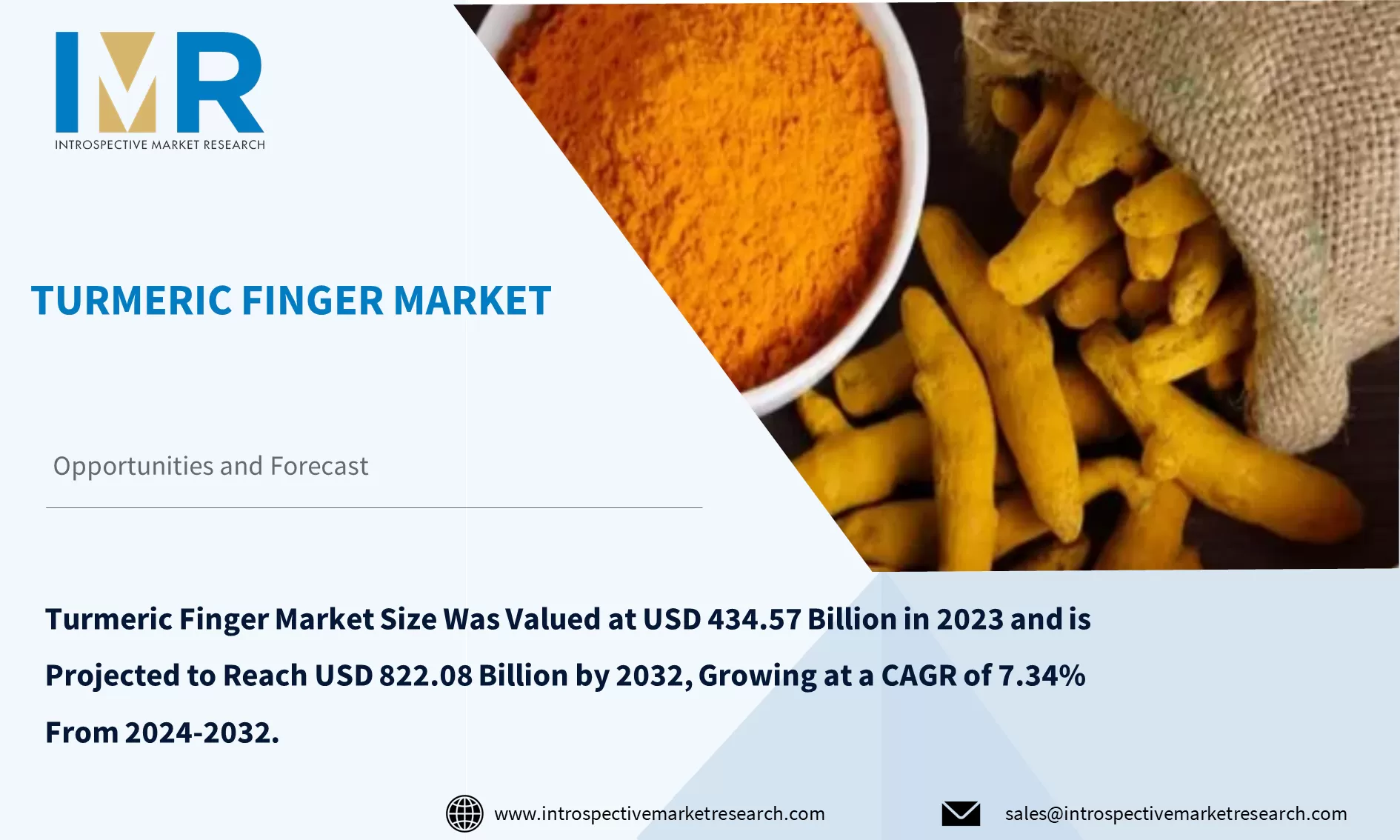

Turmeric Finger Market
According to a new report published by Introspective Market Research, titled, ?Turmeric Finger Market by Type, Nature, Application, and Distribution Channel: Global Opportunity Analysis and Industry Forecast, 2024?2032,?
the Global Turmeric Finger Market Size Was Valued at USD 434.57 Billion in 2023 and is Projected to Reach USD 822.08 Billion by 2032, Growing at a CAGR of 7.34% From 2024-2032.
Turmeric fingers, the underground stems of the Curcuma longa plant, are known for their orange-yellow color and earthy scent. Highly valued for its medicinal and culinary uses, turmeric's popularity is soaring due to its anti-inflammatory and antioxidant properties. The rising demand for natural and healthful products has significantly boosted the turmeric market.
As consumer awareness of its health benefits grows, turmeric's use in food and dietary supplements expands. This trend, driven by a focus on health and wellness, is further supported by advancements in the pharmaceutical and nutraceutical sectors. The increasing interest in holistic health and alternative medicine also contributes to market growth. Turmeric?s versatility and health benefits ensure its robust market presence, paralleling the growth of other natural ingredients like thin boiling starch.
According to the global Turmeric Finger market analysis, the market is segmented into Type, Nature, Application, and Distribution Channel and region. By Type, the market is categorized into Unpolished Finger, Double Polished Finger, and Sliced Turmeric. By Nature, the market is categorized into Organic and Conventional. By Application, the market is categorized into Spices and Condiments, Food Industry, Traditional Medicine, Pharmaceuticals, Cosmetics, and Personal Care. By Distribution Channel, the market is categorized into Supermarkets/Hypermarkets, Online Platforms, Wholesale Suppliers, and Traditional Markets. By region, it is analyzed across North America (U.S.; Canada; Mexico), Eastern Europe (Bulgaria; The Czech Republic; Hungary; Poland; Romania; Rest of Eastern Europe), Western Europe (Germany; UK; France; Netherlands; Italy; Russia; Spain; Rest of Western Europe), Asia-Pacific (China; India; Japan; Southeast Asia, etc.), South America (Brazil; Argentina, etc.), Middle East & Africa (Saudi Arabia; South Africa, etc.).
The increasing use of turmeric fingers in the food and beverage industry is driven by consumers' preference for natural and healthful ingredients. Turmeric's unique flavor, vivid color, and health benefits, including antioxidant and anti-inflammatory properties, have made it highly sought-after. It is now widely used in teas, curries, soups, and functional beverages. This trend is expected to continue with the development of novel turmeric-infused products like condiments, drinks, and snacks. Growing interest in plant-based diets and natural ingredients will further expand turmeric's market reach.
Technological advancements, such as freeze-drying and extraction techniques, have enhanced turmeric's availability and convenience, leading to a variety of turmeric-infused products. Investments in research and development are anticipated to broaden its culinary applications and explore exotic flavors. Sustainable and organic cultivation methods will cater to the demand for clean-label, ethically sourced ingredients. The Turmeric Finger market is poised for sustained growth due to these innovations and trends.
Global Turmeric Finger Market, Segmentation
The Turmeric Finger market is segmented based on Type, Nature, Application, and Distribution Channel, and region
Type:
The Unpolished Turmeric Finger segment is gaining dominance as consumers prefer minimally processed, natural foods. Retaining higher levels of nutrients and essential oils, this turmeric appeals to health-conscious individuals with its anti-inflammatory and antioxidant properties. The demand for organic and clean-label products further boosts its popularity. Unpolished turmeric, valued for its enhanced natural flavor and preserved qualities, is favored by both professional chefs and home cooks seeking authentic culinary experiences. As appreciation for pure, nutrient-dense products grows, the unpolished turmeric segment is well-positioned to maintain its market leadership amid ongoing trends towards natural and wholesome foods.
Application:
Spices and condiments hold the highest market share due to their essential role in enhancing flavor and variety in culinary applications. Turmeric, a key spice in international cuisines, imparts unique flavors, scents, and hues to food. As consumer palates become more adventurous, the demand for spices and condiments has surged, solidifying their market dominance. The popularity of home cooking and the desire for distinctive, authentic flavors also boost this segment. Turmeric, a staple in traditional cuisines, has gained popularity in modern and fusion dishes due to its vibrant color and earthy flavor. The versatility of spices and condiments in enriching the sensory experience of food ensures their continued market dominance.
Region:
Asia Pacific is expected to lead the turmeric market due to several key factors driving its rapid growth. The region's rich agricultural landscape makes it a major supplier, significantly contributing to global production. Turmeric's cultural and historical significance in Asian cuisines has boosted its consumption while increasing consumer awareness of its health benefits propels market demand. The presence of diverse, developing economies and growing populations in countries like China and India further fuel demand for turmeric in various applications. Its broad acceptance is also linked to its role in traditional medical practices. These factors indicate that Asia Pacific will continue to dominate the global turmeric market.
Some of the leading Turmeric Finger market players are
- Nani Agro Foods Pvt. Ltd. (India)
- Alobha Exim (India)
- Spectrum Food Products (India)
- Vinayak International Corporation (India)
- Chanakya Yoga And Arogya Samsta (India)
- Shree Ambey Shakti (India)
- Shubhlaxmi (India)
- Shree Sahjanand Industries (India)
- LUTA Spices (India)
- Indian Organics Exporters (India)
- Shah Ratanshi Khimji (India)
- Synthite Industries Ltd. (India)
- Kancor Ingredients Ltd. (India)
- Parrys East India Pvt. Ltd. (India), and Other Major Players.
Key Industry Developments:
- In September 2023, the Spice Board of India formed a strategic alliance with Walmart to promote Indian spices, including turmeric fingers, in the US market. This collaboration aims to enhance traceability, uphold quality standards, and create new market opportunities for Indian turmeric farmers.
- In December 2023, Kairali Spices, a well-known Indian spice company, launched a new series of turmeric fingers sourced exclusively from certified organic farms. This initiative caters to the increasing demand from health-conscious consumers seeking organic and sustainable products.
Key Findings of the Study
- The global turmeric finger market was valued at USD 434.57 billion in 2023. It is projected to reach USD 822.08 billion by 2032, growing at a CAGR of 7.34% from 2024-2032.
- The rising demand for natural and healthful products has significantly boosted the turmeric market. Turmeric is highly valued for its anti-inflammatory and antioxidant properties.
- Asia Pacific is expected to lead the market due to its rich agricultural landscape and the cultural significance of turmeric.