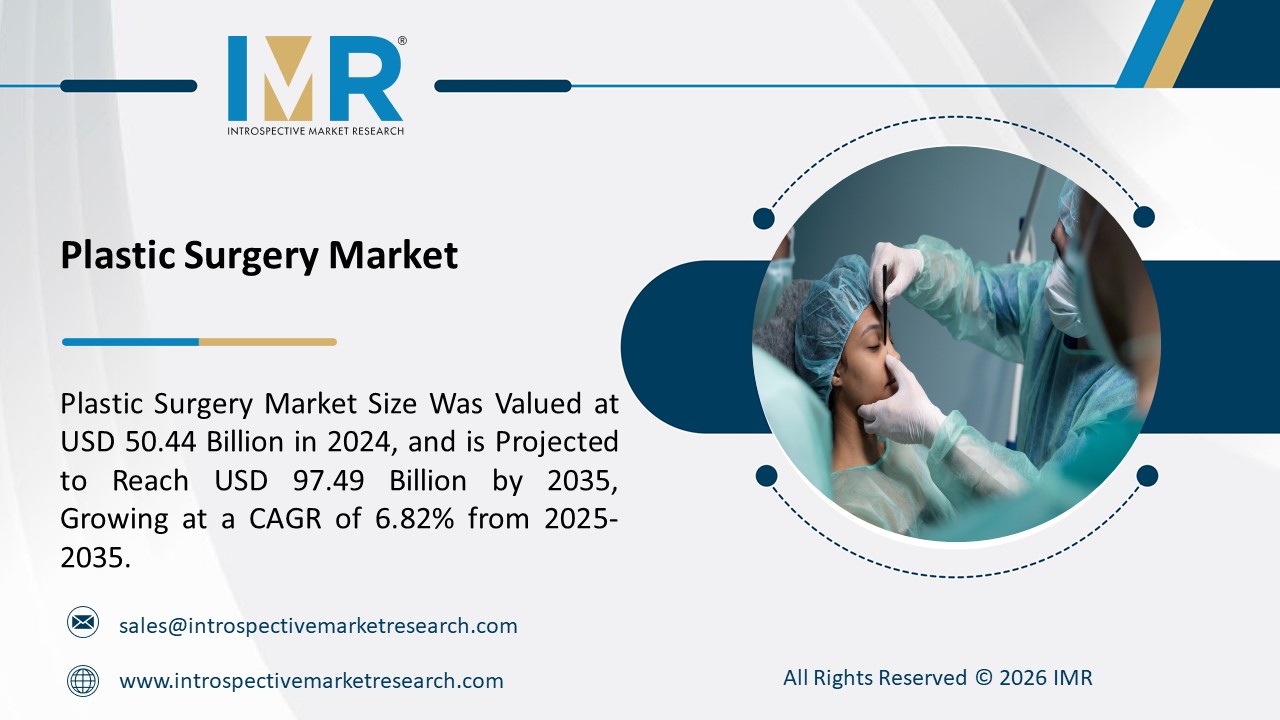
According to a new report published by Introspective Market Research, titled, “Plastic Surgery Market by Procedure Type, Service Provider, and Gender,” The Global Plastic Surgery Market Size Was Valued at USD 50.44 Billion in 2024 and is Projected to Reach USD 97.49 Billion by 2035, Growing at a CAGR of 6.82%.
The global plastic surgery market encompasses a wide range of surgical and non-surgical procedures aimed at reconstructing, restoring, or altering the human body. This field is broadly categorized into cosmetic surgery, which focuses on enhancing appearance, and reconstructive surgery, which addresses functional impairments due to trauma, congenital disabilities, or disease. Modern plastic surgery offers significant advantages over traditional alternatives, including minimally invasive techniques, reduced recovery times, enhanced precision through advanced technologies, and more natural-looking, long-lasting results.
The proliferation of minimally invasive and non-invasive cosmetic procedures stands as the primary growth driver for the plastic surgery market. Treatments such as Botox injections, hyaluronic acid fillers, chemical peels, and non-surgical fat reduction (e.g., CoolSculpting) have gained immense popularity due to their affordability, minimal downtime, and lower risk profile compared to traditional surgical interventions. This accessibility has significantly expanded the potential patient pool, attracting a younger demographic seeking preventative treatments and individuals hesitant about undergoing major surgery. The continuous innovation in these technologies, offering improved efficacy and safety, ensures sustained demand and recurrent procedures, thereby fueling consistent market revenue growth.
A significant market opportunity lies in the rapidly expanding male demographic seeking aesthetic and cosmetic procedures. Traditionally dominated by female patients, the market is witnessing a cultural shift as male grooming and aesthetic consciousness rise globally. Procedures such as gynecomastia surgery (male breast reduction), liposuction, hair transplants, and non-surgical facial rejuvenation are experiencing heightened demand. Tailoring marketing strategies, developing gender-specific treatment protocols, and creating discreet, male-friendly clinic environments present a substantial untapped potential for service providers to capture this growing segment and drive future market expansion.
Plastic Surgery Market, Segmentation
The Plastic Surgery Market is segmented on the basis of Procedure Type, Service Provider, and Gender.
Procedure Type
The Procedure Type segment is further classified into Cosmetic Surgery and Reconstructive Surgery. Among these, the Cosmetic Surgery sub-segment accounted for the highest market share in 2024. This dominance is attributed to the rising social emphasis on physical appearance, increased affordability of non-surgical options, and strong media influence. Cosmetic surgery includes both invasive procedures (like liposuction, breast augmentation, and rhinoplasty) and the fast-growing non-surgical segment (injectables, laser therapies). The desire for aesthetic enhancement, coupled with technological advancements that deliver safer and more predictable outcomes, continues to propel this segment’s revenue.
Service Provider
The Service Provider segment is further classified into Hospitals, Specialty Clinics, Ambulatory Surgical Centers (ASCs), and Spas & Cosmetic Centers. Among these, the Specialty Clinics sub-segment accounted for the highest market share in 2024. Specialty clinics are preferred for elective cosmetic procedures due to their personalized care, specialized expertise of surgeons, shorter wait times, and often more competitive pricing compared to full-scale hospitals. These clinics provide a comfortable, confidential, and patient-centric environment specifically designed for aesthetic treatments, making them the facility of choice for a majority of individuals seeking cosmetic enhancements.
Some of The Leading/Active Market Players Are-
- Allergan Aesthetics (AbbVie Inc.) (USA)
- Sientra, Inc. (USA)
- GC Aesthetics (Ireland)
- Polytech Health & Aesthetics GmbH (Germany)
- Mentor Worldwide LLC (Johnson & Johnson) (USA)
- Galderma S.A. (Switzerland)
- Bausch Health Companies Inc. (Canada)
- Teoxane Laboratories (Switzerland)
- Sinclair Pharma (UK)
- Merz Pharma GmbH & Co. KGaA (Germany)
- Integra LifeSciences Holdings Corporation (USA)
- Stryker Corporation (USA)
- Cynosure, LLC. (USA)
- Alma Lasers (Sisram Medical Ltd) (Israel)
- Candela Medical (USA)
- and other active players.
Key Industry Developments
In March 2024, Allergan Aesthetics launched the JUVÉDERM® VOLUX™ XC injectable gel in the U.S., the first and only FDA-approved hyaluronic acid filler for improving moderate to severe loss of jawline definition in adults.
This product launch addresses the growing demand for non-surgical facial contouring and underscores the industry's focus on developing specialized, FDA-approved solutions for specific aesthetic concerns, expanding treatment portfolios and driving segment growth.
In January 2024, Cynosure, LLC announced a strategic partnership with the American Society of Plastic Surgeons (ASPS) to advance surgical and non-surgical aesthetic patient care through enhanced education and technology access for surgeons.
This collaboration highlights a key trend of industry players aligning with professional medical bodies to support surgeon training, promote safe practice standards, and integrate advanced technologies like AI and laser systems into clinical workflows, fostering market professionalism and innovation.
Key Findings of the Study
- The Cosmetic Surgery segment, particularly non-invasive procedures, dominates the market by procedure type.
- Specialty Clinics are the leading service providers, preferred for elective aesthetic treatments.
- Key growth is driven by technological advancements in minimally invasive techniques and rising social acceptance.
- The Asia-Pacific region is anticipated to exhibit the highest growth rate, fueled by medical tourism and increasing disposable income.
- The male demographic segment represents a rapidly expanding and high-potential market opportunity.