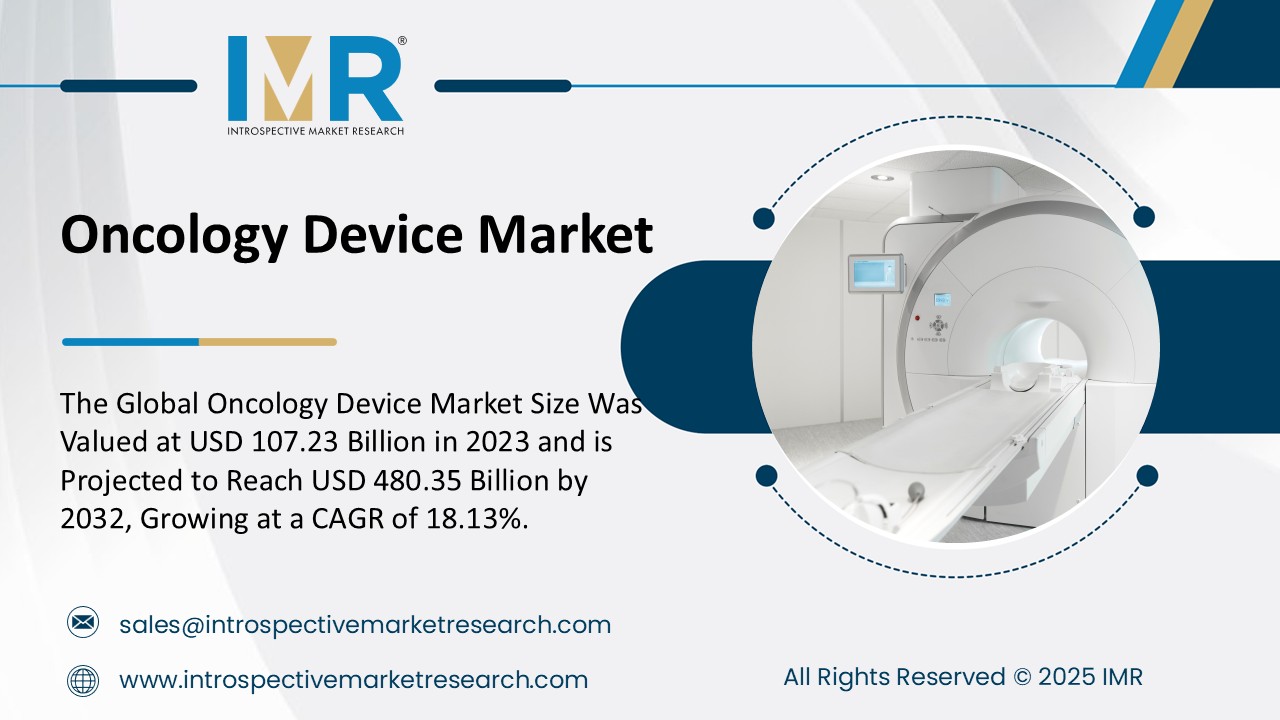
According to a new report published by Introspective Market Research, titled, Oncology Device Market by Product Type, Application, and End-User, The Global Oncology Device Market Size Was Valued at USD 107.23 Billion in 2023 and is Projected to Reach USD 480.35 Billion by 2032, Growing at a CAGR of 18.13%. The oncology device market includes diagnostic, therapeutic, and monitoring devices designed to improve detection, management, and outcomes of cancer. These devices, such as imaging systems, radiation therapy units, and ablation technologies, provide rapid, precise, and minimally invasive solutions compared to conventional treatments. Enhanced tumor localization, targeted therapy delivery, and robust data integration are driving adoption in hospitals and ambulatory surgical centers globally.
The market is propelled by rising cancer incidence, early detection initiatives, and continuous innovation in device functionality and artificial intelligence. Oncology devices play a pivotal role in screening, treatment, and post-therapy care for major cancers—breast, lung, colorectal, and prostate—across diverse healthcare systems. Their integration with electronic health records and personalized medicine approaches further enhances patient outcomes and population health metrics.
The Oncology Device Market is segmented into Product Type, Application, and End-User.
- By Product Type: Diagnostic Imaging Systems, Radiation Therapy Devices, Ablation Devices, Brachytherapy Devices, Others.
- By Application: Breast Cancer, Lung Cancer, Colorectal Cancer, Prostate Cancer, Others.
- By End-User: Hospitals, Specialty Clinics, Ambulatory Surgical Centers, Others.
A decisive growth driver for the oncology device market is the accelerating adoption of cutting-edge diagnostic imaging and therapeutic platforms. Advanced technologies like AI-powered imaging, minimally invasive surgical tools, and integrated radiation delivery systems boost early cancer detection and efficient, tailored treatment planning. These innovations enable higher survival rates and lower complication rates, prompting increased investments by hospitals, governments, and research organizations to address global cancer burden and patient needs.
Key market opportunities include the development of next-generation oncology devices—especially those incorporating robotics, AI, and real-time patient monitoring. Device makers are collaborating with clinical research centers to launch platform solutions that enable personalized medicine and streamline workflow across multiple cancer types. As regulatory bodies encourage precision diagnostics and data integration, strong demand is expected for devices that provide actionable insights, minimize side effects, and support care continuity in both developed and emerging markets.
Oncology Device Market, Segmentation
The Oncology Device Market is segmented on the basis of Product Type, Application, and End-User.
Product Type
The Product Type segment is further classified into Diagnostic Imaging Systems, Radiation Therapy Devices, Ablation Devices, Brachytherapy Devices, and Others. Among these, Diagnostic Imaging Systems accounted for the highest market share in 2023. Their central role in cancer detection, staging, and monitoring facilitates rapid diagnosis and effective treatment, making them indispensable across care settings. Continuous technological improvement in modalities—MRI, CT, PET, and digital mammography—supports their leading market position and expansion into preventive oncology globally.
Application
The Application segment is further classified into Breast Cancer, Lung Cancer, Colorectal Cancer, Prostate Cancer, and Others. Among these, Breast Cancer application held the highest market share in 2023. Early detection campaigns, high prevalence in women, and advancements in imaging, biopsy, and radiation techniques drive the adoption of oncology devices in breast cancer management. Hospital-led screening, minimally invasive diagnostics, and robust funding programs support ongoing growth and innovation within the segment.
Some of The Leading/Active Market Players Are-
- Siemens Healthineers (Germany)
- Varian Medical Systems (USA)
- GE Healthcare (USA)
- Elekta (Sweden)
- Philips Healthcare (Netherlands)
- Accuray Incorporated (USA)
- Medtronic PLC (Ireland/USA)
- Canon Medical Systems Corporation (Japan)
- Boston Scientific Corporation (USA)
- ViewRay Inc. (USA)
- Becton, Dickinson and Company (USA)
- Zimmer Biomet (USA)
- Hologic Inc. (USA)
- AngioDynamics Inc. (USA)
- Fujifilm Holdings Corporation (Japan)
- Other active players.
Key Industry Developments
In August 2025, Siemens Healthineers launched its next-generation PET/CT scanner, incorporating AI-based tumor detection and quantification tools to streamline oncology diagnosis and therapy planning. This device reduces scan times and enhances imaging detail, supporting precision oncology and multidisciplinary cancer care teams globally.
In March 2025, Boston Scientific announced the FDA clearance of its advanced ablation system for minimally invasive tumor destruction, capable of simultaneous multi-lesion treatment in liver and lung cancers. The innovation delivers faster recoveries, reduced hospital stays, and increased access to interventional oncology procedures for diverse patient populations.
Key Findings of the Study
- Diagnostic imaging systems and breast cancer application segments dominate market share globally.
- North America leads with strong healthcare infrastructure and cancer screening programs.
- Growth is powered by technological innovation, rising cancer cases, and the need for early diagnosis.
- Major trends include adoption of AI, robotics, and real-time data integration in device platforms.