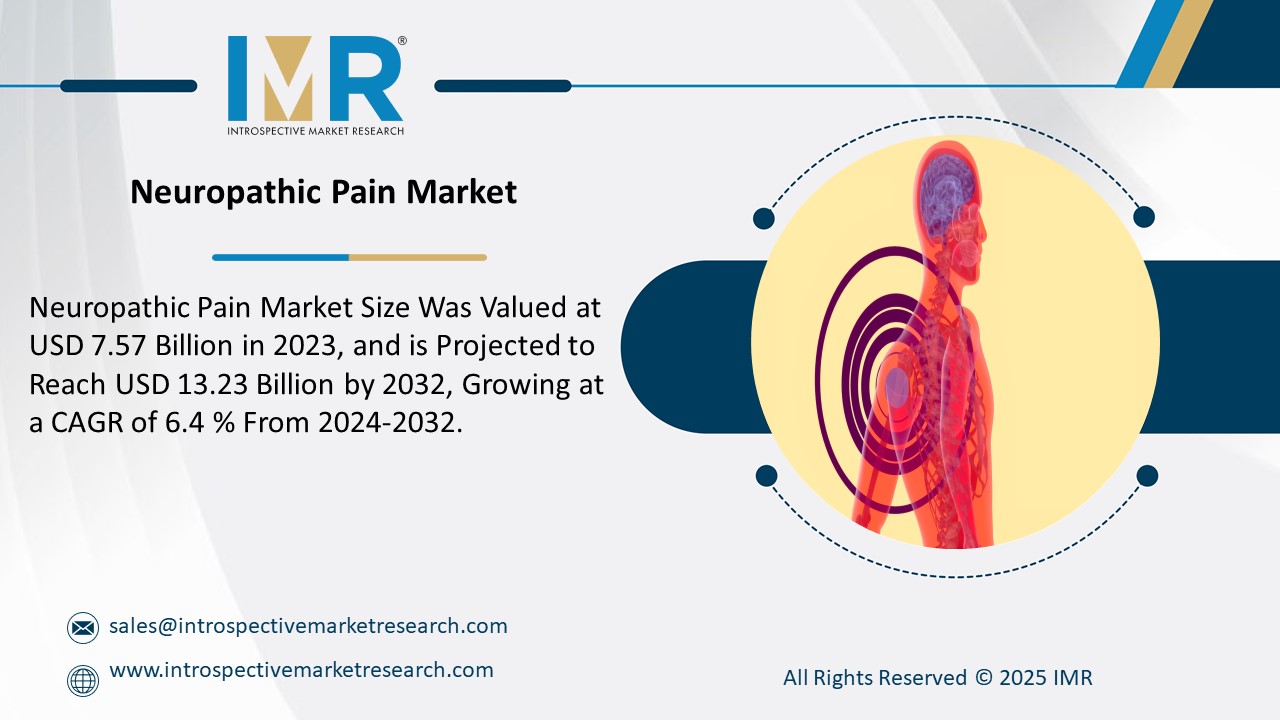
According to a new report published by Introspective Market Research, titled, Neuropathic Pain Market by Drug Class, Indication, and Distribution Channel, The Global Neuropathic Pain Market Size Was Valued at USD 7.57 Billion in 2023 and is Projected to Reach USD 13.23 Billion by 2032, Growing at a CAGR of 6.4%.
The Neuropathic Pain Market represents a crucial segment of the global healthcare industry, focusing on managing and alleviating chronic pain caused by nerve damage or dysfunction. Neuropathic pain arises from conditions such as diabetes, multiple sclerosis, shingles, and spinal cord injuries, posing a significant burden on patients’ quality of life and healthcare systems. Unlike conventional pain, neuropathic pain requires specialized treatment approaches including antidepressants, anticonvulsants, opioids, and topical agents that target nerve-related pathways. The growing demand for effective pain management therapies, coupled with advancements in drug formulations and diagnostics, is driving the market’s expansion. Increasing awareness among healthcare providers and patients about neuropathic disorders further supports the industry’s growth trajectory.
A major driver fueling the growth of the Neuropathic Pain Market is the increasing prevalence of chronic conditions such as diabetes and cancer, both of which are major contributors to neuropathic pain. Rising global incidence of diabetic neuropathy and chemotherapy-induced peripheral neuropathy has accelerated the demand for targeted pain therapies. Additionally, advancements in pharmacological research and the introduction of combination therapies with improved efficacy and reduced side effects have further boosted market adoption.
The growing focus on personalized medicine and the development of novel drug delivery systems represent significant opportunities for market players. Pharmaceutical companies are investing in research and innovation to develop next-generation pain therapeutics that address unmet needs in neuropathic pain management. Emerging economies are also creating new opportunities due to expanding healthcare infrastructure, increasing healthcare expenditure, and better access to pain management solutions.
Neuropathic Pain Market, Segmentation
The Neuropathic Pain Market is segmented on the basis of Drug Class, Indication, and Distribution Channel.
Drug Class
- The Drug Class segment is further classified into Anticonvulsants, Antidepressants, Opioids, and Others. Among these, the Anticonvulsants sub-segment accounted for the highest market share in 2023. Anticonvulsants, such as gabapentin and pregabalin, are widely prescribed due to their proven efficacy in modulating nerve signaling and reducing pain intensity. Their favorable safety profile and long-term effectiveness have positioned them as the first-line treatment option in neuropathic pain management.
Indication
- The Indication segment is further classified into Diabetic Neuropathy, Chemotherapy-Induced Peripheral Neuropathy, Postherpetic Neuralgia, and Others. Among these, the Diabetic Neuropathy sub-segment accounted for the highest market share in 2023. The rising global prevalence of diabetes has significantly increased the incidence of diabetic neuropathy, creating consistent demand for effective and affordable therapeutic options to manage pain and improve patient outcomes.
Some of The Leading/Active Market Players Are-
• Pfizer Inc. (U.S.)
• Eli Lilly and Company (U.S.)
• GlaxoSmithKline plc (U.K.)
• Novartis AG (Switzerland)
• Teva Pharmaceutical Industries Ltd. (Israel)
• Grünenthal GmbH (Germany)
• Biogen Inc. (U.S.)
• Vertex Pharmaceuticals Inc. (U.S.)
• Johnson & Johnson (U.S.)
• Astellas Pharma Inc. (Japan)
• Daiichi Sankyo Company, Limited (Japan)
• Endo International plc (Ireland)
• AbbVie Inc. (U.S.)
• Merck & Co., Inc. (U.S.)
• Sun Pharmaceutical Industries Ltd. (India)
and other active players.
Key Industry Developments
- In May 2024, Pfizer announced the launch of a new clinical trial evaluating the efficacy of pregabalin for chemotherapy-induced neuropathic pain. This trial aims to expand the therapeutic indications of existing anticonvulsant drugs and improve patient outcomes in pain management post-chemotherapy.
- In January 2025, Eli Lilly partnered with a biotechnology firm to develop next-generation non-opioid therapies for neuropathic pain. This collaboration seeks to reduce opioid dependency and introduce safer alternatives with innovative mechanisms of action targeting nerve pain pathways.
Key Findings of the Study
• Anticonvulsants segment dominated the market in 2023.
• Diabetic neuropathy accounted for the largest indication share.
• North America held the leading regional position.
• Growing chronic disease prevalence and R&D investments drive growth.
• Shift toward non-opioid and combination therapies is a major trend.