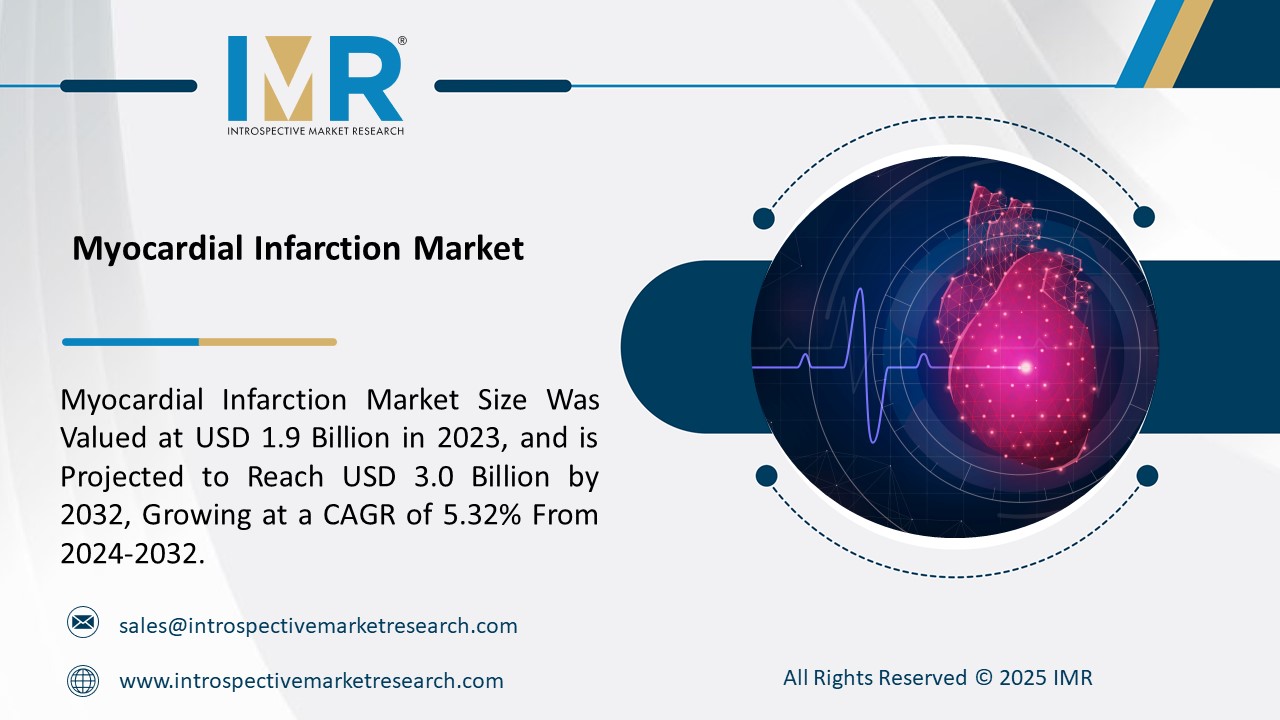
According to a new report published by Introspective Market Research, titled, Myocardial Infarction Market by Treatment Type, Drug Class, and End-User, The Global Myocardial Infarction Market Size Was Valued at USD 1.9 Billion in 2023 and is Projected to Reach USD 3.0 Billion by 2032, Growing at a CAGR of 5.32%. The global Myocardial Infarction (MI) Market, commonly known as the heart attack treatment market, is witnessing steady growth due to the increasing prevalence of cardiovascular diseases, sedentary lifestyles, and rising geriatric populations worldwide. Myocardial infarction occurs when blood flow to the heart muscle is blocked, often due to plaque buildup, leading to severe health risks and fatalities if untreated.
Advancements in pharmaceuticals, minimally invasive procedures, and enhanced diagnostic tools are transforming treatment approaches for myocardial infarction. Modern therapies aim not only to save lives during acute events but also to prevent recurrence and improve long-term patient outcomes. Compared with traditional treatment methods, today’s targeted therapies and advanced interventions significantly reduce mortality rates and enhance recovery.
Healthcare systems across developed and emerging economies are investing in better cardiac care infrastructure, preventive screening, and awareness campaigns, further boosting the adoption of novel treatment methods. With the combined impact of innovation, demand for effective drugs, and rising healthcare expenditures, the myocardial infarction market is expected to expand at a sustainable pace during the forecast period. One of the key drivers of the myocardial infarction market is the rising prevalence of cardiovascular diseases worldwide. Sedentary lifestyles, unhealthy dietary habits, and increasing cases of obesity and diabetes are major risk factors for heart attacks. The World Health Organization (WHO) consistently reports cardiovascular diseases as the leading cause of global mortality. This growing burden of heart-related illnesses has prompted increased demand for effective treatments, ranging from thrombolytic drugs and anticoagulants to advanced surgical interventions. As healthcare systems enhance their cardiac care capacities, the need for efficient and innovative myocardial infarction treatment solutions continues to grow rapidly.
A major opportunity lies in the integration of precision medicine and digital health in myocardial infarction treatment. Personalized treatment plans, based on genetic profiling and patient-specific risk factors, are becoming increasingly important in improving clinical outcomes. Additionally, telemedicine and remote monitoring technologies provide new opportunities for post-treatment care and rehabilitation, ensuring continuous monitoring of cardiac patients and reducing the likelihood of recurrent events. Emerging markets, with growing healthcare infrastructure and investments in cardiac care, further offer untapped opportunities for pharmaceutical companies, device manufacturers, and healthcare providers to expand their footprint in myocardial infarction management.
Myocardial Infarction Market, Segmentation
The Myocardial Infarction Market is segmented on the basis of Treatment Type, Drug Class, and End-User.
By Treatment Type: The Treatment Type segment is further classified into Thrombolytic Therapy, Surgical Interventions, and Pain Management. Among these, Thrombolytic Therapy accounted for the highest market share in 2023. Thrombolytic drugs are widely used to dissolve blood clots quickly and restore blood flow to the heart, making them the most common first-line treatment for acute myocardial infarction. Their efficiency in preventing severe damage to the heart muscle, coupled with accessibility across healthcare systems, makes them a dominant segment in the market.
By Drug Class: The Drug Class segment is further classified into Antiplatelet Agents, Beta Blockers, Statins, and ACE Inhibitors. Among these, Antiplatelet Agents accounted for the highest market share in 2023. Antiplatelet drugs play a critical role in preventing clot formation and reducing the risk of recurrent heart attacks. Widely prescribed by cardiologists globally, their effectiveness in both acute management and long-term prevention strategies ensures their leading position in the myocardial infarction treatment landscape.
Some of The Leading/Active Market Players Are
- AstraZeneca PLC (UK)
- Novartis AG (Switzerland)
- Bristol-Myers Squibb Company (USA)
- Pfizer Inc. (USA)
- Merck & Co., Inc. (USA)
- Sanofi S.A. (France)
- Johnson & Johnson (USA)
- Boehringer Ingelheim (Germany)
- Bayer AG (Germany)
- Daiichi Sankyo Company, Limited (Japan)
- Amgen Inc. (USA)
- GlaxoSmithKline plc (UK)
- Teva Pharmaceutical Industries Ltd. (Israel)
- Cipla Ltd. (India)
- Lupin Limited (India) and other active players.
Key Industry Developments
-
In March 2024, AstraZeneca announced the launch of a new antiplatelet therapy designed to reduce recurrent myocardial infarction cases in high-risk patients. The drug demonstrated improved efficacy in clinical trials, lowering the risk of secondary heart attacks compared to existing therapies. This innovation highlights the ongoing focus on precision treatment and enhanced patient safety in cardiac care.
-
In September 2023, Novartis partnered with leading digital health companies to integrate remote cardiac monitoring into post-MI care programs.This initiative aims to improve patient adherence, track vital signs in real-time, and provide early warnings for potential complications. By combining pharmaceutical expertise with digital tools, Novartis is enhancing long-term patient management and reducing hospital readmission rates.
Key Findings of the Study:
- Thrombolytic therapy held the largest share among treatment types in 2023.
- Antiplatelet agents led the drug class segment due to their high usage in acute and preventive care.
- North America and Europe dominate the market, supported by advanced healthcare infrastructure.
- Rising prevalence of cardiovascular diseases is the primary market driver.
- Digital health and precision medicine offer strong growth opportunities.