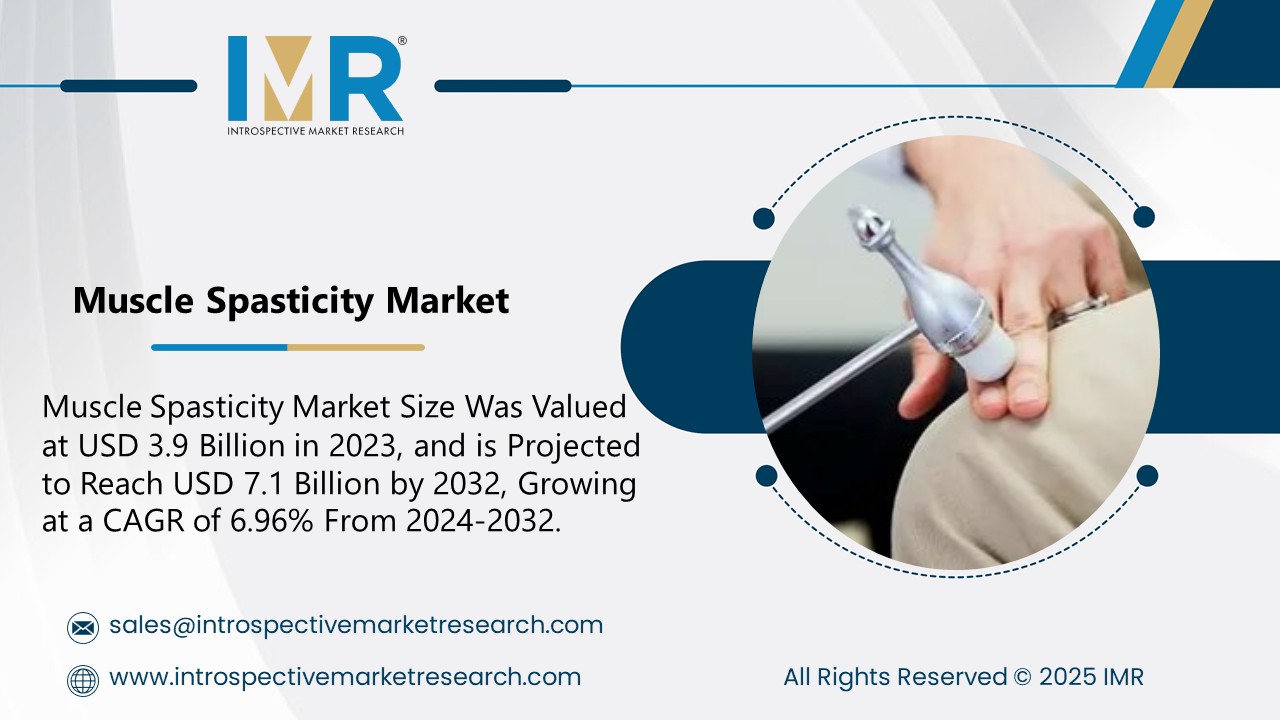
According to a new report published by Introspective Market Research, titled, Muscle Spasticity Market by Treatment, Application, and End User, The Global Muscle Spasticity Market Size Was Valued at USD 3.9 Billion in 2023 and is Projected to Reach USD 7.1 Billion by 2032, Growing at a CAGR of 6.96% from 2024 to 2032.The muscle spasticity market is witnessing significant growth due to the increasing prevalence of neurological disorders such as multiple sclerosis, cerebral palsy, stroke, and traumatic brain injury. Muscle spasticity, characterized by involuntary muscle stiffness and spasms, severely impacts patient mobility and quality of life. Rising awareness, better diagnostic tools, and expanding treatment options are strengthening the global market landscape.
Compared to traditional therapies, modern treatment options—such as botulinum toxin injections, intrathecal baclofen therapy, and advanced physiotherapy solutions—provide improved efficacy and longer-lasting relief for patients. Additionally, the adoption of multidisciplinary approaches involving pharmacological, surgical, and rehabilitative care is reshaping patient management, offering holistic solutions to improve functional independence across hospitals, clinics, and rehabilitation centers.
One of the major drivers of the muscle spasticity market is the rising incidence of neurological conditions worldwide. Increasing stroke prevalence and the growing number of patients with multiple sclerosis and cerebral palsy are contributing to higher demand for effective spasticity management. Improved healthcare infrastructure, coupled with government initiatives to promote rehabilitation services, is further boosting patient access to advanced treatments. Pharmaceutical companies are also expanding their focus on innovative drug delivery systems and biologics, adding momentum to overall market growth.
A key opportunity for the muscle spasticity market lies in the development of minimally invasive and long-acting therapies. With patients and healthcare providers seeking safer alternatives to frequent medication use, demand for advanced solutions such as sustained-release drugs, implantable pumps, and precision-targeted biologics is growing. Additionally, emerging digital health solutions, such as tele-rehabilitation and AI-powered physiotherapy programs, present significant potential for improving long-term care. The rising focus on personalized medicine and value-based healthcare models is expected to open new avenues for industry players in the coming years.
Muscle Spasticity Market, Segmentation
The Muscle Spasticity Market is segmented on the basis of Treatment, Application, and End User.
Treatment Segment
- The treatment segment is further classified into Medications, Botulinum Toxins, Intrathecal Baclofen Therapy, and Others. Among these, the Botulinum Toxins sub-segment accounted for the highest market share in 2023. Botulinum toxin injections remain the gold standard for spasticity management due to their proven efficacy, minimally invasive nature, and widespread acceptance. Increasing clinical adoption, favorable reimbursement policies, and continued innovation in toxin formulations are driving this segment’s dominance.
Application Segment
- The application segment is further classified into Multiple Sclerosis, Cerebral Palsy, Stroke, Traumatic Brain Injury, and Others. Among these, the Stroke sub-segment accounted for the highest market share in 2023. Stroke is one of the leading causes of spasticity, with millions of new cases reported annually. The growing global burden of post-stroke disabilities, combined with an increasing focus on rehabilitation care, continues to strengthen demand for spasticity treatment in this sub-segment.
Some of The Leading/Active Market Players Are-
- Ipsen Pharma (France)
- Merz Pharmaceuticals GmbH (Germany)
- Medtronic plc (Ireland)
- Allergan plc (USA)
- Novartis AG (Switzerland)
- Bayer AG (Germany)
- Revance Therapeutics, Inc. (USA)
- Pfizer Inc. (USA)
- Teva Pharmaceutical Industries Ltd. (Israel)
- UCB S.A. (Belgium)
- Jazz Pharmaceuticals plc (Ireland)
- Daiichi Sankyo Company, Limited (Japan)
- Sun Pharmaceutical Industries Ltd. (India)
and other active players.
Key Industry Developments
- In February 2024, Ipsen announced positive trial results for its next-generation botulinum toxin designed for longer-lasting spasticity relief.
The innovation demonstrated improved efficacy with reduced injection frequency, marking a significant advancement in patient-centered care. - In June 2024, Medtronic expanded its portfolio by launching an updated intrathecal baclofen pump with remote monitoring capabilities.
This development enhances treatment precision, patient safety, and convenience, reinforcing Medtronic’s leadership in implantable therapy solutions.
Key Findings of the Study
- Botulinum toxins dominated the treatment segment in 2023.
- Stroke was the leading application segment.
- North America held the largest market share.
- Rising neurological disorder prevalence is a key growth driver.
- Innovation in minimally invasive therapies and digital rehab is shaping future trends.