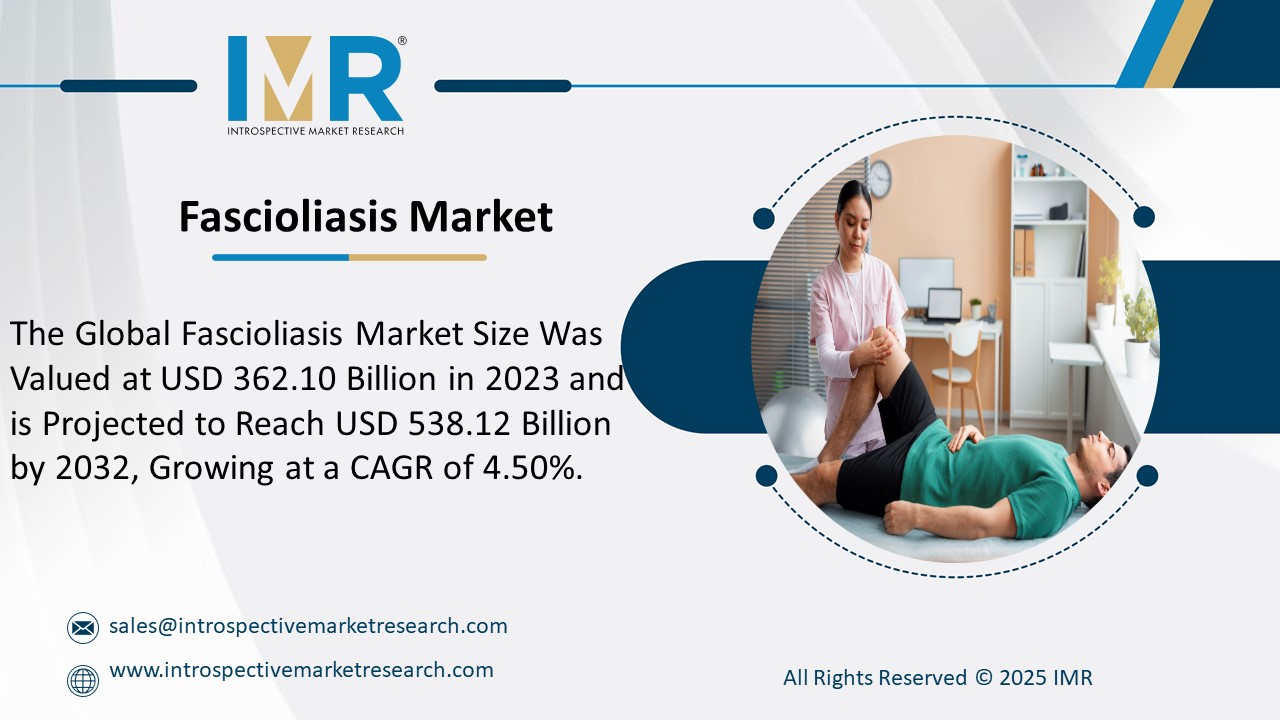
According to a new report published by Introspective Market Research, titled, Fascioliasis Market by Treatment Type, Distribution Channel, and Region, The Global Fascioliasis Market Size Was Valued at USD 362.10 Billion in 2023 and is Projected to Reach USD 538.12 Billion by 2032, Growing at a CAGR of 4.50%. The global fascioliasis market addresses therapies, diagnostics and control measures for a parasitic liver-fluke infection primarily caused by Fasciola hepatica and Fasciola gigantica. Humans contract the disease through ingestion of contaminated aquatic plants or water containing metacercariae, and livestock infections add significant veterinary and economic burdens. Traditional diagnostic and treatment paths have relied on older anti-helminthic drugs and supportive care, but recent advances in diagnostics, treatment access and awareness are driving change.
With growing attention on neglected tropical diseases (NTDs), improved surveillance, government investment and pharmaceutical interest have begun to expand the market. The increasing human and livestock prevalence of fascioliasis—especially in regions with high numbers of ruminants, freshwater snails and susceptible populations—creates demand for improved treatment options and preventive strategies.
The Fascioliasis Market is segmented into Treatment Type, Distribution Channel, and Region. By Treatment Type, the market is categorized into (Triclabendazole, Nitazoxanide, Others). By Distribution Channel, the market is categorized into (Hospital Pharmacies, Retail Pharmacies, Online Pharmacies). By Region, the market is categorized into (North America, Europe, Asia-Pacific, Latin America, Middle East & Africa).
A primary growth driver for the fascioliasis market is the rising recognition of the disease burden among humans and animals combined with enhanced diagnostics and treatment availability. The widespread distribution of the parasite, the economic impact on livestock production and a growing push by public-health authorities to address neglected tropical diseases are fueling investments. Efforts to improve access to approved treatments like triclabendazole are accelerating global market adoption.
One significant opportunity lies in the development and approval of novel therapeutic and diagnostic solutions for fascioliasis, especially in emerging regions where the disease remains under-diagnosed and under-treated. Enhancing awareness, improving supply chains, and integrating digital health solutions for monitoring infections in livestock and humans can open new growth pathways. Further, preventive veterinary and human health measures together present cross-sector potential.
Fascioliasis Market, Segmentation
The Fascioliasis Market is segmented on the basis of Treatment Type, Distribution Channel, and Region.
Treatment Type
The Treatment Type segment is further classified into Triclabendazole, Nitazoxanide, and Others. Among these, the Triclabendazole sub-segment accounted for the highest market share in [Year]. Triclabendazole is the approved standard for human cases and has widespread use in veterinary settings, benefiting from strong efficacy against immature and adult flukes. Its established profile positions it as the dominant therapy in the market.
Distribution Channel
The Distribution Channel segment is further classified into Hospital Pharmacies, Retail Pharmacies, and Online Pharmacies. Among these, the Hospital Pharmacies sub-segment accounted for the highest market share in [Year]. Hospital pharmacies dominate due to treatment of diagnosed cases in clinical settings, integration into public health programs and infrastructure availability for parasitic disease management.
Some of The Leading/Active Market Players Are-
- Novartis AG (Switzerland)
- AMGIS Lifescience Ltd. (India)
- Romark, L.C. (USA)
- AbbVie Inc. (USA)
- Merck KGaA (Germany)
- AdvaCare Pharma (India)
- Intas Pharmaceuticals Ltd. (India)
- Procyon Life Sciences (India)
- Sun Pharmaceutical Industries Ltd. (India)
- Janssen Pharmaceuticals, Inc. (USA)
- other active players.
Key Industry Developments
-
In July 2024, a major pharmaceutical company initiated a Phase III trial of a new broad-spectrum anti-fluke therapy targeting fascioliasis in livestock and humans.
The new therapy aims to reduce reliance on existing drugs and expand treatment access in endemic regions. The trial also includes companion diagnostics to identify fluke infections more rapidly and bolster surveillance. - In February 2025, a global public-health initiative announced funding of a large-scale screening programme for fascioliasis in high-risk regions of Southeast Asia and Africa.
The programme will utilise portable diagnostic kits, educational campaigns for communities and logistics to distribute approved treatment drugs. The objective is to reduce infection incidence and strengthen market demand for diagnostics and therapeutics.
Key Findings of the Study
- Triclabendazole leads the treatment segment as the standard-of-care therapy.
- Hospital pharmacies dominate distribution given clinical management of cases.
- Asia-Pacific & Africa are the fastest growth regions due to high endemicity.
- Growing awareness and neglected-disease focus drive market expansion.
- Novel therapies and diagnostics represent key future growth levers.