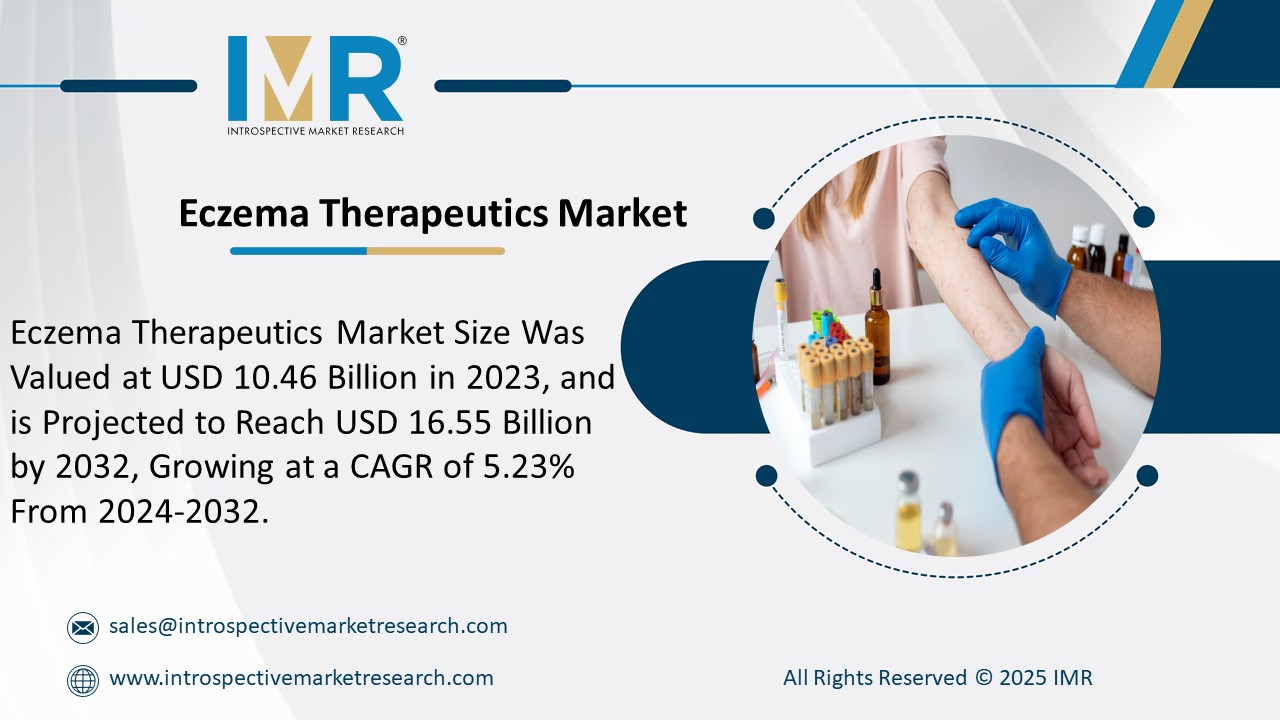
According to a new report published by Introspective Market Research, titled, Eczema Therapeutics Market by Drug Class, Route of Administration, and Distribution Channel, The Global Eczema Therapeutics Market Size Was Valued at USD 10.46 Billion in 2023 and is Projected to Reach USD 16.55 Billion by 2032, Growing at a CAGR of 5.23%. The eczema therapeutics market is witnessing significant growth as the prevalence of atopic dermatitis and other eczema subtypes continues to rise globally. Eczema, a chronic inflammatory skin condition, is often associated with intense itching, redness, and recurrent flare-ups that affect patients’ quality of life. Increasing awareness, coupled with growing healthcare expenditure, is fueling the demand for effective treatment options.
Traditionally, topical corticosteroids and emollients were the primary treatments; however, the market has evolved with the introduction of biologics, JAK inhibitors, and advanced immunotherapies. These novel therapies provide targeted treatment approaches with higher efficacy and fewer side effects. With a surge in clinical research, patient-centric drug development, and technological innovations in dermatology, the eczema therapeutics market is poised for sustainable growth over the next decade.
The Eczema Therapeutics Market is segmented into Drug Class, Route of Administration, and Distribution Channel. By Drug Class, the market is categorized into Corticosteroids, Calcineurin Inhibitors, PDE4 Inhibitors, Biologics, and Others. By Route of Administration, the market is categorized into Oral, Injectable, and Topical. By Distribution Channel, the market is categorized into Hospital Pharmacies, Retail Pharmacies, and Online Pharmacies.
A key growth driver for the eczema therapeutics market is the increasing prevalence of atopic dermatitis and other eczema-related conditions across both developed and developing regions. Rising pollution levels, changing lifestyles, and heightened allergen exposure are contributing to this trend. Additionally, growing awareness of skin health, combined with improved diagnostic rates, is boosting treatment demand. The pharmaceutical industry is also accelerating research into innovative biologics and immunotherapies, expanding the treatment landscape and fueling overall market growth.
An emerging opportunity in the eczema therapeutics market lies in the expansion of biologics and targeted therapies. Biologics such as dupilumab have transformed treatment outcomes, reducing flare-ups and improving patient quality of life. The ongoing development of novel JAK inhibitors and next-generation monoclonal antibodies is expected to widen therapeutic options. Furthermore, increasing patient access through government initiatives, healthcare reforms, and telemedicine platforms creates a favorable environment for market penetration, especially in under-served regions. This presents strong opportunities for pharmaceutical companies to expand their reach and establish dominance.
Eczema Therapeutics Market, Segmentation
The Eczema Therapeutics Market is segmented on the basis of Drug Class, Route of Administration, and Distribution Channel.
Drug Class
The Drug Class segment is further classified into Corticosteroids, Calcineurin Inhibitors, PDE4 Inhibitors, Biologics, and Others. Among these, the Biologics sub-segment accounted for the highest market share in 2023. Biologics are preferred due to their targeted approach in modulating the immune response, leading to effective long-term control of severe atopic dermatitis. Their proven efficacy, fewer side effects compared to traditional corticosteroids, and increasing approvals of new biologic drugs have cemented their position as the fastest-growing therapeutic option.
Route of Administration
The Route of Administration segment is further classified into Oral, Injectable, and Topical. Among these, the Topical sub-segment accounted for the highest market share in 2023. Topical treatments remain the first-line therapy for mild to moderate eczema cases, offering cost-effective and easy-to-use solutions. They are widely accessible through retail and hospital pharmacies, ensuring broad patient adoption. Despite advancements in biologics, topical formulations continue to dominate due to their affordability and rapid symptom relief.
Some of The Leading/Active Market Players Are-
- Sanofi S.A. (France)
- Regeneron Pharmaceuticals, Inc. (United States)
- Pfizer Inc. (United States)
- AbbVie Inc. (United States)
- Novartis AG (Switzerland)
- Eli Lilly and Company (United States)
- Leo Pharma A/S (Denmark)
- Johnson & Johnson (United States)
- Amgen Inc. (United States)
- Bristol Myers Squibb (United States)
- Glenmark Pharmaceuticals (India)
- Astellas Pharma Inc. (Japan)
- Incyte Corporation (United States)
- Dermira, Inc. (United States)
- Medimetriks Pharmaceuticals (United States) and other active players.
Key Industry Developments
-
In April 2024, the FDA approved Pfizer’s abrocitinib, an oral JAK1 inhibitor, for the treatment of moderate-to-severe atopic dermatitis in adults and adolescents. The drug demonstrated significant improvements in symptom reduction and quality of life.
This approval expands Pfizer’s dermatology portfolio and provides patients with a much-needed alternative to biologic therapies, marking a milestone in eczema treatment. -
In June 2024, Sanofi and Regeneron announced expanded approvals for dupilumab in treating children as young as six months with moderate-to-severe atopic dermatitis. The extension highlights the safety and efficacy of biologics across age groups.
This development broadens the treatment landscape, providing earlier intervention for pediatric patients and strengthening Sanofi-Regeneron’s leadership in eczema therapeutics.
Key Findings of the Study
- Biologics dominated the drug class segment in 2023, driven by targeted efficacy.
- Topical therapies remain the most widely adopted treatment option.
- North America and Europe lead the global eczema therapeutics market.
- Rising prevalence of atopic dermatitis is a key growth driver.
- Expanding biologics and JAK inhibitors create new opportunities for innovation.