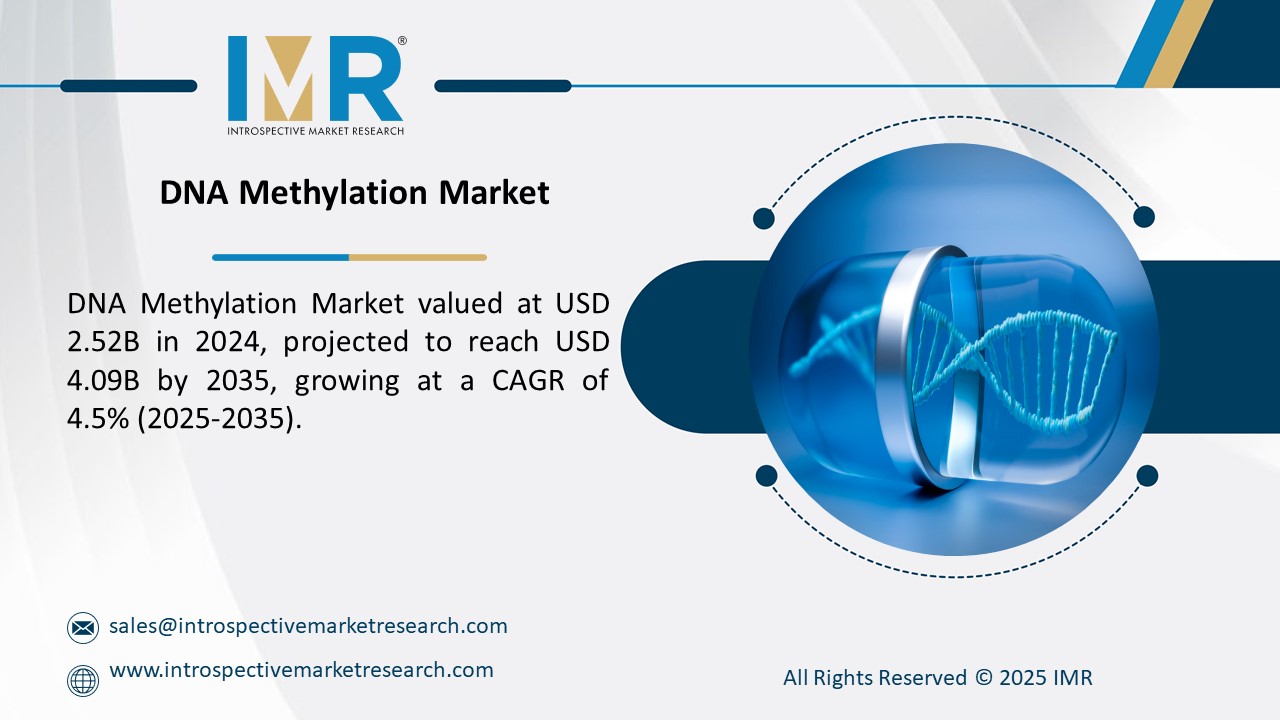
The DNA methylation market focuses on technologies, kits, reagents, and services used to study epigenetic modifications that regulate gene expression without altering DNA sequences. DNA methylation plays a critical role in cellular differentiation, disease progression, and gene silencing, making it a cornerstone of modern epigenetics research. Compared to traditional genetic analysis, DNA methylation analysis provides deeper insights into disease mechanisms and environmental influences on gene expression.
These solutions are widely applied in oncology, developmental biology, neuroscience, and personalized medicine. Advancements in sequencing technologies, bioinformatics tools, and high-throughput analysis platforms have significantly improved accuracy, scalability, and affordability. As epigenetics gains prominence in clinical diagnostics and drug discovery, DNA methylation analysis continues to expand across academic, pharmaceutical, and clinical research settings.
The rising prevalence of cancer and chronic diseases is a major growth driver for the DNA methylation market. Aberrant DNA methylation patterns are closely linked to tumor initiation, progression, and treatment resistance, making them critical biomarkers for early diagnosis and prognosis. Increasing investments in oncology research, coupled with the growing adoption of epigenetic biomarkers in precision medicine, are accelerating demand for DNA methylation analysis tools. Additionally, government funding and global research initiatives supporting epigenomics further strengthen market growth.
Expanding applications of DNA methylation in clinical diagnostics present a significant market opportunity. The integration of methylation-based assays into non-invasive diagnostic tests, such as liquid biopsies, is gaining momentum. These assays enable early disease detection, treatment monitoring, and patient stratification. Emerging economies, with improving healthcare infrastructure and growing research capabilities, also offer untapped potential. Moreover, advancements in next-generation sequencing and AI-driven data analysis are expected to create new avenues for market expansion.
Detailed Segmentation
DNA Methylation Market, Segmentation
The DNA Methylation Market is segmented on the basis of Technology, Application, and End User.
By Technology
The Technology segment is further classified into Bisulfite Sequencing, Methylation-Specific PCR, and Microarray-Based Methods. Among these, the Bisulfite Sequencing sub-segment accounted for the highest market share in 2024. Bisulfite sequencing is considered the gold standard for DNA methylation analysis due to its high accuracy and single-base resolution. Its widespread use in large-scale epigenome studies and compatibility with next-generation sequencing platforms continue to drive its dominance in both research and clinical applications.
By Application
The Application segment is further classified into Cancer Research, Developmental Biology, and Clinical Diagnostics. Among these, the Cancer Research sub-segment accounted for the highest market share in 2024. DNA methylation analysis is extensively used in oncology to identify tumor-specific biomarkers, understand cancer epigenetics, and support drug development. The growing focus on personalized cancer therapies and early detection methods further fuels the demand for methylation-based cancer research tools.
Some of the Leading/Active Market Players Are-
- Illumina Inc. (USA)
- Thermo Fisher Scientific Inc. (USA)
- Agilent Technologies Inc. (USA)
- Merck KGaA (Germany)
- QIAGEN N.V. (Netherlands)
- Roche Diagnostics (Switzerland)
- Zymo Research Corporation (USA)
- Bio-Rad Laboratories Inc. (USA)
- Pacific Biosciences of California Inc. (USA)
- New England Biolabs Inc. (USA)
- Abcam plc (UK)
- PerkinElmer Inc. (USA)
- BGI Genomics (China)
- Oxford Nanopore Technologies (UK)
- Takara Bio Inc. (Japan)
and other active players.
Key Industry Developments
In March 2024, a leading biotechnology company launched an advanced DNA methylation sequencing kit designed for improved sensitivity and reduced sample input. The new solution enhances accuracy in low-abundance samples, supporting cancer and rare disease research while reducing overall analysis time and cost.
In September 2024, a major genomics firm announced a strategic collaboration with academic institutions to accelerate epigenetics research. The partnership focuses on developing methylation-based biomarkers for early disease detection, leveraging next-generation sequencing platforms and advanced bioinformatics tools.
Key Findings of the Study
- Bisulfite sequencing remains the dominant technology segment.
- Cancer research is the leading application area.
- North America holds a significant market share due to strong R&D investment.
- Rising oncology research and precision medicine drive market growth.
- Advancements in sequencing technologies shape key market trends.