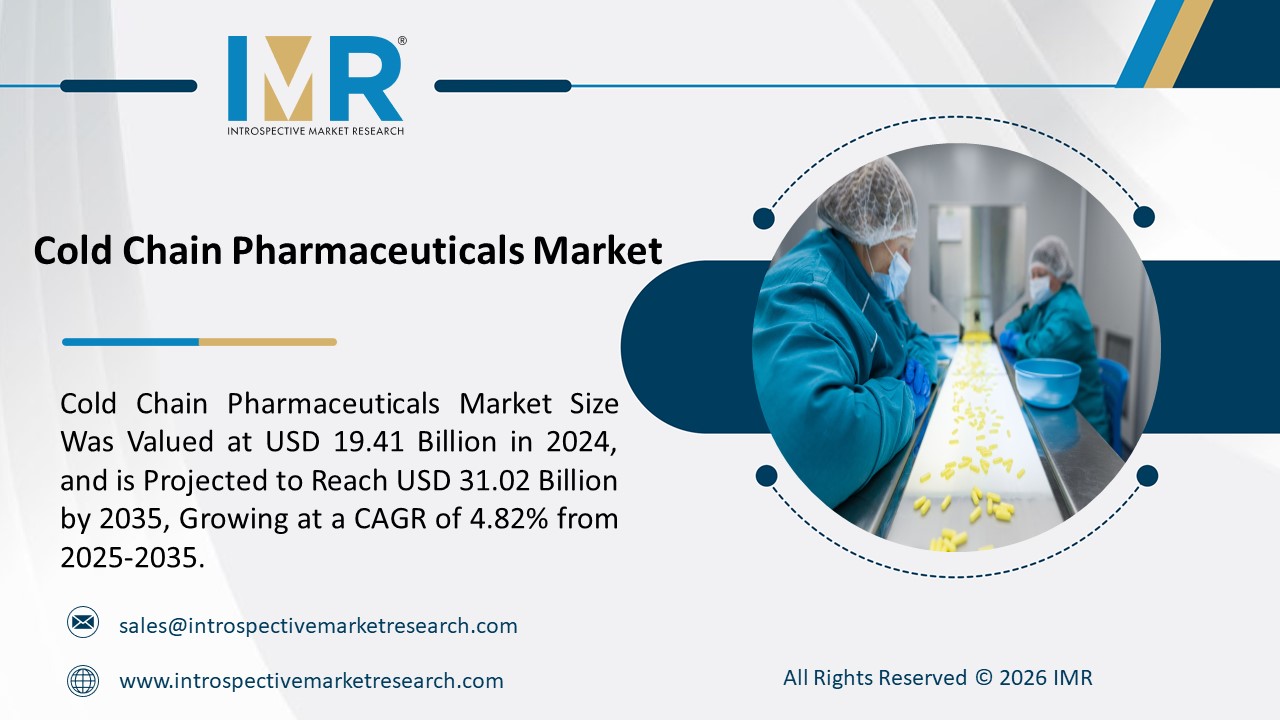
According to a new report published by Introspective Market Research, titled, “Cold Chain Pharmaceuticals Market by Product, Application, and End-User,” The Global Cold Chain Pharmaceuticals Market Size Was Valued at USD 19.41 Billion in 2024 and is Projected to Reach USD 31.02 Billion by 2035, Growing at a CAGR of 4.82% From 2025–2035.
The Cold Chain Pharmaceuticals market comprises temperature-controlled supply chain solutions dedicated to the storage, transportation, and distribution of medicinal products that must be maintained within a strict, unbroken temperature range (typically 2°C to 8°C or -20°C or lower) from manufacturing to patient administration. This includes insulated packaging, refrigerated containers, temperature-monitoring devices, data loggers, and specialized logistics services. The critical advantage of a validated cold chain over standard logistics is its ability to preserve the potency, safety, and efficacy of highly sensitive biologics, vaccines, and specialty drugs, ensuring they arrive in a therapeutically viable state and comply with stringent global regulatory standards (e.g., FDA, EMA GDP guidelines).
The paramount growth driver for the cold chain pharmaceuticals market is the unstoppable rise of biologics, biosimilars, and advanced therapy medicinal products (ATMPs) such as cell and gene therapies, which are almost exclusively temperature-sensitive. The pharmaceutical pipeline is dominated by these complex molecules, which offer targeted, high-efficacy treatments for cancer, autoimmune diseases, and rare genetic disorders. Unlike traditional small-molecule drugs, biologics have intricate three-dimensional structures that can denature and become ineffective or unsafe if exposed to temperature excursions. This fundamental characteristic makes a reliable, end-to-end cold chain not a logistical option but an absolute scientific and regulatory necessity for their commercialization and patient access, creating a structural, long-term demand driver tied directly to pharmaceutical innovation.
A significant market opportunity lies in the integration of advanced digital technologies and data platforms to create intelligent, transparent, and predictive cold chains. Moving beyond basic temperature monitoring, there is immense value in implementing IoT-enabled sensors, blockchain for immutable custody tracking, and AI-powered analytics. These technologies can provide real-time visibility into shipment location and condition, predict potential failures before they occur by analyzing historical data and external factors (like weather), automate compliance reporting, and ensure data integrity from manufacturer to patient. Companies that evolve from providing passive packaging or transportation to offering integrated "cold chain as a service" platforms with guaranteed data integrity and proactive risk management will capture a premium position in the market.
Cold Chain Pharmaceuticals Market, Segmentation
The Cold Chain Pharmaceuticals Market is segmented on the basis of Product, Application, and End-User.
Product
The Product segment is further classified into Insulated Packaging, Refrigerated Storage, Temperature Monitoring Systems, and Logistics Services. Among these, the Insulated Packaging sub-segment (including shippers, coolers, and qualified containers) accounted for the highest market share in 2024. Insulated packaging dominates as it is the essential, single-use consumable required for the transportation of every single temperature-sensitive shipment, from large pallets to small parcel deliveries. Its growth is fueled by the expansion of direct-to-patient and clinic distribution models, the rise of e-commerce pharmacies, and the need for scalable, cost-effective solutions for last-mile delivery, making it a high-volume, recurring revenue segment.
Application
The Application segment is further classified into Vaccines, Biologics, Clinical Trial Materials, and Others. Among these, the Biologics sub-segment accounted for the highest market share in 2024. The biologics market, encompassing monoclonal antibodies, recombinant proteins, and hormones, is larger and more commercially established than vaccines in terms of annual revenue. The high value and volume of these drugs, coupled with their universal cold chain requirement, make this application the largest revenue driver. The continued launch of new biologics and biosimilars ensures sustained, robust demand for cold chain solutions tailored to their specific stability profiles.
Some of The Leading/Active Market Players Are-
• AmerisourceBergen Corporation (US)
• Cardinal Health, Inc. (US)
• McKesson Corporation (US)
• FedEx Corporation (US) [FedEx Custom Critical, FedEx SupplyChain]
• United Parcel Service, Inc. (UPS) (US)
• DHL International GmbH (Germany)
• DB Schenker (Germany)
• Kuehne + Nagel International AG (Switzerland)
• Cold Chain Technologies, LLC (US)
• Sonoco ThermoSafe (US)
• and other active players.
Key Industry Developments
In March 2024, a leading global logistics provider launched a new "cell and gene therapy dedicated lane" within its cold chain network. The service features ultra-low temperature (-150°C) capabilities, real-time cryogenic monitoring, and specialized handling protocols to meet the extreme sensitivity and tight timelines required for delivering these live, personalized therapies.
In January 2024, a major pharmaceutical distributor and a blockchain technology firm announced a pilot program to track high-value oncology biologics. The system creates an immutable digital record of temperature data and chain of custody at every transfer point, aiming to eliminate paperwork, reduce disputes, and provide verifiable proof of compliance to regulators and end customers.
Key Findings of the Study
• Insulated Packaging and the Biologics application segment are the market share leaders.
• North America is the largest regional market, driven by its concentration of biopharma innovators and high healthcare spending.
• The key growth driver is the pharmaceutical industry's shift towards temperature-sensitive biologics and advanced therapies.
• Major trends include the digitalization of the cold chain with IoT and blockchain, and the specialization of logistics for cell and gene therapies.