
Bunk Trailers Market
According to a new report published by Introspective Market Research, titled, ?Bunk Trailers Market by Material and Type: Global Opportunity Analysis and Industry Forecast, 2024?2032,?
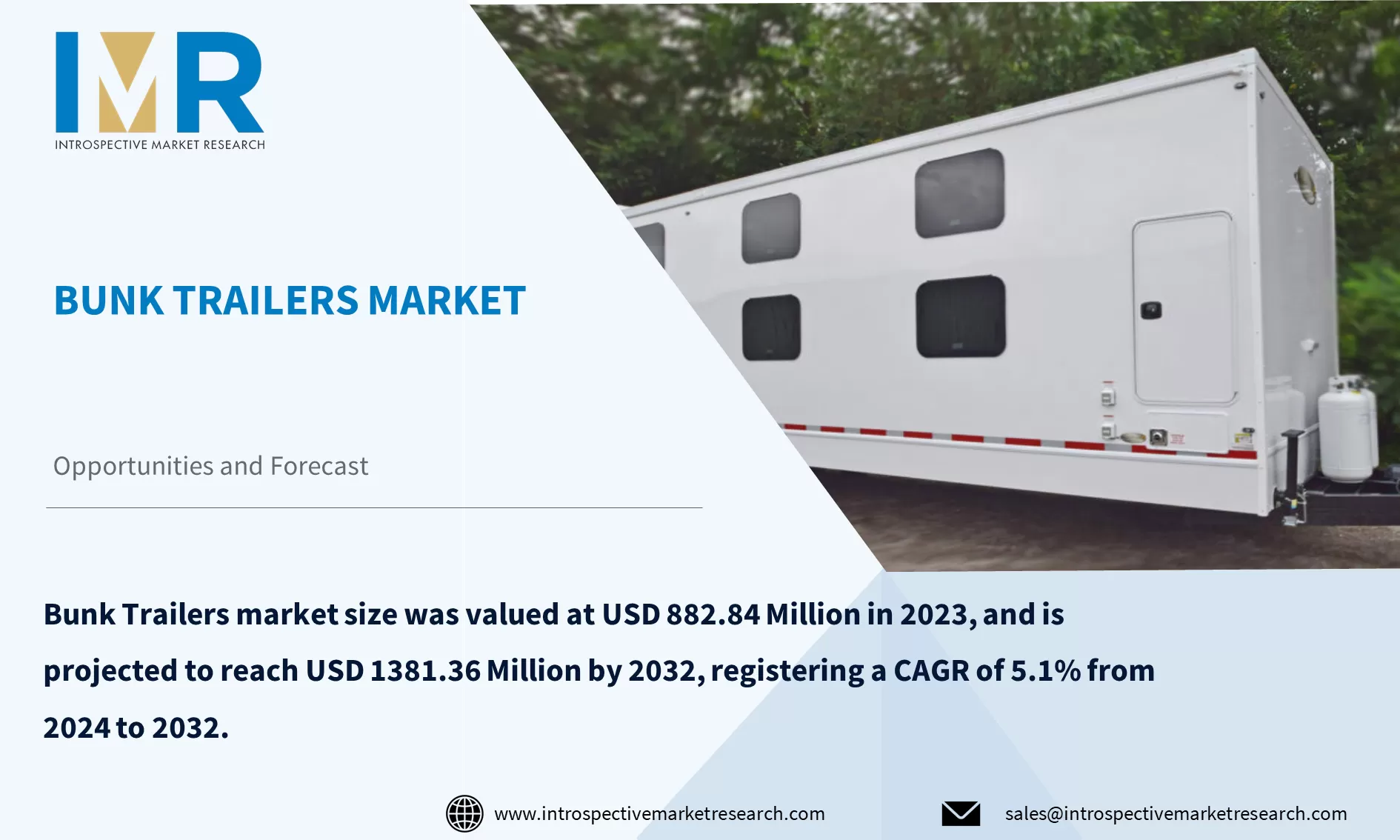
the global Bunk Trailers market size was valued at USD 882.84 Million in 2023, and is projected to reach USD 1381.36 Million by 2032, registering a CAGR of 5.1% from 2024 to 2032.
Bunk trailers cater to the boat shipping industry with specifically contoured supports that align with the boat hull, ensuring secure transit. Their design allows for effortless use, accommodating various boat shapes and sizes through adjustable angles. These trailers evenly distribute the boat's weight, mitigating hull damage during transport. They facilitate straightforward loading and unloading, making them ideal for single operators or those with limited experience. Constructed from galvanized steel or aluminum, these robust trailers may feature integrated lighting, braking systems, and adjustable winch mechanisms for enhanced functionality.
According to The Bunk Trailers Marketis segmented into Materials, Type, and region. By Materials, the market is categorized into Steel, Aluminum, and Composite. By Type, the market is categorized into Dry Bunk Trailers, Livestock Bunk Trailers, and Others. By region, it is analyzed across North America (U.S.; Canada; Mexico), Eastern Europe (Bulgaria; The Czech Republic; Hungary; Poland; Romania; Rest of Eastern Europe), Western Europe (Germany; UK; France; Netherlands; Italy; Russia; Spain; Rest of Western Europe), Asia-Pacific (China; India; Japan; Southeast Asia, etc.), South America (Brazil; Argentina, etc.), Middle East & Africa (Saudi Arabia; South Africa, etc.).
Low-maintenance bunk trailers are popular for their convenience and reliability in outdoor activities. Advances in technology enhance durability, reducing repair and maintenance needs. Features like anti-corrosive coatings, improved sealing systems, and aluminum frames make them a cost-effective alternative to high-end models, appealing to both budget-conscious and upscale consumers.
The bunk trailers market is transforming to improve durability, comfort, and affordability. Manufacturers are using high-density foams and memory foams to meet consumer preferences and enhance trailer appeal. Sustainable materials, like recycled and biodegradable ones, reduce production costs and support sustainability efforts. Innovative materials boost productivity, reduce expenses, and increase investment in research and development.
Global Bunk Trailers Market, Segmentation
The Bunk Trailers market is segmented based on Material, Type, and region.
Packaging Type:
Aluminum is the preferred material for bunk trailers due to its lightweight nature, which enhances fuel efficiency and ease of towing across different vehicle types. Its corrosion resistance makes it ideal for harsh weather conditions and exposure to road salt. While the upfront cost of aluminum trailers is higher, their long-term economic benefits, stemming from durability and minimal maintenance, outweigh the initial investment. In contrast, composite materials and iron are heavier and present technical challenges, making them less favorable for bunk trailer construction.
Application:
Dry bunk trailers lead the bunk trailer market to their versatility, serving sectors like logistics, construction, and recreation effectively. They transport general cargo without requiring special conditions, such as temperature control for perishable goods or accommodations for livestock. The rise of technology and e-commerce has boosted demand for dry bunk trailers, making them essential in the logistics chain. While livestock bunk trailers are predominantly used in agriculture and have a more niche market, dry bunk trailers remain the most popular choice due to their broad applicability and high demand.
Region:
North America holds the largest share of the bunk trailer market due to its robust transportation and logistics infrastructure, extensive highway networks, and significant demand for cargo transportation systems. Stringent regulations and technological advancements drive manufacturers to produce high-quality, durable bunk trailers. The market experiences consistent growth, with businesses of all sizes utilizing these trailers. This dominance is further supported by favorable financing schemes and effective trade policies.
Some of The Leading/Active Market Players Are-
- Airstream, Inc. (USA)
- Coachmen RV (USA)
- Cruiser RV (USA)
- Dutchmen Manufacturing, Inc. (USA)
- Forest River, Inc. (USA)
- Grand Design RV (USA)
- Gulf Stream Coach, Inc. (USA)
- Heartland RV (USA)
- Jayco, Inc. (USA)
- KZ RV (USA), and Other Active Players
Key Industry Developments
- In November 2023, Utility Trailer Manufacturing Company unveiled its latest lightweight bunk trailer model, engineered to enhance fuel efficiency and load capacity. This cutting-edge trailer incorporates advanced materials and aerodynamic design features to minimize drag and maximize performance.
- In September 2023, Wabash National Corporation introduced its latest refrigerated bunk trailer system, featuring advanced temperature control and monitoring capabilities. This state-of-the-art trailer is specifically designed to meet the stringent demands of the cold chain logistics industry.
Key Findings of the Study
- The global bunk trailers market, valued at USD 882.84 million in 2023, is projected to reach USD 1381.36 million by 2032, with a CAGR of 5.1%.
- Aluminum bunk trailers, favored for their lightweight and corrosion resistance, lead the market due to their fuel efficiency and durability.
- Dry bunk trailers dominate the market, driven by their versatility and rising demand from logistics and e-commerce sectors.
- North America's market leadership stems from its advanced logistics infrastructure and stringent quality regulations, ensuring steady growth.