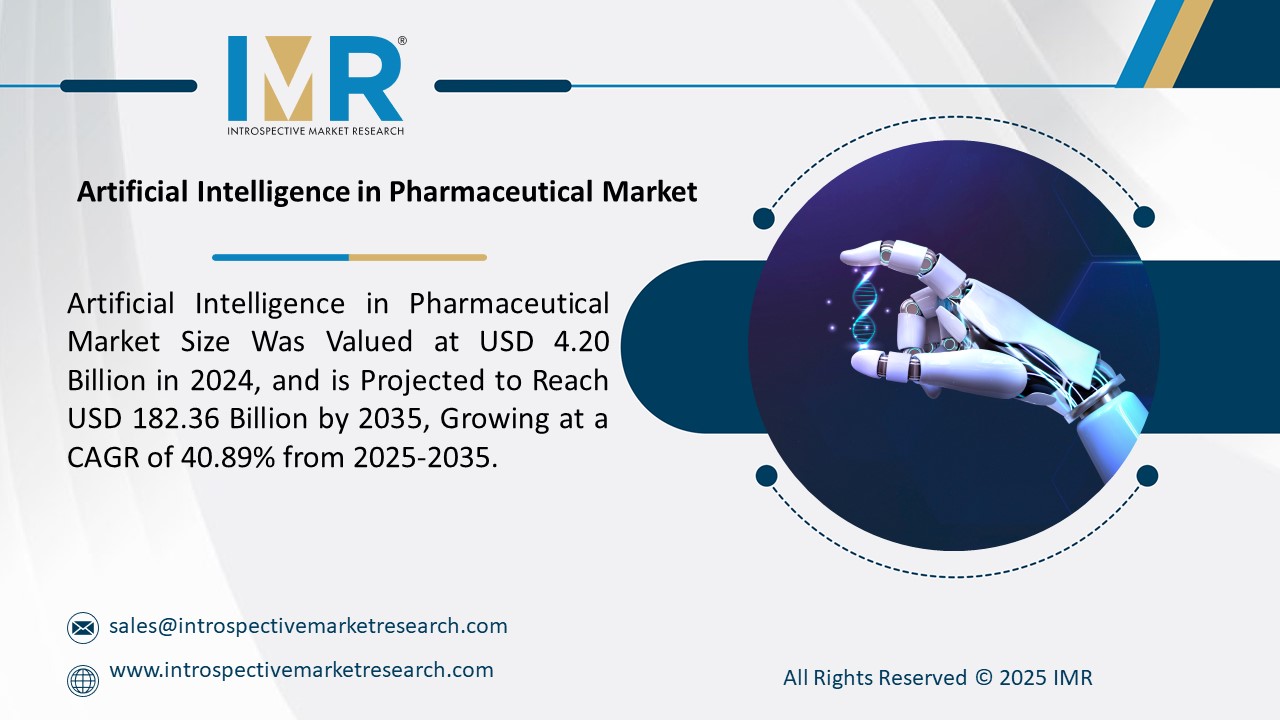
Artificial Intelligence (AI) in the pharmaceutical industry refers to the integration of advanced algorithms, machine learning (ML), and deep learning techniques into various stages of drug discovery, clinical trials, and manufacturing. This transformative technology enables the processing of massive biological and chemical datasets at unprecedented speeds, allowing researchers to identify potential drug candidates, predict molecular behavior, and optimize patient selection for clinical studies. As the industry faces rising R&D costs and longer development timelines, AI has become a cornerstone for modernizing the pharmaceutical value chain.
The primary advantage of AI over traditional pharmaceutical methodologies is its ability to drastically reduce the time and cost associated with "hit-to-lead" identification and drug optimization. By utilizing predictive modeling and virtual screening, AI minimizes the need for extensive physical lab testing in early stages, thereby mitigating the high failure rates typically associated with drug development. Furthermore, AI enhances precision medicine by analyzing genomic data to tailor treatments for specific patient populations. Major industries utilizing AI in this space include biopharmaceutical companies, contract research organizations (CROs), and diagnostic laboratories.
The principal growth driver for the AI in pharmaceutical market is the critical need to accelerate drug discovery timelines while reducing the exorbitant costs of R&D. On average, bringing a new drug to market takes over a decade and billions of dollars; AI significantly truncates this process by identifying promising compounds in a fraction of the traditional time. Additionally, the increasing volume of complex biological data, such as genomic and proteomic information, has reached a scale where human analysis is no longer sufficient. Pharmaceutical giants are aggressively investing in AI to gain a competitive edge in finding breakthrough treatments for chronic diseases and rare conditions.
A major market opportunity lies in the application of AI for "Drug Repurposing" and the optimization of clinical trial designs. AI algorithms can scan existing databases of approved drugs to identify new therapeutic indications for old molecules, providing a faster and safer route to market. Furthermore, AI-driven patient recruitment and real-time monitoring of trial participants offer a lucrative niche for software providers. By predicting patient attrition rates and ensuring more diverse and relevant trial cohorts, AI can significantly improve the success rates of Phase II and Phase III trials, offering a massive ROI for biopharmaceutical developers.
Detailed Segmentation
Title: Artificial Intelligence in Pharmaceutical Market Market, Segmentation The Artificial Intelligence in Pharmaceutical Market is segmented on the basis of Component, Application, and Deployment Mode.
By Component
- The Component segment is further classified into Software, Hardware, and Services. Among these, the Software sub-segment accounted for the highest market share in 2024. This dominance is driven by the continuous development of sophisticated AI platforms and SaaS solutions tailored for high-throughput screening and molecular modeling. Pharmaceutical companies prefer flexible, scalable software environments that can integrate with existing lab equipment and cloud infrastructure. The recurring revenue models of software providers and the constant need for algorithmic updates to handle evolving biological data ensure that this segment remains the primary engine of market value.
By Application
- The Application segment is further classified into Drug Discovery, Clinical Trials, and Manufacturing. Among these, the Drug Discovery sub-segment accounted for the highest market share in 2024. Drug discovery is the most data-intensive phase of the pharmaceutical lifecycle, making it the most immediate beneficiary of AI integration. By automating the identification of novel targets and predicting the toxicity of compounds before they enter clinical phases, AI provides immense value in the early R&D stages. The high success rates of AI-designed molecules entering first-in-human trials have validated this application as the market's leading revenue generator.
Some of The Leading or Active Market key Players Are-
- NVIDIA Corporation (United States)
- Google (Alphabet Inc.) (United States)
- Microsoft Corporation (United States)
- IBM Corporation (United States)
- BenevolentAI (United Kingdom)
- Exscientia (United Kingdom)
- Insilico Medicine (Hong Kong)
- Atomwise Inc. (United States)
- Schrodinger, Inc. (United States)
- Recursion Pharmaceuticals (United States)
- Novartis AG (Switzerland)
- Pfizer Inc. (United States) and other active players.
Key Industry Developments
- In June 2024, NVIDIA announced a collaboration with several global pharmaceutical leaders to deploy its BioNeMo cloud service for generative AI in drug discovery. This news item is significant because it provides researchers with the massive computing power needed to generate new protein structures and predict their functions in real-time, drastically reducing the initial discovery phase from months to days.
- In February 2024, Insilico Medicine reached a major milestone by initiating a Phase II clinical trial for a drug entirely discovered and designed by its generative AI platform. This news item marks the first time an AI-generated molecule for a chronic condition has reached this advanced stage of human testing, providing a definitive proof-of-concept for the entire AI-pharma industry.
Key Findings of the Study
- Dominant Segments: Software components and Drug Discovery applications currently command the largest portions of the market.
- Leading Regions: North America leads the global market due to its high concentration of tech-pharma partnerships and R&D funding.
- Key Growth Drivers: The urgent need to lower R&D costs and the explosion of biological "Big Data" requiring automated analysis.
- Market Trends: Rapid adoption of generative AI for protein folding and a shift toward cloud-based collaborative research platforms.