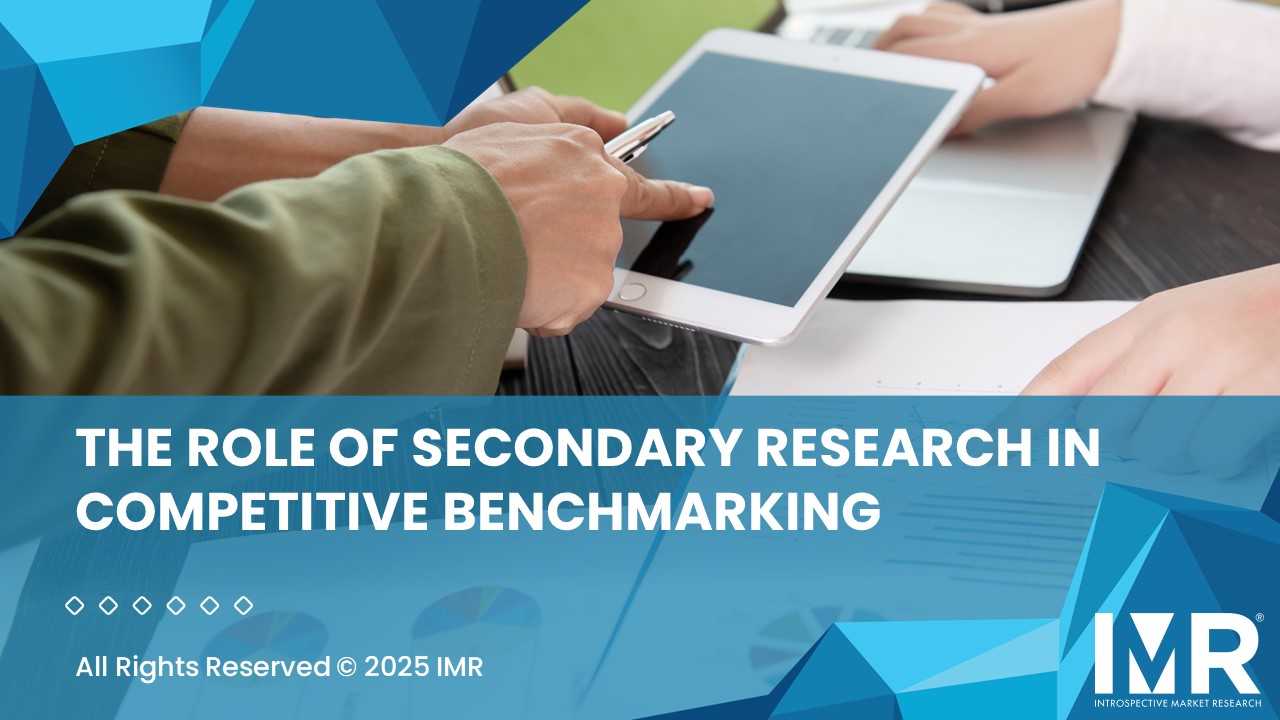
Secondary research plays a critical role in competitive benchmarking by enabling organizations to analyze existing data, industry reports, and market intelligence without the time and cost associated with primary research. In data-driven business environment, companies rely on competitive benchmarking to evaluate their performance against industry leaders and identify gaps in strategy, operations, and customer engagement.
Secondary research provides the foundation for informed benchmarking analysis by aggregating insights from credible sources such as market studies, financial reports, academic publications, and industry databases. This approach not only enhances decision-making efficiency but also improves the accuracy of competitive intelligence. By leveraging secondary research, businesses can uncover trends, compare key performance indicators, and develop actionable strategies that strengthen their market position and long-term growth across diverse industry sectors and global competitive markets.
Understanding Secondary Research in Competitive Benchmarking
Secondary research in competitive benchmarking refers to the process of collecting and analyzing existing information to evaluate a company’s position relative to its competitors. This form of research relies on publicly available data, industry publications, government reports, and third-party analytics to establish performance standards. Unlike primary research, it does not involve direct data collection from surveys or interviews, making it more cost-effective and time-efficient.
Organizations use secondary research to identify industry benchmarks, understand competitor strategies, and assess market dynamics. It provides a broad overview of the competitive landscape, helping businesses make informed strategic decisions.
Key sources of secondary research include:
- Industry reports and white papers published by consulting firms
- Financial statements and annual reports of competitors
- Market research databases and statistical platforms
- Trade journals and academic studies
By synthesizing these sources, companies can establish meaningful benchmarking criteria and evaluate their strengths and weaknesses. Secondary research also supports trend analysis, enabling organizations to anticipate shifts in consumer behavior and market demand, which is essential for maintaining competitive advantage in rapidly evolving industries.
Additionally, it enables benchmarking consistency across different markets ensuring that performance comparisons remain reliable scalable and aligned with strategic business objectives in both domestic and international contexts over time and across competitive cycles globally in practice settings today.
Role of Secondary Research in Competitive Benchmarking Analysis:
Secondary research plays a vital role in shaping competitive benchmarking analysis by providing the contextual data needed to compare organizational performance against industry standards. It helps businesses identify gaps in efficiency, pricing strategies, customer satisfaction, and operational effectiveness. By leveraging existing datasets, companies can quickly build competitive intelligence frameworks without extensive field research.
One of the key advantages is its ability to streamline decision-making processes. Managers can rely on verified information from reputable sources to guide strategy development and performance evaluation.
Important applications of secondary research include:
- Identifying key performance indicators (KPIs) used by industry leaders
- Comparing market share and revenue growth across competitors
- Evaluating pricing models and value propositions
- Assessing digital presence and customer engagement strategies
In addition, secondary research supports segmentation analysis, allowing organizations to understand how competitors target different customer groups. This insight is critical for refining marketing strategies and improving customer acquisition efforts.
By integrating secondary research into benchmarking analysis, businesses can achieve a more comprehensive understanding of their competitive position and make data-driven decisions that enhance long-term sustainability and profitability.
Furthermore, it enhances strategic foresight by enabling continuous monitoring of competitor movements and industry benchmarks which supports proactive adjustments to organizational strategy and long-term competitive positioning in dynamic markets worldwide trends today.
Benefits of Secondary Research for Competitive Intelligence:
Secondary research is a cornerstone of competitive intelligence, offering numerous benefits that support strategic planning and market positioning. It enables organizations to access vast amounts of information without the high costs associated with primary data collection.
Cost Efficiency and Time Savings:
One of the primary benefits is reduced cost and faster access to insights. Businesses can utilize existing reports and databases instead of conducting expensive surveys or field studies. This accelerates benchmarking cycles and allows for quicker strategic adjustments.
Enhanced Market Understanding:
Secondary research also improves understanding of industry trends and competitor behavior. By analyzing historical data and published insights, companies can identify long-term patterns and emerging opportunities. This helps in refining product development, marketing strategies, and operational improvements.
Secondary research strengthens competitive intelligence frameworks by providing reliable, scalable, and comprehensive data sources. It supports evidence-based decision-making and reduces uncertainty in complex market environments, allowing organizations to respond effectively to changing industry conditions and maintain a strong competitive edge in their respective sectors.
Moreover, organizations that consistently apply secondary research in competitive benchmarking are better positioned to optimize resource allocation improve strategic agility and maintain alignment with evolving industry standards across both regional and global markets over time while supporting continuous innovation and data-driven transformation initiatives within organizations.
Challenges and Limitations of Secondary Research in Benchmarking:
Secondary research offers significant advantages in competitive benchmarking; it also presents certain limitations that organizations must consider. One major challenge is data relevance, as secondary sources may not always reflect the most current market conditions. Outdated or generalized information can lead to inaccurate benchmarking conclusions.
The accuracy and credibility of the information cannot always be guaranteed. Businesses must carefully evaluate the quality of sources before integrating them into competitive analysis frameworks. Additionally, secondary research may lack depth in certain areas, particularly when detailed, organization-specific insights are required. It often provides a broad overview rather than granular, actionable intelligence.
Despite these challenges, organizations can mitigate risks by combining secondary research with primary research methods. This integrated approach ensures a more balanced and comprehensive understanding of competitive environments.
Ultimately, awareness of these limitations allows businesses to use secondary research more effectively, ensuring that benchmarking efforts remain accurate, relevant, and strategically valuable in dynamic and competitive markets. Proper validation and cross-referencing of sources further enhance the credibility and effectiveness of benchmarking outcomes in business practice settings.
Practical Insights for Effective Competitive Benchmarking:
The value of secondary research in competitive benchmarking, organizations should establish clear objectives, select credible data sources, and regularly update their information base. Integrating multiple datasets helps improve accuracy and reduces bias in analysis. Additionally, aligning benchmarking metrics with strategic goals ensures relevance and actionable outcomes. Businesses should combine qualitative and quantitative insights to gain a holistic understanding of competitors and market conditions, enabling informed decision-making competitive advantage in evolving industries.
Conclusion:
Secondary research is a fundamental component of competitive benchmarking, enabling organizations to make informed, data-driven decisions based on existing market intelligence and industry insights. It provides a cost-effective and efficient way to analyze competitors, identify performance gaps, and establish meaningful benchmarks that guide strategic planning. By leveraging credible sources such as industry reports, financial statements, and market databases, businesses can enhance their competitive intelligence capabilities and improve decision-making accuracy.
Despite certain limitations, secondary research remains essential for understanding market dynamics and supporting long-term business growth. When integrated effectively into benchmarking frameworks, it empowers organizations to stay agile, competitive, and responsive to evolving industry conditions. Secondary research strengthens the foundation of competitive analysis and plays a vital role in shaping sustainable business strategies in today’s highly competitive global marketplace.