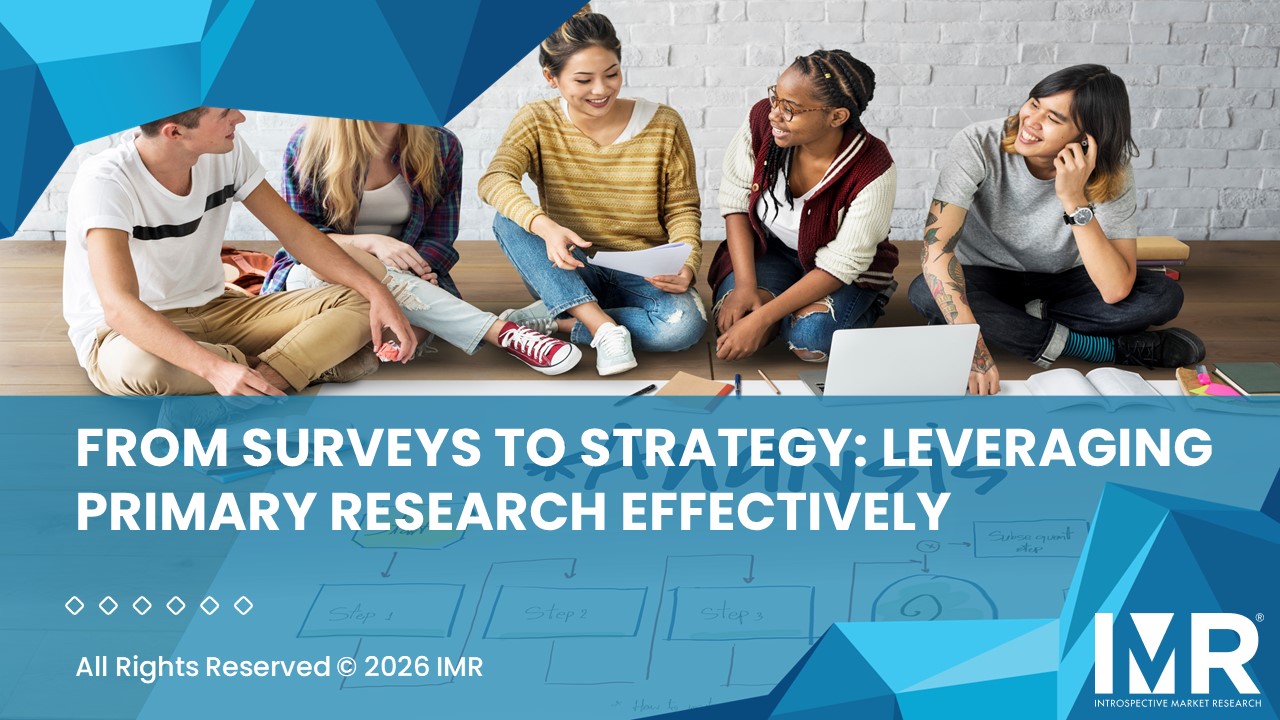
In an increasingly data-driven business environment, organizations that rely on assumptions rather than evidence risk falling behind. Primary research serves as a critical bridge between raw data collection and actionable business strategy, enabling companies to understand customer behavior, market dynamics, and emerging trends firsthand. From surveys and interviews to focus groups and observational studies, primary research provides tailored insights that secondary data often cannot deliver. However, the true value lies not in gathering information but in converting it into a clear strategic direction. When executed effectively, primary research empowers decision-makers to reduce uncertainty, optimize offerings, and strengthen competitive positioning. This article outlines how organizations can transition from surveys to strategy by leveraging primary research in a structured, disciplined, and results-oriented manner.
Understanding Primary Research and Its Strategic Value
Primary research is the systematic collection of original data directly from target audiences to achieve a defined objective. Unlike secondary research, which relies on existing sources, primary research is purpose-built to address specific business questions.
Types of Primary Research Methods
Organizations adopt a range of methods depending on their strategic requirements:
- Surveys and questionnaires to capture large-scale quantitative insights
- In-depth interviews to explore detailed qualitative perspectives
- Focus groups to analyze perceptions within a controlled discussion setting
- Observational research to assess real-world behavior patterns
- Experiments and field trials to validate hypotheses under controlled conditions
Each method contributes uniquely to building a comprehensive understanding of customers and markets.
Strategic Importance of Primary Research
Primary research plays a vital role in strengthening business strategy by enabling organizations to:
- Identify customer expectations and unmet needs with precision
- Validate product concepts before large-scale investment
- Evaluate brand perception and customer satisfaction levels
- Detect emerging trends and untapped market opportunities
When research objectives are clearly aligned with strategic priorities, the resulting insights become directly applicable to decision-making processes.
Designing Effective Surveys for Actionable Insights
Surveys are among the most widely used primary research tools due to their efficiency and scalability. Their effectiveness, however, depends heavily on thoughtful design and execution.
Key Principles of Survey Design
To ensure accuracy and relevance, surveys must follow essential design principles:
- Clarity and simplicity: Questions should be direct, concise, and easy to interpret
- Relevance: Every question must serve a defined research purpose
- Logical structure: Questions should follow a coherent and intuitive sequence
- Neutral framing: Avoid leading or biased wording that influences responses
- Optimal length: Maintain a balance to prevent respondent fatigue while capturing necessary data
Adhering to these principles improves response quality and enhances the reliability of findings.
Common Pitfalls to Avoid
Survey design can be compromised by several common issues:
- Combining multiple questions into a single query
- Using complex or technical language that reduces clarity
- Relying on unrepresentative samples
- Skipping pre-testing or pilot validation
Addressing these challenges is essential to ensure that collected data accurately reflects respondent perspectives and supports informed decision-making.
Transforming Data into Strategic Insights
Data collection alone does not create value. The ability to interpret findings and convert them into meaningful insights determines the overall impact of primary research.
Data Analysis Techniques
Organizations employ a variety of analytical approaches to extract value from research data:
- Descriptive analysis to summarize patterns and key metrics
- Segmentation analysis to categorize audiences based on shared characteristics
- Correlation analysis to identify relationships between variables
- Thematic analysis to interpret qualitative inputs and recurring themes
A combination of these techniques enables a deeper and more nuanced understanding of research outcomes.
From Insights to Strategy
Turning insights into strategy requires a structured and disciplined approach:
- Identify critical findings that directly influence business objectives
- Map insights to strategic priorities to ensure relevance
- Rank opportunities based on impact and feasibility
- Develop clear action plans aligned with organizational goals
- Track performance metrics to evaluate effectiveness over time
This structured process ensures that insights are translated into measurable business outcomes rather than remaining theoretical observations.
Strategic Application
Organizations that effectively utilize primary research integrate insights into product development, customer experience design, and market positioning. This alignment ensures that decisions are grounded in evidence, reducing risk and enhancing the likelihood of success in competitive markets.
Integrating Primary Research into Business Decision-Making
To maximize its value, primary research must be embedded within the broader decision-making framework of the organization rather than treated as a standalone activity.
Building a Research-Driven Culture
A research-driven organization prioritizes data as a central component of decision-making. This can be achieved by:
- Encouraging collaboration between research, marketing, and strategy teams
- Providing training on interpreting and applying research insights
- Reinforcing the importance of evidence-based decisions across all levels
Such a culture ensures that research findings are consistently utilized to guide business actions.
Leveraging Technology and Tools
Advancements in technology have significantly enhanced the effectiveness of primary research:
- Digital survey platforms streamline data collection processes
- Advanced analytics tools enable deeper data interpretation
- Integrated systems connect research findings with customer data
These capabilities allow organizations to manage complex datasets efficiently and generate insights at scale.
Ensuring Continuous Feedback Loops
Primary research should be an ongoing process rather than a one-time initiative. Continuous feedback mechanisms enable organizations to remain adaptive:
- Regular surveys to monitor changing customer expectations
- Ongoing testing to refine products and services
- Periodic research initiatives to assess market shifts
Sustained engagement with target audiences ensures that strategies remain relevant and responsive.
Best Practices for Maximizing Research Impact
To fully leverage primary research, organizations must adopt best practices that enhance both execution and strategic integration.
Key Best Practices
- Define clear objectives before initiating research activities
- Select appropriate methodologies aligned with business needs
- Ensure data accuracy and reliability through robust sampling methods
- Focus on actionable outcomes rather than excessive data collection
- Communicate insights effectively to key stakeholders
These practices help convert research efforts into meaningful and measurable results.
Enhancing Stakeholder Alignment
Strong alignment with stakeholders increases the likelihood of successful implementation:
- Engage decision-makers during the research planning phase
- Provide regular updates to maintain transparency
- Present insights using structured reports and visual tools
Clear communication ensures that insights are understood and acted upon across the organization.
Measuring Research Effectiveness
Evaluating the impact of primary research is essential for continuous improvement. Organizations should monitor:
- Changes in key performance indicators linked to research insights
- Business outcomes resulting from research-driven strategies
- Adoption levels of insights across different teams
Consistent evaluation reinforces the value of research and supports future optimization.
Conclusion
Primary research is a powerful tool for transforming data into a strategic direction. By adopting a structured approach to survey design, data analysis, and insight application, organizations can unlock meaningful opportunities for growth and innovation. Integrating research into decision-making processes ensures that strategies are grounded in real-world insights rather than assumptions. Additionally, fostering a research-driven culture and maintaining continuous feedback loops enable organizations to stay responsive in dynamic markets. Ultimately, leveraging primary research effectively allows businesses to make informed decisions, enhance customer engagement, and build a sustainable competitive advantage in an increasingly complex and evolving landscape.