




Microalgae Market Synopsis:
Microalgae Market Size Was Valued at USD 12.88 Billion in 2024, and is Projected to Reach USD 24.37 Billion by 2032, Growing at a CAGR of 8.30% From 2025-2032.
Microalgae market can, therefore, be defined as the business that deals with the cultivation, processing and marketing of different forms of microalgae. These microorganisms, which are reported to growth both in freshwater and marine environments, are good sources of bioactive molecules, including proteins, lipids, antioxidants, and pigments. Microalgae are consumed in culinary products and soft drinks, in drugs and functional foods, as animal fodder, and as sources of biodiesel owing to their nutritional significance and satisfaction of future worldwide demands for biomass.
Another factor that will support growth of the microalgae market is a growing consumption of healthy products and bioactive compounds from natural and renewable sources. As consumers become increasingly conscious of healthy eating, global tendencies show that naturally packed with nutrients microalgae such as Spirulina and Chlorella are in high demand. Due to its nutrient composition of protein, essential fatty acid, vitamins and minerals, health potentials of microalgae make them suitable for use as food supplements or fortificants in comparison to the traditional chemical supplements.
Also the growing demand for biofuels and other renewable energy sources is expected to fuel the microalgae market. When it comes to the commercial production of microalgae, they have a great ability to produce biofuels like biodiesel, which may be a powerful replacement to the fossil fuels. Increased focus on controlling greenhouse emissions and developing sustainable sources of energy is driving the interest in microalgae based technologies for biofuel development.
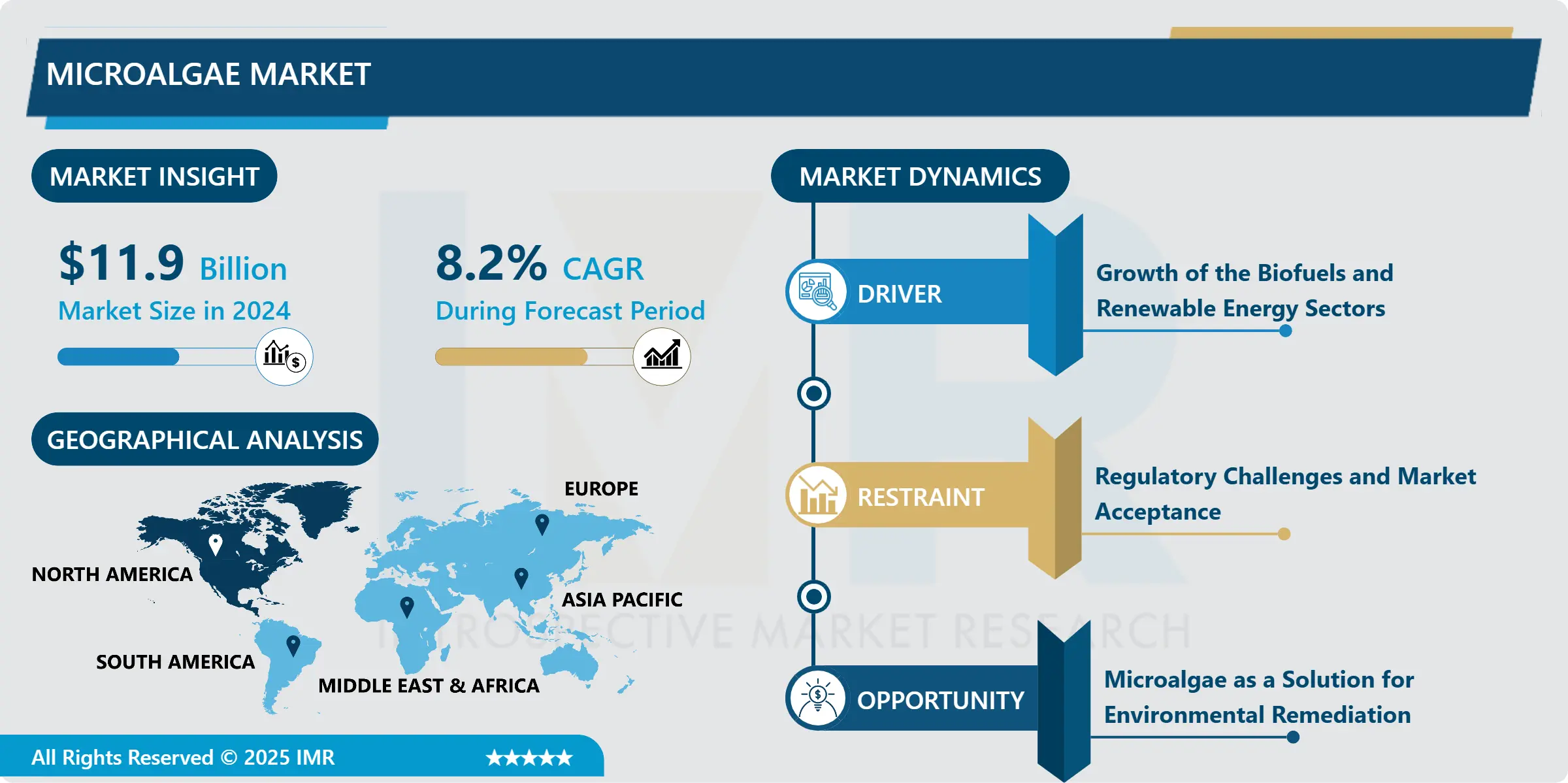
Microalgae Market Trend Analysis:
Advances in biotechnology
- This aspect shows that the microalgae market is gradually moving toward innovativeness in the extraction and the culture process. New technologies like genetic engineering and bioreactor technologies have a given impetus to the improvement of microalgae cultivation systems that can be suitable for large-scale harvesting. This is also supporting the lowering of costs associated with production and making available quality microalgae for various uses. In addition, new algae food products like algae protein powders and plant-based drinks are also being developed and accepted by consumers in the plant-base market.
- Another important trend is the emergence and increasing importance of the economically and ecologically viable concept of circular economy. Microalgae species have desirable characteristics for large scale production since they don’t need much land and water as other regular agricultural crops yet they can produce high yields. As industries and consumers demand for sustainable solutions are drawn out, microalgae production is in line with these unknown supply chain initiatives of going green.
Increasing global health concerns
- It has been estimated that the there are vast prospects of the microalgae industry especially in nutraceuticals and pharmaceuticals. As global health deteriorates through chronic diseases, these bioactive compounds in microalgae, including antioxidants, anti-inflammatory substances, and omega-3 fatty acids may be an effective method of disease prevention and treatment. New avenues for microalgae usage in novel food products and supplements for boosting the immune system as well as in pharmaceutical applications continue to be revealed by ongoing studies of their therapeutic values.
- The second of such opportunity is the potential use of microalgae in environmental clean up. Due to their photosynthetic character, microalgae can also help remove nutrients of foul water and hence partly reduce water pollution. The benefits of using microalgae are that it creates a new market for other needs in water treatment, aquaculture, and managing agricultural runoff that makes the industries more sustainable that uses water.
Microalgae Market Segment Analysis:
Microalgae Market is Segmented on the basis of Type, Application, End User, and Region.
By Type, Spirulina segment is expected to dominate the market during the forecast period
- The market for microalgae also has a number of types, however, Spirulina and Chlorella are some of the most known types of commercial nature. Spirulina is a famous protein source used to add to dietary supplements and food products, resulting from its rich protein levels. Chlorella is a type of mineralized green algas, which contains high chlorophyll and various types of vitamins. It is often used as a detoxifying and Immunomodulatory agent.
- Dunaliella, particularly with high beta-carotene station, is mostly applied in cosmetic industries due to its antioxidant activity. Aphanizomenon flos-aquae is largely used to improve mental activity and energy. Other categories from microalgae include other species used for other purposes like generation of biofuel or specific dietary needs.
By Application, Food & Beverages segment expected to held the largest share
- Microalgae have found its usage in vast number of products and services in different sectors of industry. Within the food and beverages segment, microalgia is a natural source of protein vitamins or minerals integral in the development of plant-based meals and vitamin and mineral supplements. Used in animal feed it helps in increasing the diet value of feeds especially in fish farming feed ingredients.
- Diseases-focused pharmaceutical industry considers the bioactive compounds in microalgae for developing new functional medicines and supplements. In the cosmetic and personal care sectors, microalgae is employed due to its antioxidant, wrinkle, and skin heath enhancing effects. Also, the microalgae have a large use in biofuel. Required mainly for the increasing usage of renewable energy sources bio-nutraceuticals which are also health promoting products.
Microalgae Market Regional Insights:
Asia Pacific is Expected to Dominate the Market Over the Forecast period
- The Asia Pacific region is projected to dominate the global microalgae market throughout the forecast period, driven by a combination of favorable climatic conditions, rising demand for sustainable food and feed sources, and strong government support for algae-based technologies. Countries such as China, India, Japan, and South Korea are investing heavily in research and development to harness microalgae’s potential in sectors like pharmaceuticals, nutraceuticals, biofuels, and cosmetics.
- The growing health consciousness among consumers and the rising preference for plant-based supplements are accelerating market growth. The region’s vast coastline, availability of sunlight, and low labor costs further contribute to its competitive edge in microalgae cultivation and production. Strategic collaborations between private players and academic institutions are fostering innovation and scalability in microalgae-based solutions. These factors collectively position Asia Pacific as a leader in the rapidly evolving microalgae industry.
Active Key Players in the Microalgae Market:
- AlgaeCal (Canada)
- AlgaEnergy (Spain)
- Algatech (Israel)
- Cellana (USA)
- Corbion (Netherlands)
- EID Parry (India)
- Phytotech Microalgae (USA)
- Solazyme (USA)
- Sundew (Australia)
- Yunnan Algae Industry Group (China), and Other Active Players
|
Global Microalgae Market |
|||
|
Base Year: |
2024 |
Forecast Period: |
2025-2032 |
|
Historical Data: |
2018 to 2024 |
Market Size in 2024: |
USD 12.88 Billion |
|
Forecast Period 2025-32 CAGR: |
8.30% |
Market Size in 2032: |
USD 24.37 Billion |
|
Segments Covered: |
By Type |
|
|
|
By Application |
|
||
|
By End User |
|
||
|
By Region |
|
||
|
Key Market Drivers: |
|
||
|
Key Market Restraints: |
|
||
|
Key Opportunities: |
|
||
|
Companies Covered in the report: |
|
||
Chapter 1: Introduction
1.1 Scope and Coverage
Chapter 2:Executive Summary
Chapter 3: Market Landscape
3.1 Market Dynamics
3.1.1 Drivers
3.1.2 Restraints
3.1.3 Opportunities
3.1.4 Challenges
3.2 Market Trend Analysis
3.3 PESTLE Analysis
3.4 Porter's Five Forces Analysis
3.5 Industry Value Chain Analysis
3.6 Ecosystem
3.7 Regulatory Landscape
3.8 Price Trend Analysis
3.9 Patent Analysis
3.10 Technology Evolution
3.11 Investment Pockets
3.12 Import-Export Analysis
Chapter 4: Microalgae Market by Type
4.1 Microalgae Market Snapshot and Growth Engine
4.2 Microalgae Market Overview
4.3 Spirulina
4.3.1 Introduction and Market Overview
4.3.2 Historic and Forecasted Market Size in Value USD and Volume Units (2017-2032F)
4.3.3 Key Market Trends, Growth Factors and Opportunities
4.3.4 Spirulina: Geographic Segmentation Analysis
4.4 Chlorella
4.4.1 Introduction and Market Overview
4.4.2 Historic and Forecasted Market Size in Value USD and Volume Units (2017-2032F)
4.4.3 Key Market Trends, Growth Factors and Opportunities
4.4.4 Chlorella: Geographic Segmentation Analysis
4.5 Dunaliella
4.5.1 Introduction and Market Overview
4.5.2 Historic and Forecasted Market Size in Value USD and Volume Units (2017-2032F)
4.5.3 Key Market Trends, Growth Factors and Opportunities
4.5.4 Dunaliella: Geographic Segmentation Analysis
4.6 Aphanizomenon Flos-Aquae
4.6.1 Introduction and Market Overview
4.6.2 Historic and Forecasted Market Size in Value USD and Volume Units (2017-2032F)
4.6.3 Key Market Trends, Growth Factors and Opportunities
4.6.4 Aphanizomenon Flos-Aquae: Geographic Segmentation Analysis
4.7 Others
4.7.1 Introduction and Market Overview
4.7.2 Historic and Forecasted Market Size in Value USD and Volume Units (2017-2032F)
4.7.3 Key Market Trends, Growth Factors and Opportunities
4.7.4 Others: Geographic Segmentation Analysis
Chapter 5: Microalgae Market by Application
5.1 Microalgae Market Snapshot and Growth Engine
5.2 Microalgae Market Overview
5.3 Food & Beverages
5.3.1 Introduction and Market Overview
5.3.2 Historic and Forecasted Market Size in Value USD and Volume Units (2017-2032F)
5.3.3 Key Market Trends, Growth Factors and Opportunities
5.3.4 Food & Beverages: Geographic Segmentation Analysis
5.4 Animal Feed
5.4.1 Introduction and Market Overview
5.4.2 Historic and Forecasted Market Size in Value USD and Volume Units (2017-2032F)
5.4.3 Key Market Trends, Growth Factors and Opportunities
5.4.4 Animal Feed: Geographic Segmentation Analysis
5.5 Pharmaceuticals
5.5.1 Introduction and Market Overview
5.5.2 Historic and Forecasted Market Size in Value USD and Volume Units (2017-2032F)
5.5.3 Key Market Trends, Growth Factors and Opportunities
5.5.4 Pharmaceuticals: Geographic Segmentation Analysis
5.6 Cosmetics & Personal Care
5.6.1 Introduction and Market Overview
5.6.2 Historic and Forecasted Market Size in Value USD and Volume Units (2017-2032F)
5.6.3 Key Market Trends, Growth Factors and Opportunities
5.6.4 Cosmetics & Personal Care: Geographic Segmentation Analysis
5.7 Biofuels
5.7.1 Introduction and Market Overview
5.7.2 Historic and Forecasted Market Size in Value USD and Volume Units (2017-2032F)
5.7.3 Key Market Trends, Growth Factors and Opportunities
5.7.4 Biofuels: Geographic Segmentation Analysis
5.8 Nutraceuticals
5.8.1 Introduction and Market Overview
5.8.2 Historic and Forecasted Market Size in Value USD and Volume Units (2017-2032F)
5.8.3 Key Market Trends, Growth Factors and Opportunities
5.8.4 Nutraceuticals: Geographic Segmentation Analysis
5.9 Others
5.9.1 Introduction and Market Overview
5.9.2 Historic and Forecasted Market Size in Value USD and Volume Units (2017-2032F)
5.9.3 Key Market Trends, Growth Factors and Opportunities
5.9.4 Others: Geographic Segmentation Analysis
Chapter 6: Microalgae Market by End User
6.1 Microalgae Market Snapshot and Growth Engine
6.2 Microalgae Market Overview
6.3 Industrial
6.3.1 Introduction and Market Overview
6.3.2 Historic and Forecasted Market Size in Value USD and Volume Units (2017-2032F)
6.3.3 Key Market Trends, Growth Factors and Opportunities
6.3.4 Industrial: Geographic Segmentation Analysis
6.4 Commercial
6.4.1 Introduction and Market Overview
6.4.2 Historic and Forecasted Market Size in Value USD and Volume Units (2017-2032F)
6.4.3 Key Market Trends, Growth Factors and Opportunities
6.4.4 Commercial: Geographic Segmentation Analysis
6.5 Research & Academia
6.5.1 Introduction and Market Overview
6.5.2 Historic and Forecasted Market Size in Value USD and Volume Units (2017-2032F)
6.5.3 Key Market Trends, Growth Factors and Opportunities
6.5.4 Research & Academia: Geographic Segmentation Analysis
Chapter 7: Company Profiles and Competitive Analysis
7.1 Competitive Landscape
7.1.1 Competitive Benchmarking
7.1.2 Microalgae Market Share by Manufacturer (2023)
7.1.3 Industry BCG Matrix
7.1.4 Heat Map Analysis
7.1.5 Mergers and Acquisitions
7.2 ALGAECAL (CANADA)
7.2.1 Company Overview
7.2.2 Key Executives
7.2.3 Company Snapshot
7.2.4 Role of the Company in the Market
7.2.5 Sustainability and Social Responsibility
7.2.6 Operating Business Segments
7.2.7 Product Portfolio
7.2.8 Business Performance
7.2.9 Key Strategic Moves and Recent Developments
7.2.10 SWOT Analysis
7.3 CELLANA (USA)
7.4 ALGAENERGY (SPAIN)
7.5 EID PARRY (INDIA)
7.6 CORBION (NETHERLANDS)
7.7 ALGATECH (ISRAEL)
7.8 PHYTOTECH MICROALGAE (USA)
7.9 SUNDEW (AUSTRALIA)
7.10 SOLAZYME (USA)
7.11 YUNNAN ALGAE INDUSTRY GROUP (CHINA)
7.12 OTHER ACTIVE PLAYERS
Chapter 8: Global Microalgae Market By Region
8.1 Overview
8.2. North America Microalgae Market
8.2.1 Key Market Trends, Growth Factors and Opportunities
8.2.2 Top Key Companies
8.2.3 Historic and Forecasted Market Size by Segments
8.2.4 Historic and Forecasted Market Size By Type
8.2.4.1 Spirulina
8.2.4.2 Chlorella
8.2.4.3 Dunaliella
8.2.4.4 Aphanizomenon Flos-Aquae
8.2.4.5 Others
8.2.5 Historic and Forecasted Market Size By Application
8.2.5.1 Food & Beverages
8.2.5.2 Animal Feed
8.2.5.3 Pharmaceuticals
8.2.5.4 Cosmetics & Personal Care
8.2.5.5 Biofuels
8.2.5.6 Nutraceuticals
8.2.5.7 Others
8.2.6 Historic and Forecasted Market Size By End User
8.2.6.1 Industrial
8.2.6.2 Commercial
8.2.6.3 Research & Academia
8.2.7 Historic and Forecast Market Size by Country
8.2.7.1 US
8.2.7.2 Canada
8.2.7.3 Mexico
8.3. Eastern Europe Microalgae Market
8.3.1 Key Market Trends, Growth Factors and Opportunities
8.3.2 Top Key Companies
8.3.3 Historic and Forecasted Market Size by Segments
8.3.4 Historic and Forecasted Market Size By Type
8.3.4.1 Spirulina
8.3.4.2 Chlorella
8.3.4.3 Dunaliella
8.3.4.4 Aphanizomenon Flos-Aquae
8.3.4.5 Others
8.3.5 Historic and Forecasted Market Size By Application
8.3.5.1 Food & Beverages
8.3.5.2 Animal Feed
8.3.5.3 Pharmaceuticals
8.3.5.4 Cosmetics & Personal Care
8.3.5.5 Biofuels
8.3.5.6 Nutraceuticals
8.3.5.7 Others
8.3.6 Historic and Forecasted Market Size By End User
8.3.6.1 Industrial
8.3.6.2 Commercial
8.3.6.3 Research & Academia
8.3.7 Historic and Forecast Market Size by Country
8.3.7.1 Russia
8.3.7.2 Bulgaria
8.3.7.3 The Czech Republic
8.3.7.4 Hungary
8.3.7.5 Poland
8.3.7.6 Romania
8.3.7.7 Rest of Eastern Europe
8.4. Western Europe Microalgae Market
8.4.1 Key Market Trends, Growth Factors and Opportunities
8.4.2 Top Key Companies
8.4.3 Historic and Forecasted Market Size by Segments
8.4.4 Historic and Forecasted Market Size By Type
8.4.4.1 Spirulina
8.4.4.2 Chlorella
8.4.4.3 Dunaliella
8.4.4.4 Aphanizomenon Flos-Aquae
8.4.4.5 Others
8.4.5 Historic and Forecasted Market Size By Application
8.4.5.1 Food & Beverages
8.4.5.2 Animal Feed
8.4.5.3 Pharmaceuticals
8.4.5.4 Cosmetics & Personal Care
8.4.5.5 Biofuels
8.4.5.6 Nutraceuticals
8.4.5.7 Others
8.4.6 Historic and Forecasted Market Size By End User
8.4.6.1 Industrial
8.4.6.2 Commercial
8.4.6.3 Research & Academia
8.4.7 Historic and Forecast Market Size by Country
8.4.7.1 Germany
8.4.7.2 UK
8.4.7.3 France
8.4.7.4 The Netherlands
8.4.7.5 Italy
8.4.7.6 Spain
8.4.7.7 Rest of Western Europe
8.5. Asia Pacific Microalgae Market
8.5.1 Key Market Trends, Growth Factors and Opportunities
8.5.2 Top Key Companies
8.5.3 Historic and Forecasted Market Size by Segments
8.5.4 Historic and Forecasted Market Size By Type
8.5.4.1 Spirulina
8.5.4.2 Chlorella
8.5.4.3 Dunaliella
8.5.4.4 Aphanizomenon Flos-Aquae
8.5.4.5 Others
8.5.5 Historic and Forecasted Market Size By Application
8.5.5.1 Food & Beverages
8.5.5.2 Animal Feed
8.5.5.3 Pharmaceuticals
8.5.5.4 Cosmetics & Personal Care
8.5.5.5 Biofuels
8.5.5.6 Nutraceuticals
8.5.5.7 Others
8.5.6 Historic and Forecasted Market Size By End User
8.5.6.1 Industrial
8.5.6.2 Commercial
8.5.6.3 Research & Academia
8.5.7 Historic and Forecast Market Size by Country
8.5.7.1 China
8.5.7.2 India
8.5.7.3 Japan
8.5.7.4 South Korea
8.5.7.5 Malaysia
8.5.7.6 Thailand
8.5.7.7 Vietnam
8.5.7.8 The Philippines
8.5.7.9 Australia
8.5.7.10 New Zealand
8.5.7.11 Rest of APAC
8.6. Middle East & Africa Microalgae Market
8.6.1 Key Market Trends, Growth Factors and Opportunities
8.6.2 Top Key Companies
8.6.3 Historic and Forecasted Market Size by Segments
8.6.4 Historic and Forecasted Market Size By Type
8.6.4.1 Spirulina
8.6.4.2 Chlorella
8.6.4.3 Dunaliella
8.6.4.4 Aphanizomenon Flos-Aquae
8.6.4.5 Others
8.6.5 Historic and Forecasted Market Size By Application
8.6.5.1 Food & Beverages
8.6.5.2 Animal Feed
8.6.5.3 Pharmaceuticals
8.6.5.4 Cosmetics & Personal Care
8.6.5.5 Biofuels
8.6.5.6 Nutraceuticals
8.6.5.7 Others
8.6.6 Historic and Forecasted Market Size By End User
8.6.6.1 Industrial
8.6.6.2 Commercial
8.6.6.3 Research & Academia
8.6.7 Historic and Forecast Market Size by Country
8.6.7.1 Turkiye
8.6.7.2 Bahrain
8.6.7.3 Kuwait
8.6.7.4 Saudi Arabia
8.6.7.5 Qatar
8.6.7.6 UAE
8.6.7.7 Israel
8.6.7.8 South Africa
8.7. South America Microalgae Market
8.7.1 Key Market Trends, Growth Factors and Opportunities
8.7.2 Top Key Companies
8.7.3 Historic and Forecasted Market Size by Segments
8.7.4 Historic and Forecasted Market Size By Type
8.7.4.1 Spirulina
8.7.4.2 Chlorella
8.7.4.3 Dunaliella
8.7.4.4 Aphanizomenon Flos-Aquae
8.7.4.5 Others
8.7.5 Historic and Forecasted Market Size By Application
8.7.5.1 Food & Beverages
8.7.5.2 Animal Feed
8.7.5.3 Pharmaceuticals
8.7.5.4 Cosmetics & Personal Care
8.7.5.5 Biofuels
8.7.5.6 Nutraceuticals
8.7.5.7 Others
8.7.6 Historic and Forecasted Market Size By End User
8.7.6.1 Industrial
8.7.6.2 Commercial
8.7.6.3 Research & Academia
8.7.7 Historic and Forecast Market Size by Country
8.7.7.1 Brazil
8.7.7.2 Argentina
8.7.7.3 Rest of SA
Chapter 9 Analyst Viewpoint and Conclusion
9.1 Recommendations and Concluding Analysis
9.2 Potential Market Strategies
Chapter 10 Research Methodology
10.1 Research Process
10.2 Primary Research
10.3 Secondary Research
|
Global Microalgae Market |
|||
|
Base Year: |
2024 |
Forecast Period: |
2025-2032 |
|
Historical Data: |
2018 to 2024 |
Market Size in 2024: |
USD 12.88 Billion |
|
Forecast Period 2025-32 CAGR: |
8.30% |
Market Size in 2032: |
USD 24.37 Billion |
|
Segments Covered: |
By Type |
|
|
|
By Application |
|
||
|
By End User |
|
||
|
By Region |
|
||
|
Key Market Drivers: |
|
||
|
Key Market Restraints: |
|
||
|
Key Opportunities: |
|
||
|
Companies Covered in the report: |
|
||


