




Antiparasitic Drugs Market Synopsis:
Antiparasitic Drugs Market Size Was Valued at USD 22.7 Billion in 2023, and is Projected to Reach USD 37.38 Billion by 2032, Growing at a CAGR of 5.70% From 2024-2032.
Antiparasitic drugs is a classification of drugs intended for the management of parasitic diseases from protozoan, helminthic, and ectoparasites. These drugs either eliminate the parasites or prevent their multiplication – and so control and treat illnesses like malaria, schistosomiasis and giardiasis. Dep Sky A1 There is a broad drug use in human and veterinary medicine for parasitic infections with a particular emphasis on neglected tropical diseases, travel medicine and veterinary parasitology.
Global antiparasitic drugs market has been on the rise, mainly it owes to the enhancing knowledge about the parasitic disorders and the increasing incidences of diseases containing parasitic organisms. The market is established by the growing wheels of globalization whereby persons can easily transport different diseases to other areas. Current challenges of malaria, one of the most widespread parasitic diseases in the World, are considerable, especially in SSA. Measures to control parasitic diseases have also entailed the spending of resources on research and development (R&D) of better and cheaper antiparasitic agents.
The consumption of parasitic medications is not limited to humans alone, but also in veterinarian where the medication for the livestock and the pets is becoming popular. The concern caused by the health of pet animals especially dogs and cats have fostered the use of veterinary anti parasitic drugs in the market. Further, with increased understanding of zoonotic diseases, there is growing concern for prevention of parasitic diseases. The prospects for the development of new drugs, as well as the treatment of various parasitic diseases, is very promising, but still many needs a radical increase in intervention effectiveness as well as accessibility, it is especially acute in developing countries, where the burden of parasitic diseases is highest.
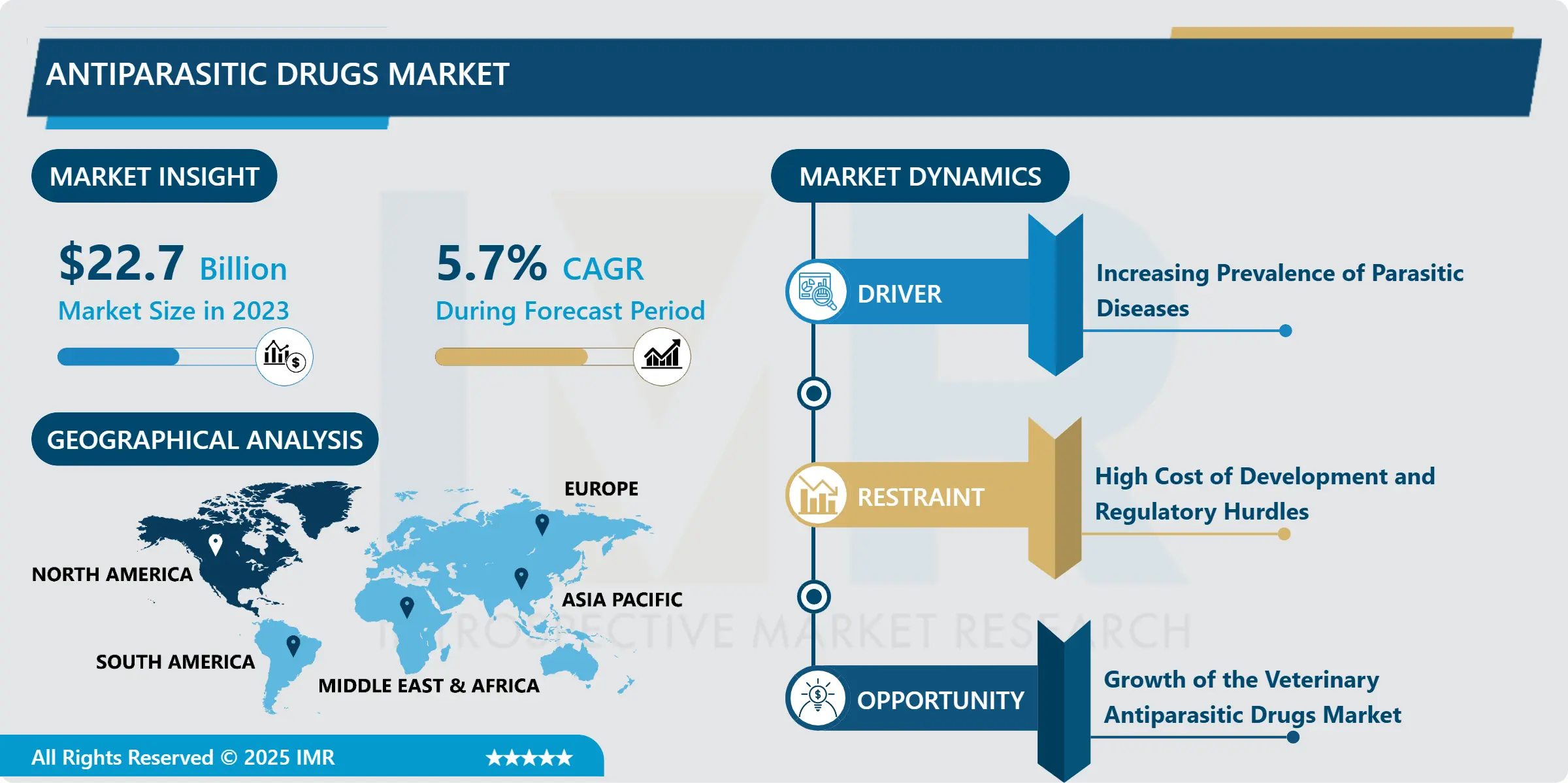
Antiparasitic Drugs Market Trend Analysis:
Growing Focus on Antiparasitic Drugs for Neglected Tropical Diseases
-
Main trends in antiparasitic drugs are attributed to the increasing attention towards the treatment of neglected tropical diseases. These diseases are transmitted by parasites lymphatic filariasis onchocerciasis schistosomiasis affect mostly the poor in the tropical and sub tropical areas. These diseases are very demanding on health systems but they have been overlooked in most international frameworks. But there has been a recent awareness of these diseases and thus an advancement in research and development of these treatments. Such vesofsus like the WHO roadmap for Neglected Tropical Diseases are now helping drive NTD control efforts, especially in low income settings.
- International governmental and non-governmental agencies and private pharmaceutical firms are taking collective efforts to address these issues. Their combined efforts put emphasis on the need to provide cheap antiparasitic drugs to people who require them most especially in those regions that cannot easily access the drugs. This collective action has been propelling to promising changes in the drug availability and treatment opportunities. This trend is predicted to become more significant in the future based on the growth of innovation in technological systems, The funding from international organizations and the improvement of cooperation between the public and the private sectors on the provision of antiparasitic treatments thus boosting the overall standard of global health.
Rising Demand for Veterinary Antiparasitic Drugs
-
New directions in the antiparasitic drugs market are associated with the growing need for veterinary antiparasitic. Thus, the pet population has been increasing all across the globe, especially in developed countries; therefore, the requirement of good treatment for parasitic diseases in house animals has risen too. A growing concern about the negative effects of parasites on the general health of pets have enhanced the consumption of preventive as well as therapeutic antiparasitic drugs. This is due to a rising prevalence and ownership of pets such as dogs and cats in emerging markets which due to increased disposable incomes are looking for enhanced pet health care products.
- The other substantial segment for the use of veterinary antiparasitic drugs is the livestock segment. Infection with parasites is found to impose heavy economic burden in terms of production, health of animals and costs of treatment. Farmers are therefore are in the lookout for efficient control measure of these invasions since healthy stock is central to food security as well as source of revenue. The need for better quality and disease-free meat and allied products is also driving the use of veterinary antiparasitic drugs, as more and new economies emerge as major manufacturers and consumers of livestock products. This change can be attributed to the improving pet healthcare incidences, the agricultural market, and thus the need to unlock this market’s future.
Antiparasitic Drugs Market Segment Analysis:
Antiparasitic Drugs Market is Segmented on the basis of Drug Type, Application, End User, and Region.
By Type, antimalarial drugs segment is expected to dominate the market during the forecast period
-
This antiparasitic drugs market is mainly categorized based on the drugs type with major divisions of antimalarial, anthelmintic drugs, antiprotozoal, and ant ectoparasitic drugs. They are employed in treating as well as prophylaxis of malaria, which is one of the most rampant parasitic diseases in the world. They are too crucial in regions with high malaria prevalence and most especially within the African continent. They are used in treating roundworms, flatworms and hookworms common in both human and animals anthelmintic refer to drugs that given to eliminate parasites. These drugs play a big role in the treatment of diseases such as ascariasis, schistosomiasis and filariasis.
- Antiprotozoal drugs are meant for treatment for protozoal infections such as giardiasis, amoebiasis and leishmaniasis. These drugs are essential in the treatment of diseases spread through infected water and foods or by vectors. Lastly, ant ectoparasitic drugs are used in treating external parasites for instance; the lice, fleas, and ticks. These are mostly found in treatment of animals domestically and in farms for treatment of diseases affecting livestock and in controlling parasites in such animals. These drug types are important in handling the different kinds of parasitic ailments that are of human and animal concern in the world.
By Application, human health segment expected to held the largest share
-
Based on the application, the antiparasitic drugs market is divided between human health and veterinary health section, both of which are important to address parasitology. Bucking the trend of other destinations, human health continues to be the biggest market for end-products of the industry due to constantly prevalent parasitic diseases such as malaria, giardiasis, leishmaniasis, and schistosomiasis affecting millions of populations across developing countries. With the global trend in morbidity showing an upward trend in NTDs, there has been need to enrol robust antiparasitic drugs to eradicate these fatal diseases. With a growing global population exploring the possibilities of travelling and migrating from one country to another, cases of parasitic infection spilling over from one country to another have also raised concern on new human health uses especially in the affected areas.
- On the other hand, veterinary health is another strongly growing segment due to grows demand of antiparasitic for dogs, cats, livestock and other pets. Bach is also threatened by rising pet ownership in developed economies and changing consciousness about animal well being in pumping demand for treatment against external parasites, including fleas, ticks, and lice, as well as internal parasites, including worms. Furthermore, infestation with parasites causes substantial effects in the productivity of livestock thus the importance of veterinary antiparasitic agents. The increase in the availability of veterinary services in developing countries and an increased concern for food safety is also serving as drivers for increased use of veterinary antiparasitic treatments.
Antiparasitic Drugs Market Regional Insights:
North America is Expected to Dominate the Market Over the Forecast period
-
North America is expected to continue its reign in the global demand for antiparasitic drugs. This dominance is partially due to the fact that the region possesses the highest standard of healthcare, has a well-developed pharmaceutical sector and the population is more aware of parasitic diseases. The U.S., particularly, has been pivotal in developing this market because of its powerful research & development that has contributed to the development of new antiparasitic therapies. Moreover, increased pet care in the country, together with new public health activities related to NTDs, supports the need for antiparasitic treatments.
- The hike in the international tourists visiting North America also plays a role in dominating the market since such tourists might need antiparasitic drugs to prevent parasitic illnesses they might encounter in parasite-endemic countries. In addition, the increasing usage of veterinary antiparasitic drugs due to the increased population of pets and enhanced awareness among the consumer on the health needs of their pets, have emerged as growth stimulants of the markets. Although European and Asia-Pacific countries show growth in the consumption of antiparasitic drugs, the rich North American healthcare, a strong pharmaceutical complex, and diverse demand in both human and veterinary medicine will keep the north American countries in the leader’s position within the estimated 2023.
Active Key Players in the Antiparasitic Drugs Market:
-
AbbVie (USA)
- Bayer AG (Germany)
- Bristol-Myers Squibb (USA)
- Cipla Ltd. (India)
- Covetrus (USA)
- Eli Lilly and Co. (USA)
- GlaxoSmithKline Plc (UK)
- Merck & Co., Inc. (USA)
- Mylan NV (USA)
- Novartis AG (Switzerland)
- Pfizer Inc. (USA)
- Sanofi S.A. (France)
- Sumitomo Chemical Co., Ltd. (Japan)
- Teva Pharmaceutical Industries Ltd. (Israel)
- Zoetis Inc. (USA), and Other Active Players
|
Global Antiparasitic Drugs Market |
|||
|
Base Year: |
2023 |
Forecast Period: |
2024-2032 |
|
Historical Data: |
2017 to 2023 |
Market Size in 2023: |
USD 22.7 Billion |
|
Forecast Period 2024-32 CAGR: |
5.70% |
Market Size in 2032: |
USD 37.38 Billion |
|
Segments Covered: |
By Drug Type |
|
|
|
By Application |
|
||
|
By End User |
|
||
|
By Region |
|
||
|
Key Market Drivers: |
|
||
|
Key Market Restraints: |
|
||
|
Key Opportunities: |
|
||
|
Companies Covered in the report: |
|
||
Chapter 1: Introduction
1.1 Scope and Coverage
Chapter 2:Executive Summary
Chapter 3: Market Landscape
3.1 Market Dynamics
3.1.1 Drivers
3.1.2 Restraints
3.1.3 Opportunities
3.1.4 Challenges
3.2 Market Trend Analysis
3.3 PESTLE Analysis
3.4 Porter's Five Forces Analysis
3.5 Industry Value Chain Analysis
3.6 Ecosystem
3.7 Regulatory Landscape
3.8 Price Trend Analysis
3.9 Patent Analysis
3.10 Technology Evolution
3.11 Investment Pockets
3.12 Import-Export Analysis
Chapter 4: Antiparasitic Drugs Market by Drug Type
4.1 Antiparasitic Drugs Market Snapshot and Growth Engine
4.2 Antiparasitic Drugs Market Overview
4.3 Antimalarial Drugs
4.3.1 Introduction and Market Overview
4.3.2 Historic and Forecasted Market Size in Value USD and Volume Units (2017-2032F)
4.3.3 Key Market Trends, Growth Factors and Opportunities
4.3.4 Antimalarial Drugs: Geographic Segmentation Analysis
4.4 Anthelmintic Drugs
4.4.1 Introduction and Market Overview
4.4.2 Historic and Forecasted Market Size in Value USD and Volume Units (2017-2032F)
4.4.3 Key Market Trends, Growth Factors and Opportunities
4.4.4 Anthelmintic Drugs: Geographic Segmentation Analysis
4.5 Antiprotozoal Drugs
4.5.1 Introduction and Market Overview
4.5.2 Historic and Forecasted Market Size in Value USD and Volume Units (2017-2032F)
4.5.3 Key Market Trends, Growth Factors and Opportunities
4.5.4 Antiprotozoal Drugs: Geographic Segmentation Analysis
4.6 Antiectoparasitic Drugs
4.6.1 Introduction and Market Overview
4.6.2 Historic and Forecasted Market Size in Value USD and Volume Units (2017-2032F)
4.6.3 Key Market Trends, Growth Factors and Opportunities
4.6.4 Antiectoparasitic Drugs: Geographic Segmentation Analysis
Chapter 5: Antiparasitic Drugs Market by Application
5.1 Antiparasitic Drugs Market Snapshot and Growth Engine
5.2 Antiparasitic Drugs Market Overview
5.3 (Human Health
5.3.1 Introduction and Market Overview
5.3.2 Historic and Forecasted Market Size in Value USD and Volume Units (2017-2032F)
5.3.3 Key Market Trends, Growth Factors and Opportunities
5.3.4 (Human Health: Geographic Segmentation Analysis
5.4 Veterinary Health)
5.4.1 Introduction and Market Overview
5.4.2 Historic and Forecasted Market Size in Value USD and Volume Units (2017-2032F)
5.4.3 Key Market Trends, Growth Factors and Opportunities
5.4.4 Veterinary Health): Geographic Segmentation Analysis
Chapter 6: Antiparasitic Drugs Market by End User
6.1 Antiparasitic Drugs Market Snapshot and Growth Engine
6.2 Antiparasitic Drugs Market Overview
6.3 Hospitals & Clinics
6.3.1 Introduction and Market Overview
6.3.2 Historic and Forecasted Market Size in Value USD and Volume Units (2017-2032F)
6.3.3 Key Market Trends, Growth Factors and Opportunities
6.3.4 Hospitals & Clinics: Geographic Segmentation Analysis
6.4 Homecare Settings
6.4.1 Introduction and Market Overview
6.4.2 Historic and Forecasted Market Size in Value USD and Volume Units (2017-2032F)
6.4.3 Key Market Trends, Growth Factors and Opportunities
6.4.4 Homecare Settings: Geographic Segmentation Analysis
6.5 Veterinary Clinics
6.5.1 Introduction and Market Overview
6.5.2 Historic and Forecasted Market Size in Value USD and Volume Units (2017-2032F)
6.5.3 Key Market Trends, Growth Factors and Opportunities
6.5.4 Veterinary Clinics: Geographic Segmentation Analysis
Chapter 7: Company Profiles and Competitive Analysis
7.1 Competitive Landscape
7.1.1 Competitive Benchmarking
7.1.2 Antiparasitic Drugs Market Share by Manufacturer (2023)
7.1.3 Industry BCG Matrix
7.1.4 Heat Map Analysis
7.1.5 Mergers and Acquisitions
7.2 ABBVIE
7.2.1 Company Overview
7.2.2 Key Executives
7.2.3 Company Snapshot
7.2.4 Role of the Company in the Market
7.2.5 Sustainability and Social Responsibility
7.2.6 Operating Business Segments
7.2.7 Product Portfolio
7.2.8 Business Performance
7.2.9 Key Strategic Moves and Recent Developments
7.2.10 SWOT Analysis
7.3 BAYER AG
7.4 BRISTOL-MYERS SQUIBB
7.5 CIPLA LTD.
7.6 COVETRUS
7.7 OTHER ACTIVE PLAYERS
Chapter 8: Global Antiparasitic Drugs Market By Region
8.1 Overview
8.2. North America Antiparasitic Drugs Market
8.2.1 Key Market Trends, Growth Factors and Opportunities
8.2.2 Top Key Companies
8.2.3 Historic and Forecasted Market Size by Segments
8.2.4 Historic and Forecasted Market Size By Drug Type
8.2.4.1 Antimalarial Drugs
8.2.4.2 Anthelmintic Drugs
8.2.4.3 Antiprotozoal Drugs
8.2.4.4 Antiectoparasitic Drugs
8.2.5 Historic and Forecasted Market Size By Application
8.2.5.1 (Human Health
8.2.5.2 Veterinary Health)
8.2.6 Historic and Forecasted Market Size By End User
8.2.6.1 Hospitals & Clinics
8.2.6.2 Homecare Settings
8.2.6.3 Veterinary Clinics
8.2.7 Historic and Forecast Market Size by Country
8.2.7.1 US
8.2.7.2 Canada
8.2.7.3 Mexico
8.3. Eastern Europe Antiparasitic Drugs Market
8.3.1 Key Market Trends, Growth Factors and Opportunities
8.3.2 Top Key Companies
8.3.3 Historic and Forecasted Market Size by Segments
8.3.4 Historic and Forecasted Market Size By Drug Type
8.3.4.1 Antimalarial Drugs
8.3.4.2 Anthelmintic Drugs
8.3.4.3 Antiprotozoal Drugs
8.3.4.4 Antiectoparasitic Drugs
8.3.5 Historic and Forecasted Market Size By Application
8.3.5.1 (Human Health
8.3.5.2 Veterinary Health)
8.3.6 Historic and Forecasted Market Size By End User
8.3.6.1 Hospitals & Clinics
8.3.6.2 Homecare Settings
8.3.6.3 Veterinary Clinics
8.3.7 Historic and Forecast Market Size by Country
8.3.7.1 Russia
8.3.7.2 Bulgaria
8.3.7.3 The Czech Republic
8.3.7.4 Hungary
8.3.7.5 Poland
8.3.7.6 Romania
8.3.7.7 Rest of Eastern Europe
8.4. Western Europe Antiparasitic Drugs Market
8.4.1 Key Market Trends, Growth Factors and Opportunities
8.4.2 Top Key Companies
8.4.3 Historic and Forecasted Market Size by Segments
8.4.4 Historic and Forecasted Market Size By Drug Type
8.4.4.1 Antimalarial Drugs
8.4.4.2 Anthelmintic Drugs
8.4.4.3 Antiprotozoal Drugs
8.4.4.4 Antiectoparasitic Drugs
8.4.5 Historic and Forecasted Market Size By Application
8.4.5.1 (Human Health
8.4.5.2 Veterinary Health)
8.4.6 Historic and Forecasted Market Size By End User
8.4.6.1 Hospitals & Clinics
8.4.6.2 Homecare Settings
8.4.6.3 Veterinary Clinics
8.4.7 Historic and Forecast Market Size by Country
8.4.7.1 Germany
8.4.7.2 UK
8.4.7.3 France
8.4.7.4 The Netherlands
8.4.7.5 Italy
8.4.7.6 Spain
8.4.7.7 Rest of Western Europe
8.5. Asia Pacific Antiparasitic Drugs Market
8.5.1 Key Market Trends, Growth Factors and Opportunities
8.5.2 Top Key Companies
8.5.3 Historic and Forecasted Market Size by Segments
8.5.4 Historic and Forecasted Market Size By Drug Type
8.5.4.1 Antimalarial Drugs
8.5.4.2 Anthelmintic Drugs
8.5.4.3 Antiprotozoal Drugs
8.5.4.4 Antiectoparasitic Drugs
8.5.5 Historic and Forecasted Market Size By Application
8.5.5.1 (Human Health
8.5.5.2 Veterinary Health)
8.5.6 Historic and Forecasted Market Size By End User
8.5.6.1 Hospitals & Clinics
8.5.6.2 Homecare Settings
8.5.6.3 Veterinary Clinics
8.5.7 Historic and Forecast Market Size by Country
8.5.7.1 China
8.5.7.2 India
8.5.7.3 Japan
8.5.7.4 South Korea
8.5.7.5 Malaysia
8.5.7.6 Thailand
8.5.7.7 Vietnam
8.5.7.8 The Philippines
8.5.7.9 Australia
8.5.7.10 New Zealand
8.5.7.11 Rest of APAC
8.6. Middle East & Africa Antiparasitic Drugs Market
8.6.1 Key Market Trends, Growth Factors and Opportunities
8.6.2 Top Key Companies
8.6.3 Historic and Forecasted Market Size by Segments
8.6.4 Historic and Forecasted Market Size By Drug Type
8.6.4.1 Antimalarial Drugs
8.6.4.2 Anthelmintic Drugs
8.6.4.3 Antiprotozoal Drugs
8.6.4.4 Antiectoparasitic Drugs
8.6.5 Historic and Forecasted Market Size By Application
8.6.5.1 (Human Health
8.6.5.2 Veterinary Health)
8.6.6 Historic and Forecasted Market Size By End User
8.6.6.1 Hospitals & Clinics
8.6.6.2 Homecare Settings
8.6.6.3 Veterinary Clinics
8.6.7 Historic and Forecast Market Size by Country
8.6.7.1 Turkiye
8.6.7.2 Bahrain
8.6.7.3 Kuwait
8.6.7.4 Saudi Arabia
8.6.7.5 Qatar
8.6.7.6 UAE
8.6.7.7 Israel
8.6.7.8 South Africa
8.7. South America Antiparasitic Drugs Market
8.7.1 Key Market Trends, Growth Factors and Opportunities
8.7.2 Top Key Companies
8.7.3 Historic and Forecasted Market Size by Segments
8.7.4 Historic and Forecasted Market Size By Drug Type
8.7.4.1 Antimalarial Drugs
8.7.4.2 Anthelmintic Drugs
8.7.4.3 Antiprotozoal Drugs
8.7.4.4 Antiectoparasitic Drugs
8.7.5 Historic and Forecasted Market Size By Application
8.7.5.1 (Human Health
8.7.5.2 Veterinary Health)
8.7.6 Historic and Forecasted Market Size By End User
8.7.6.1 Hospitals & Clinics
8.7.6.2 Homecare Settings
8.7.6.3 Veterinary Clinics
8.7.7 Historic and Forecast Market Size by Country
8.7.7.1 Brazil
8.7.7.2 Argentina
8.7.7.3 Rest of SA
Chapter 9 Analyst Viewpoint and Conclusion
9.1 Recommendations and Concluding Analysis
9.2 Potential Market Strategies
Chapter 10 Research Methodology
10.1 Research Process
10.2 Primary Research
10.3 Secondary Research
|
Global Antiparasitic Drugs Market |
|||
|
Base Year: |
2023 |
Forecast Period: |
2024-2032 |
|
Historical Data: |
2017 to 2023 |
Market Size in 2023: |
USD 22.7 Billion |
|
Forecast Period 2024-32 CAGR: |
5.70% |
Market Size in 2032: |
USD 37.38 Billion |
|
Segments Covered: |
By Drug Type |
|
|
|
By Application |
|
||
|
By End User |
|
||
|
By Region |
|
||
|
Key Market Drivers: |
|
||
|
Key Market Restraints: |
|
||
|
Key Opportunities: |
|
||
|
Companies Covered in the report: |
|
||


