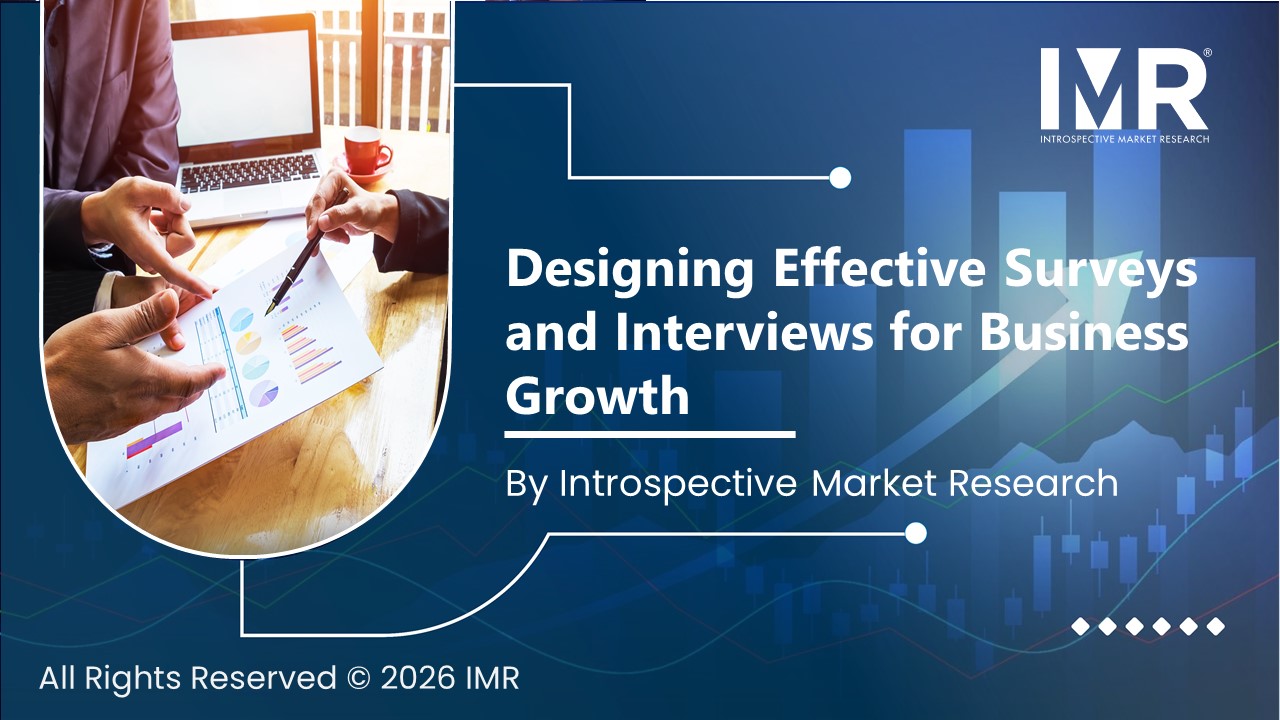
In an increasingly data-driven economy, organizations depend on reliable insights to guide strategy and innovation. Designing Effective Surveys and Interviews for Business Growth enables companies to capture accurate customer feedback, reduce uncertainty, and identify high-value opportunities. However, poorly structured questions or biased sampling can distort findings and mislead decision makers. A disciplined approach to research design ensures clarity, consistency, and actionable outcomes across markets and segments.
Why Survey and Interview Design Matters
Effective design aligns research objectives with business goals, ensuring every question serves a purpose. Designing Effective Surveys and Interviews for Business Growth helps organizations uncover drivers of demand, measure satisfaction, and prioritize investments. Clear logic flows, neutral wording, and appropriate scales improve response quality while reducing fatigue. When executed rigorously, insights translate into confident decisions and measurable performance gains.
A Practical Framework for Designing Instruments
A structured framework streamlines Designing Effective Surveys and Interviews for Business Growth across functions and geographies. Begin by defining objectives and hypotheses, then map constructs to measurable variables. Select methods such as online surveys, in-depth interviews, or mixed modes based on audience and context. Pilot test instruments to validate comprehension and timing, and refine before full deployment.
Question Design and Structure
Use simple, specific language and avoid leading or double-barreled questions. Sequence items from general to specific, grouping related topics to maintain coherence. Balance open and closed formats to capture depth and comparability. Consistent scales enable benchmarking across waves and segments.
Sampling Strategy and Fieldwork Execution
Robust sampling ensures representativeness and statistical confidence. Define the target population, choose probability or nonprobability approaches, and set quotas where needed. Monitor fieldwork quality through validation checks, interviewer training, and real time dashboards to minimize bias and nonresponse errors.
Best Practices for High Quality Insights
- Align each question with a decision or metric.
- Keep surveys concise to improve completion rates and data quality.
- Use screening and routing to target relevant respondents.
- Incorporate pretests and cognitive interviews to detect ambiguity.
- Apply data cleaning, weighting, and validation before analysis.
- Protect privacy and comply with applicable regulations.
Turning Insights into Growth Actions
Insights only create value when translated into action. Synthesize findings into clear narratives, quantify impact, and prioritize initiatives using feasibility and return criteria. Integrate results with analytics and operational data to inform pricing, product development, and customer experience strategies. Establish feedback loops to track outcomes and continuously improve research programs.
Technology and Tools for Modern Research
Modern platforms enhance Designing Effective Surveys and Interviews for Business Growth by automating distribution, sampling, and analytics. Use survey software for logic branching and real-time dashboards, and interview tools for recording, transcription, and coding. Integrate with CRM and data warehouses to unify customer views. Apply AI-assisted text analysis to extract themes, sentiment, and intent, improving speed and consistency while maintaining human oversight for quality assurance. Ensure security controls, role-based access, and audit trails to protect sensitive data and support governance standards across all deployments.
In conclusion, Designing Effective Surveys and Interviews for Business Growth is a strategic capability that underpins evidence-based decision-making. By combining rigorous frameworks, disciplined execution, and ethical data practices, organizations can generate trustworthy insights and sustain competitive advantage. Consistent application of these principles improves data quality, accelerates learning, and enhances growth outcomes across markets. Contact us for expert insights and tailored research solutions that drive measurable business impact. Furthermore, establish governance cadences with stakeholders to review insights, align priorities, and fund initiatives that scale proven opportunities effectively across regions