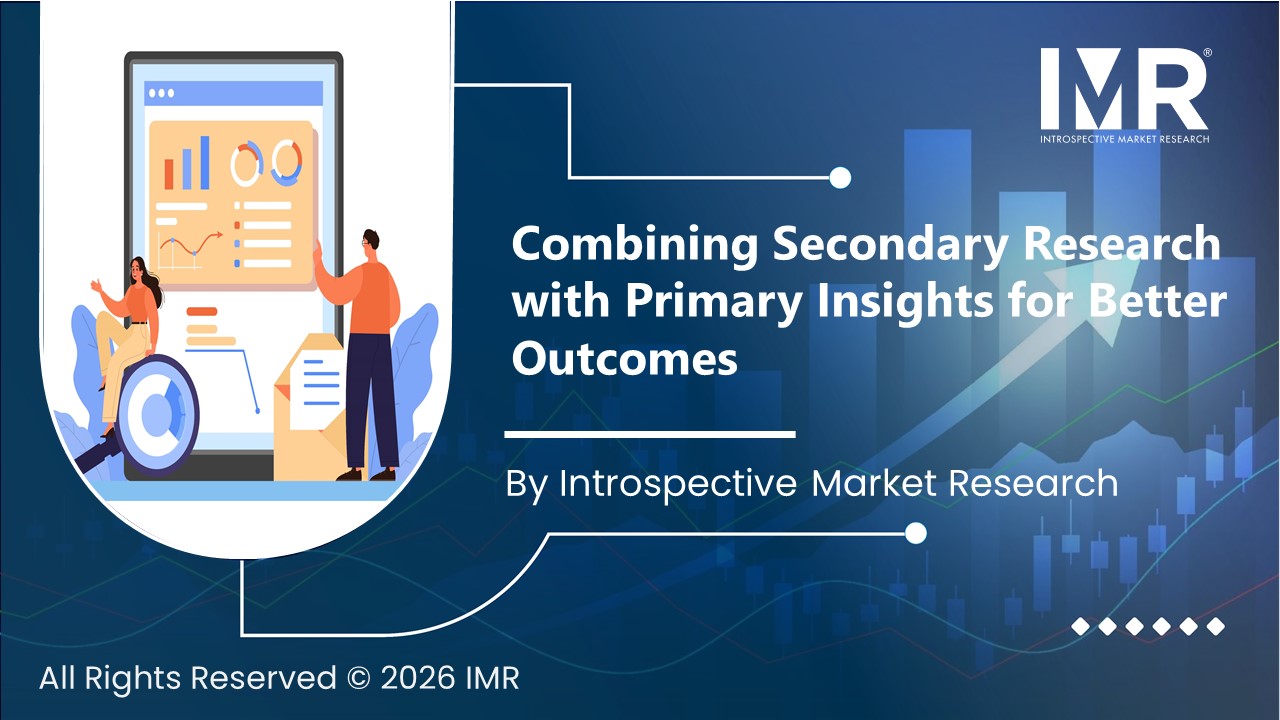
In a rapidly evolving business environment, organizations must rely on comprehensive data strategies to stay competitive. Combining Secondary Research with Primary Insights for Better Outcomes enables firms to balance broad market understanding with real-world validation. While secondary research offers accessible, cost-effective information, primary insights provide depth and specificity. Integrating both approaches enhances accuracy, reduces risk, and improves decision-making. Consulting firms increasingly adopt this hybrid methodology to deliver actionable intelligence, identify growth opportunities, and align strategies with dynamic market conditions. A structured approach to combining data sources ensures reliable outcomes and sustained competitive advantage.
The Strategic Value of Integrated Research
Combining Secondary Research with Primary Insights for Better Outcomes creates a comprehensive foundation for strategic analysis. Secondary data, including industry reports, competitor filings, and market statistics, provides macro-level insights. Primary research, such as interviews, surveys, and field observations, adds context and validates assumptions. When used together, these methods reduce information gaps and improve reliability. Organizations can benchmark performance, understand customer behavior, and anticipate market trends more effectively. This integrated approach supports evidence-based decision-making and strengthens long-term planning.
Key Components of Effective Integration
Leveraging Secondary Data
Effective integration begins with strong secondary research. Public databases, industry publications, and financial disclosures offer valuable benchmarks and trend analysis. These sources help organizations understand competitive positioning and market dynamics. However, relying solely on secondary data may yield outdated or overly general insights. Therefore, it should serve as a baseline for further validation through primary methods.
Generating Primary Insights
Primary research complements secondary findings by capturing real-time, targeted information. Surveys, interviews, and focus groups provide direct feedback from customers, stakeholders, and industry experts. This qualitative and quantitative data refines assumptions derived from secondary sources. Combining Secondary Research with Primary Insights for Better Outcomes ensures that decisions are grounded in both broad trends and specific realities.
Practical Frameworks for Implementation
Organizations can adopt structured frameworks to maximize the value of integrated research. A systematic approach ensures consistency, accuracy, and relevance in analysis.
- Align research objectives with business goals
- Use secondary data to define hypotheses
- Validate findings through primary research methods
- Cross-check data from multiple sources for accuracy
- Translate insights into actionable strategies
These steps enhance Combining Secondary Research with Primary Insights for Better Outcomes by ensuring insights are both reliable and actionable. Organizations can identify opportunities, mitigate risks, and improve performance through structured execution.
Benefits of an Integrated Approach
Combining Secondary Research with Primary Insights for Better Outcomes delivers multiple strategic benefits. It reduces reliance on assumptions and improves the credibility of insights. Organizations gain a holistic understanding of markets, customers, and competitors. This approach also enhances agility, enabling businesses to respond quickly to changes and emerging trends.
Challenges and Best Practices
Despite its advantages, integration requires careful planning. Data inconsistencies, bias, and outdated information can affect outcomes. Organizations should prioritize credible sources, maintain data quality, and ensure alignment between research methods. Regular updates and continuous validation are essential for maintaining relevance. Combining Secondary Research with Primary Insights for Better Outcomes requires discipline, expertise, and a structured methodology.
Conclusion
In conclusion, Combining Secondary Research with Primary Insights for Better Outcomes is a powerful strategy for organizations seeking accurate and actionable intelligence. By integrating diverse data sources, businesses can strengthen decision-making, reduce uncertainty, and enhance competitive positioning. This approach enables a balanced perspective that combines market-wide trends with direct stakeholder input. Companies that adopt this methodology are better equipped to identify opportunities, address challenges, and drive sustainable growth. A disciplined and structured implementation ensures long-term value and consistent results. Contact us for expert insights and tailored research solutions that support informed business decisions and measurable success. Organizations that continuously refine their research processes will maintain relevance, improve forecasting accuracy, and achieve stronger alignment between strategy, execution, and measurable business outcomes.