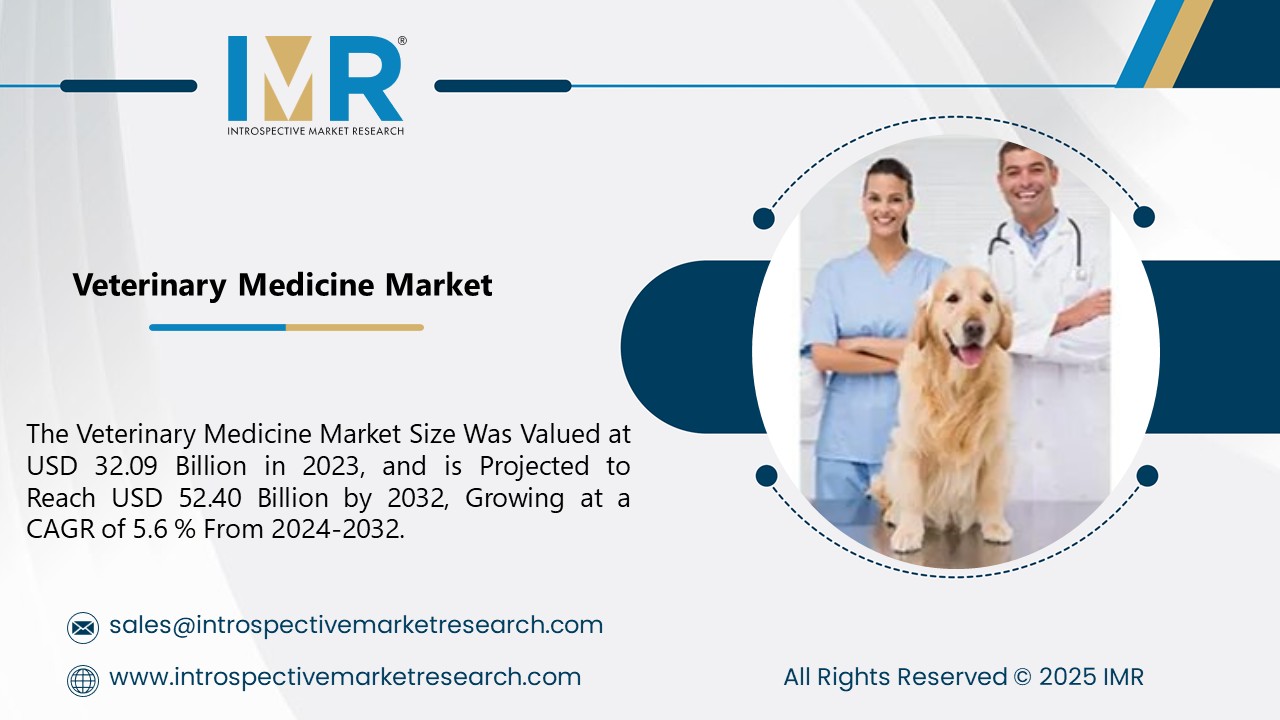
According to a new report published by Introspective Market Research, titled, Veterinary Medicine Market by Product, Animal Type, and Distribution Channel, The Global Veterinary Medicine Market Size Was Valued at USD 32.09 Billion in 2023 and is Projected to Reach USD 52.40 Billion by 2032, Growing at a CAGR of 5.24% from 2024–2032.The veterinary medicine market plays a crucial role in safeguarding animal health and ensuring the safety of food derived from livestock. It encompasses pharmaceuticals, vaccines, feed additives, and diagnostic solutions that are used to treat, prevent, and manage a wide variety of diseases in companion animals and livestock. With growing awareness of zoonotic diseases, veterinary medicine has become vital in protecting both animal and human health.
Compared to traditional approaches, modern veterinary medicines offer faster, more effective treatment and preventive care solutions. They are widely adopted in industries such as livestock farming, pet healthcare, and animal research. Rising pet adoption worldwide, combined with the increasing demand for animal protein, is fueling the growth of this market.
One of the key drivers of the veterinary medicine market is the rising trend of pet ownership worldwide. Increasing disposable income, changing lifestyle patterns, and growing awareness of animal health have led to higher spending on pet healthcare. Companion animals are now considered part of families, driving demand for advanced medicines, preventive care, and wellness products.
A major opportunity for the veterinary medicine market lies in technological advancements in animal healthcare. The integration of digital health tools, AI-powered diagnostics, and innovative drug delivery systems is expected to improve efficiency and accessibility. Additionally, rising investments in vaccine development and biotechnology for disease prevention present strong growth potential for the industry.
Veterinary Medicine Market, Segmentation
The Veterinary Medicine Market is segmented on the basis of Product, Animal Type, and Distribution Channel.
Product
- The Pharmaceuticals segment accounted for the highest market share in 2023. This segment includes antibiotics, parasiticides, anti-inflammatory drugs, and specialty medicines. Its growth is attributed to the increasing prevalence of infectious diseases in animals and the need for effective treatment solutions. Continuous innovation in formulations and the expansion of veterinary pharmacies are further strengthening this segment.
Animal Type
- The Companion Animals segment accounted for the highest market share in 2023. Rising pet adoption, especially dogs and cats, and the humanization of pets have boosted spending on veterinary care. Vaccinations, chronic disease treatments, and preventive care for pets are major contributors to this segment’s dominance, particularly in developed economies such as North America and Europe.
Some of the Leading/Active Market Players Are-
- Zoetis Inc. (USA)
- Elanco Animal Health (USA)
- Boehringer Ingelheim Animal Health (Germany)
- Merck Animal Health (USA)
- Virbac (France)
- Ceva Santé Animale (France)
- Vetoquinol SA (France)
- IDEXX Laboratories (USA)
- Bimeda (Ireland)
- Dechra Pharmaceuticals (UK)
- Norbrook Laboratories (UK)
- Phibro Animal Health (USA)
- Chanelle Pharma (Ireland)
- Heska Corporation (USA)
- SeQuent Scientific (India)
- Other active players.
Key Industry Developments
- March 2024: Zoetis introduced a new oral parasiticide for dogs to combat flea and tick infestations. This launch enhances its portfolio of pet health solutions, catering to rising demand in the companion animal segment.
- July 2023: Boehringer Ingelheim expanded its R&D facility in Germany to strengthen its pipeline of veterinary vaccines. This move reflects growing investments in preventive healthcare solutions for livestock and pets.
Key Findings of the Study
- Pharmaceuticals segment dominates the product category.
- Companion animals lead the animal type segment due to rising pet adoption.
- North America remains the leading region, supported by high spending on pet healthcare.
- Rising pet ownership and livestock health concerns are key growth drivers.
- Technological innovations and vaccine R&D present significant opportunities.