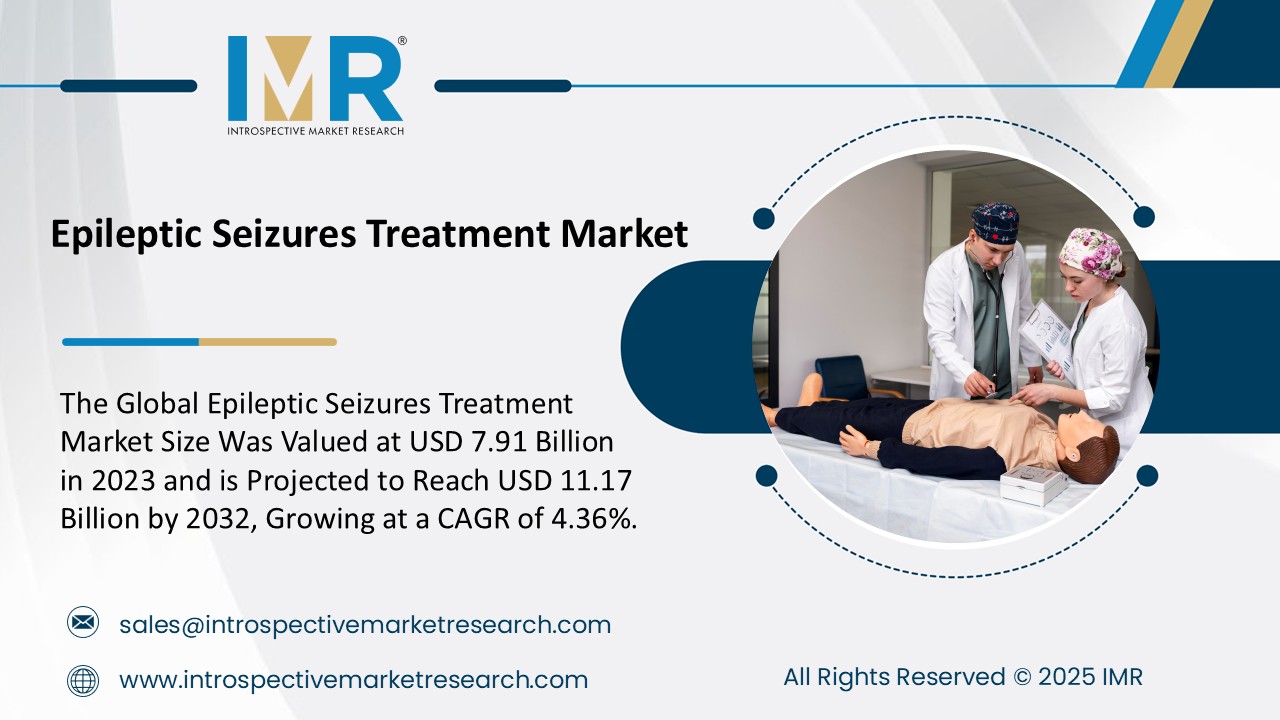
According to a new report published by Introspective Market Research, titled, Epileptic Seizures Treatment Market by Drug Class, Route of Administration, and End User, The Global Epileptic Seizures Treatment Market Size Was Valued at USD 7.91 Billion in 2023 and is Projected to Reach USD 11.17 Billion by 2032, Growing at a CAGR of 4.36%. The Epileptic Seizures Treatment Market focuses on therapies and pharmaceuticals designed to prevent, control, and manage seizures in individuals with epilepsy. Treatments include a range of anti-epileptic drugs (AEDs), surgical interventions, neurostimulation devices, and dietary solutions, which are constantly being refined to offer improved efficacy and fewer side effects. Compared to traditional alternatives, second and third-generation AEDs provide higher tolerability and patient compliance, revolutionizing seizure control even in drug-resistant cases.
The market is driven by growing epilepsy prevalence worldwide, increasing awareness of neurological health, and advances in novel drug formulations. Hospitals, clinics, and retail pharmacies are the primary channels for distributing these treatments, serving both pediatric and adult populations with a growing focus on precision medicine. Significant investment in R&D and support from public health initiatives are further propelling the sector’s evolution.
The Epileptic Seizures Treatment Market is segmented into Drug Class, Route of Administration, and End User.
- By Drug Class: segmented into First Generation, Second Generation, and Third Generation Anti-Epileptic Drugs.
- By Route of Administration: segmented into Oral, Injectable, Nasal, and Rectal.
- By End User: segmented into Hospitals, Clinics, and Retail Pharmacies.
A major growth driver for the market is the escalating prevalence of epilepsy globally, with a significant percentage of the population being diagnosed each year. This rise, supported by enhanced diagnostic techniques, ongoing awareness initiatives, and a broadening elderly population, creates sustained demand for both traditional and advanced treatment options. The introduction of new drugs with improved mechanisms of action further supports effective seizure management, thereby boosting market expansion.
A significant opportunity in the epileptic seizures treatment market lies in the development and commercialization of next-generation anti-epileptic drugs and precision neuromodulation devices. Pharmaceutical and medical technology companies investing in innovative formulations, targeted drug delivery, and wearable seizure monitoring can address drug-resistant cases and improve patient outcomes. Growing accessibility through online pharmacies, and digital health integration, especially in emerging economies, represents further untapped market potential.
Epileptic Seizures Treatment Market, Segmentation
The Epileptic Seizures Treatment Market is segmented on the basis of Drug Class, Route of Administration, and End User.
Drug Class
The Drug Class segment is further classified into First Generation, Second Generation, and Third Generation Anti-Epileptic Drugs. Second Generation AEDs accounted for the highest market share in 2024, driven by wide prescription among clinicians for their favorable efficacy and tolerability profiles. These drugs offer improved management, especially for refractory cases, and serve as standard first-line therapies in both developed and developing regions.
Route of Administration
The Route of Administration segment is further classified into Oral, Injectable, Nasal, and Rectal. The Oral segment has held the largest market share in 2024. Oral formulations continue to dominate due to patient preference, ease of administration, and broad availability, supporting improved adherence across all age groups and geographies.
Some of The Leading/Active Market Players Are
- Pfizer Inc. (USA)
- Novartis AG (Switzerland)
- UCB S.A. (Belgium)
- GlaxoSmithKline plc (UK)
- Eisai Co., Ltd. (Japan)
- Sunovion Pharmaceuticals Inc. (USA)
- Johnson & Johnson Services, Inc. (USA)
- Sanofi S.A. (France)
- Lupin Limited (India)
- SK Life Science (South Korea)
- Viatris Inc. (USA)
- Supernus Pharmaceuticals (USA)
- BIAL – Portela & Cª, S.A. (Portugal)
- Zogenix, Inc. (USA)
- Sage Therapeutics, Inc. (USA)
- Other active players.
Key Industry Developments
In May 2025, SK Life Science launched a nationwide TV campaign for Xcopri (cenobamate) in the US, focusing on seizure control for adults. The campaign, spanning streaming platforms and social media, aims to raise patient awareness and drive adoption of this newly approved anti-seizure medication, which offers enhanced efficacy for partial-onset seizures.
In May 2025, Indian pharma company Lupin launched Eslicarbazepine Acetate Tablets in the US, post-FDA approval, with exclusive generic rights for 180 days. This launch expands affordable access to treatment for partial-onset seizures, supported by bioequivalence with Aptiom and robust market interest.
Key Findings of the Study
- Second-generation AEDs and oral formulations are market leaders.
- North America remains the dominant region; Asia-Pacific is growing fastest.
- Increased prevalence, innovation, and drug accessibility drive growth.
- Multi-channel distribution and next-gen drug development lead market trends.
- Strategic collaborations and generic launches strengthen competition.