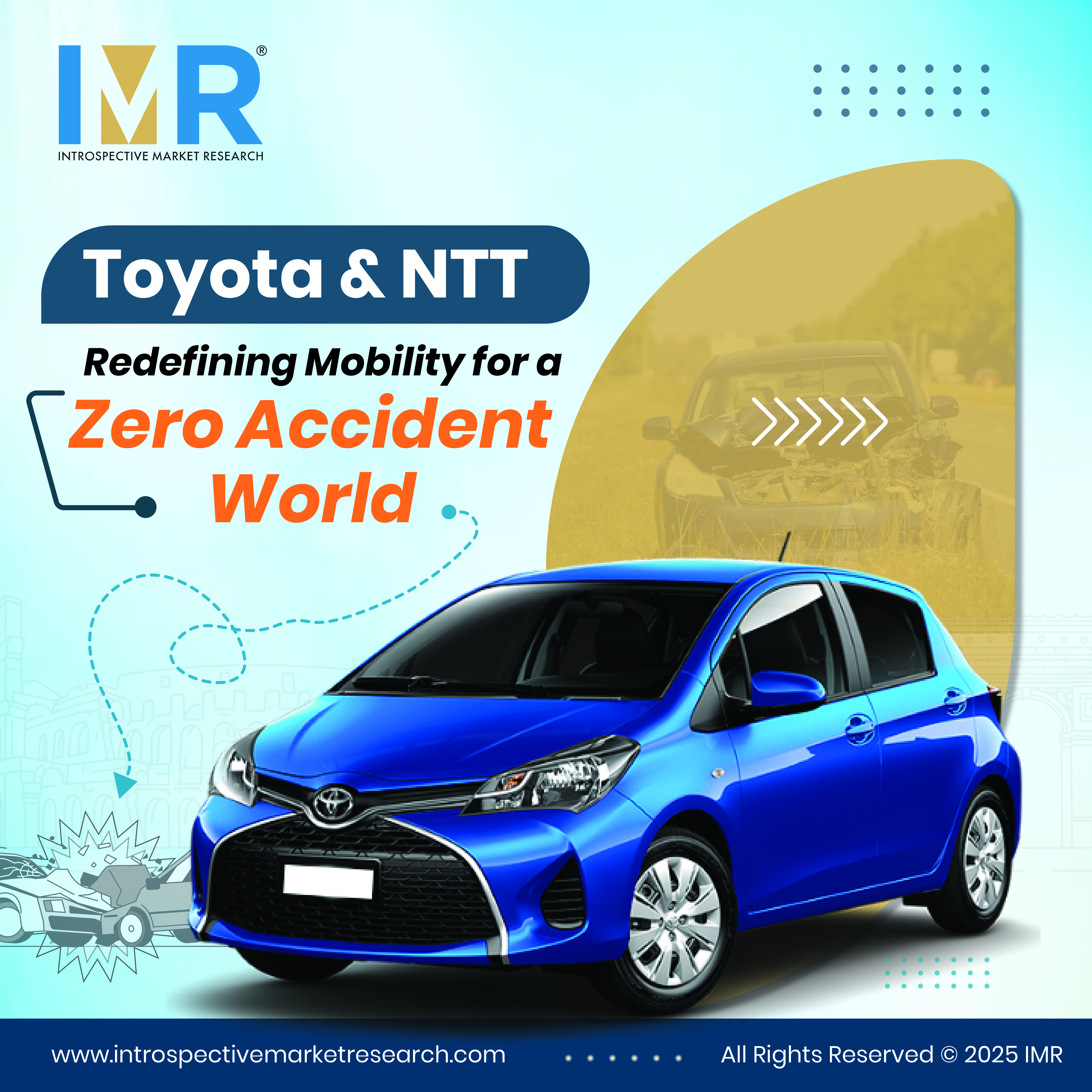
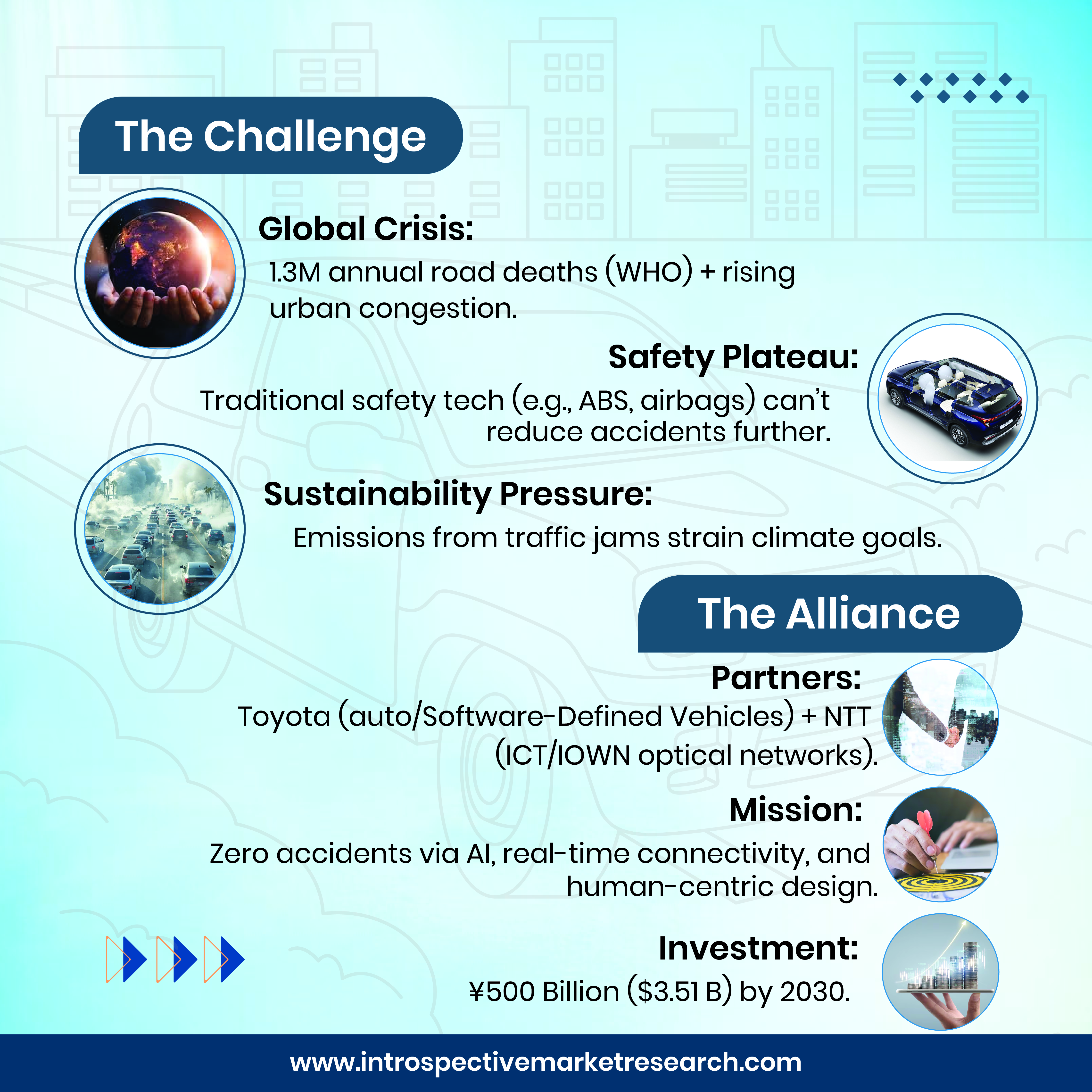
Toyota and NTT have joined forces to tackle one of the world’s most persistent challenges road safety and sustainability. With 1.3 million annual traffic deaths globally (WHO) and growing urban congestion, the two Japanese giants aim to create a world of zero accidents through next-generation mobility powered by AI, ultra-fast connectivity, and human-centric design. Their collaboration leverages Toyota’s automotive expertise and NTT’s ICT and optical network technologies to build a safer, smarter, and greener transportation ecosystem.
Key Features of the Mobility AI Platform:
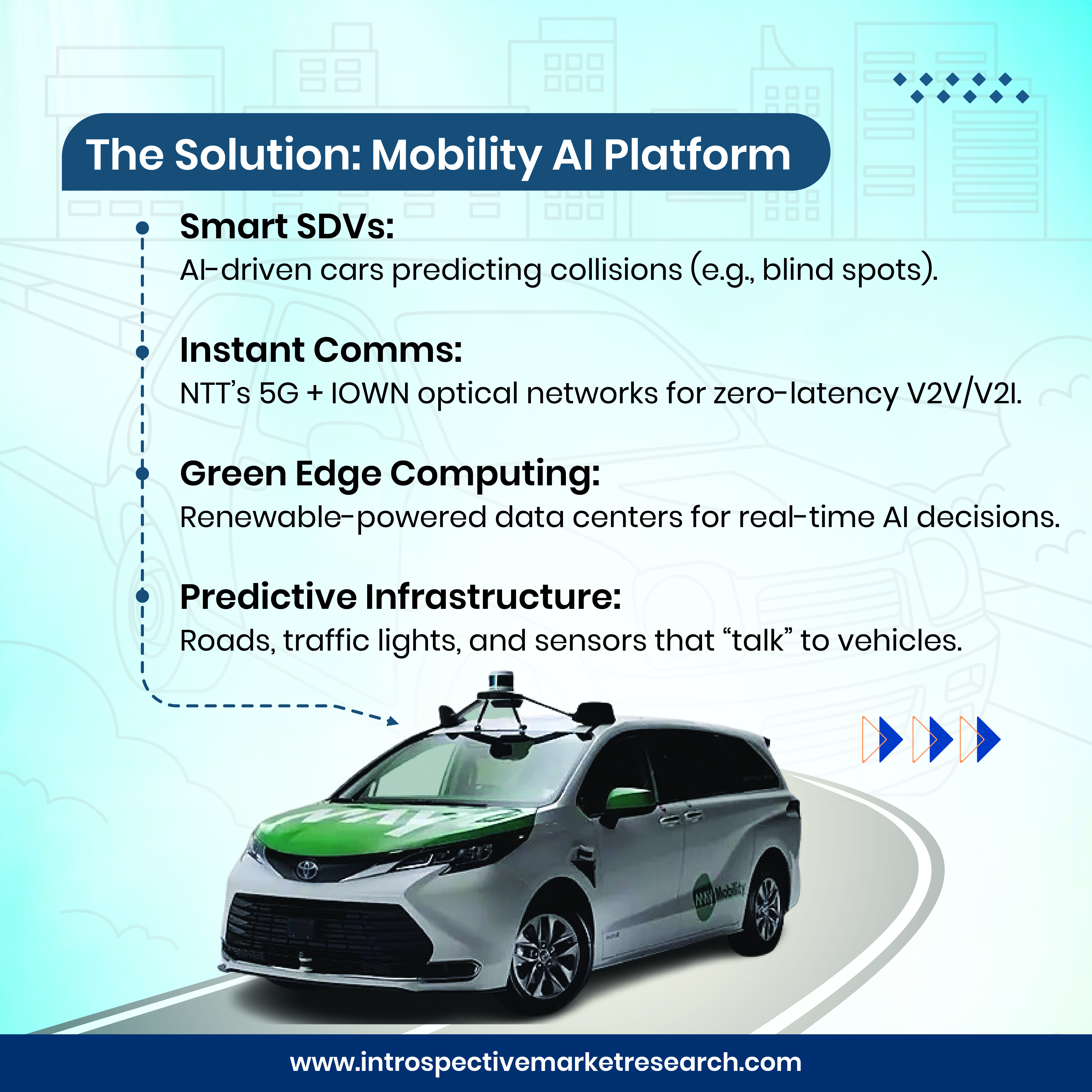
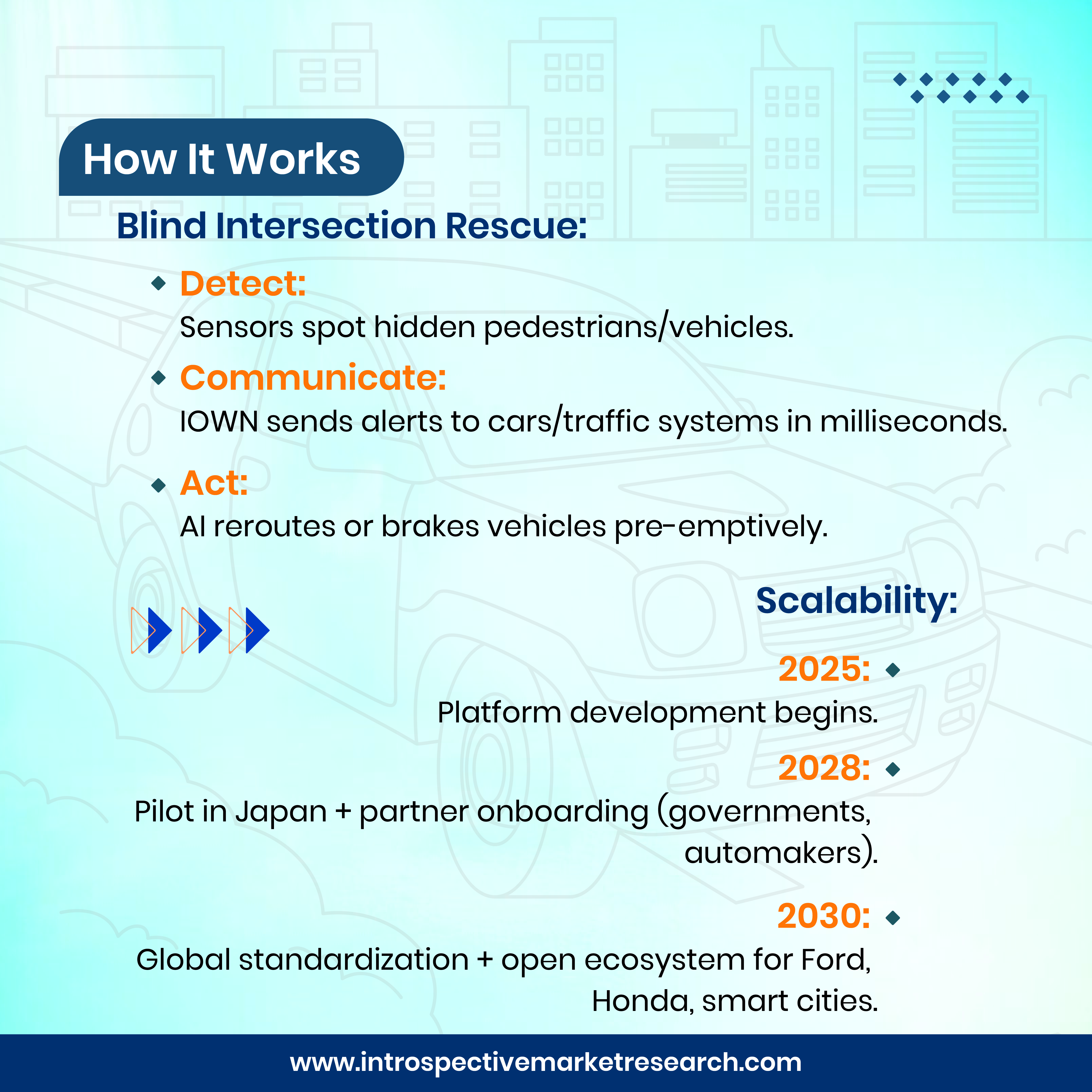
- Smart Software-Defined Vehicles (SDVs): Equipped with AI that predicts potential collisions including blind spot and pedestrian risks enabling vehicles to take preemptive safety actions.
- Instant Connectivity: NTT’s 5G and IOWN optical networks provide near-zero latency communication for Vehicle-to-Vehicle (V2V) and Vehicle-to-Infrastructure (V2I) data sharing, ensuring instant responses to potential hazards.
- Green Edge Computing: AI processing happens in renewable-powered data centers, enabling real-time decision-making while reducing carbon footprints from data operations.
- Predictive Infrastructure: Smart roads, traffic lights, and sensors “talk” to vehicles, helping prevent collisions and easing congestion through proactive traffic management.
Impact on Safety and Sustainability:
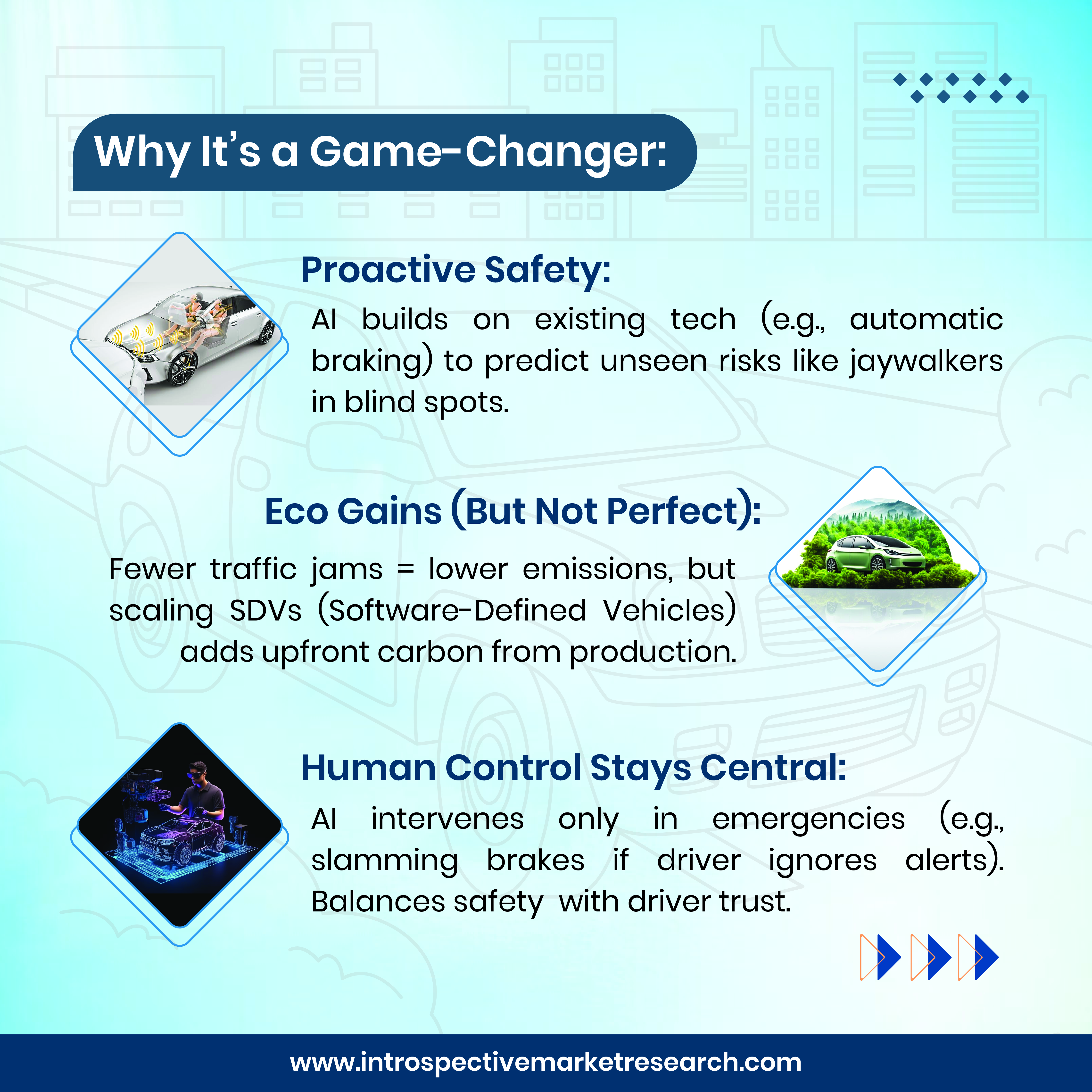
- Proactive Accident Prevention: AI extends traditional safety tech (like ABS or airbags) by predicting unseen dangers such as jaywalkers or vehicles at blind intersections and intervening when needed.
- Eco-Efficiency with Caution: Reduced congestion leads to lower emissions; however, scaling SDVs comes with an upfront environmental cost from advanced vehicle production.
- Human-Centric Approach: Drivers remain in control AI only overrides in emergencies, maintaining a balance between automation and driver trust.
Broader Impact Across Sectors:
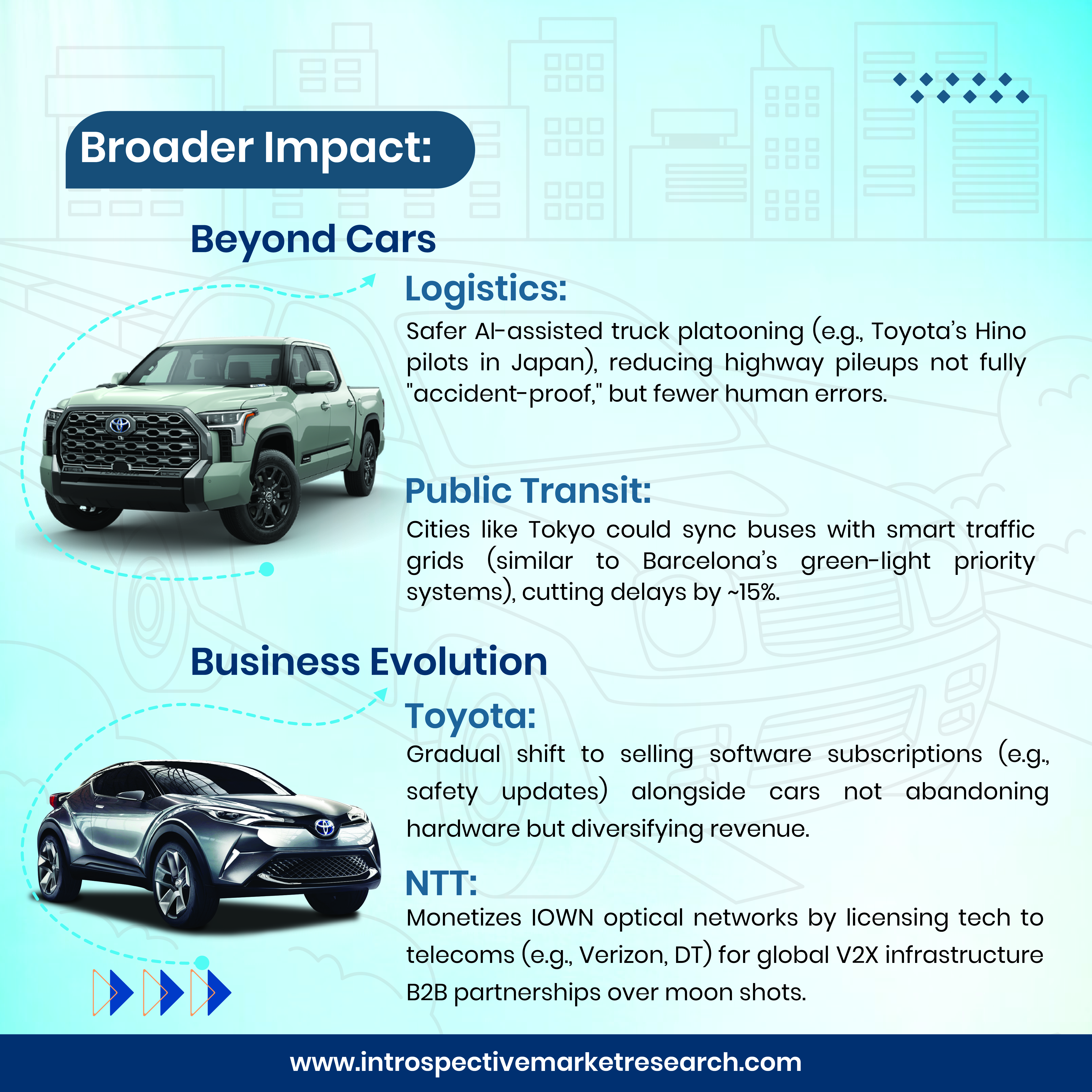
- Logistics: Toyota’s Hino division is piloting AI-assisted truck platooning, allowing trucks to travel in coordinated convoys that reduce human error and highway accidents.
- Public Transit: Smart infrastructure could enable bus networks, like Tokyo’s, to sync with traffic systems similar to Barcelona’s green-light priority cutting delays by up to 15%.
Future Roadmap:
- 2025: Platform development begins.
- 2028: Pilot implementation in Japan with government and automaker partnerships.
- 2030: Global rollout and open ecosystem for automakers and smart cities worldwide.
Conclusion:
Toyota and NTT’s alliance marks a pivotal step toward zero-accident, sustainable mobility. By combining AI intelligence, real-time data exchange, and eco-conscious infrastructure, the partnership represents a shift from reactive safety to proactive prevention. This initiative not only enhances driver and pedestrian protection but also redefines how vehicles, cities, and people interact in the age of intelligent mobility.