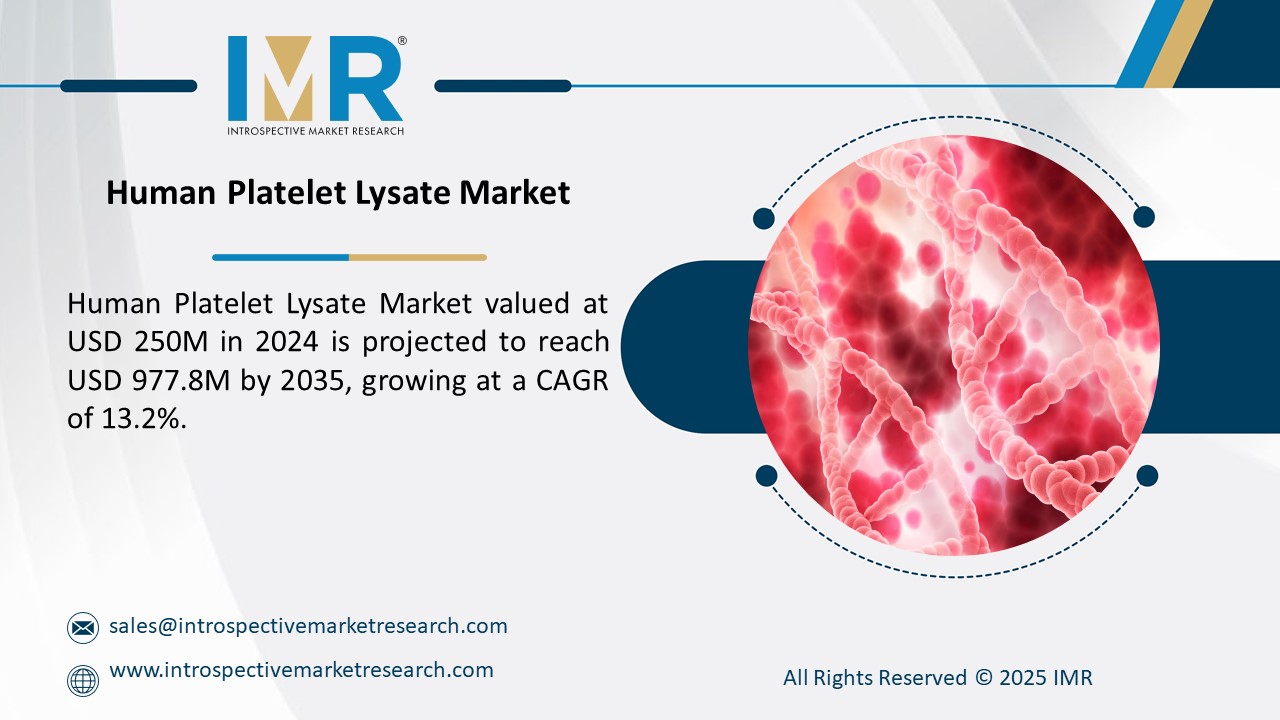
Human Platelet Lysate (HPL) is a high-performance, non-animal derived supplement used in cell culture media, produced by lysing human blood platelets through a freeze-thaw process. This process releases a concentrated cocktail of natural growth factors, cytokines, and proteins essential for the expansion and maintenance of various human primary cells and stem cells. As the regenerative medicine landscape matures, HPL has emerged as the gold-standard alternative to animal-derived serums, ensuring high physiological relevance and safety in clinical applications.
The primary advantage of Human Platelet Lysate over traditional alternatives like Fetal Bovine Serum (FBS) is its superior safety profile and ethical alignment. Being xeno-free, HPL eliminates the risk of cross-species contamination and bovine-related immune reactions in patients receiving cell therapies. Furthermore, HPL offers significantly higher potency in supporting human cell proliferation, which accelerates research timelines and improves the efficacy of cell-based products. Major industries utilizing HPL include biopharmaceutical research, clinical cell therapy manufacturing, and tissue engineering.
The principal growth driver for the Human Platelet Lysate Market is the rapid global expansion of clinical trials and commercial approvals for Mesenchymal Stem Cell (MSC) therapies. As the healthcare industry moves toward personalized and regenerative treatments for chronic conditions such as autoimmune disorders, cardiovascular diseases, and orthopedic injuries, the demand for standardized, high-quality growth media has skyrocketed. Regulatory bodies are increasingly encouraging the transition from animal-based additives to xeno-free supplements to ensure patient safety and product consistency. This shift makes HPL an essential component in the large-scale production of life-saving cell therapies, underpinning the market's double-digit growth rate.
A major market opportunity lies in the development of specialized "heparin-free" and pathogen-inactivated HPL formulations. Traditionally, HPL required the addition of heparin to prevent coagulation in the cell culture environment; however, this can interfere with certain downstream biological processes. Manufacturers who can produce high-purity, heparin-free variants that are validated for Good Manufacturing Practice (GMP) will capture a significant share of the clinical-grade market. Furthermore, integrating advanced viral inactivation technologies to guarantee the highest level of biosafety offers a lucrative niche, particularly for high-value applications in organ-on-a-chip technology and the bioprocessing of specialized immune cells like CAR-T.
Detailed Segmentation
Title: Human Platelet Lysate Market Market, Segmentation Line below: The Human Platelet Lysate Market is segmented on the basis of Type, Application, and End-User.
Type
The Type segment is further classified into Heparin-free HPL and Heparin-requiring HPL. Among these, the Heparin-requiring HPL sub-segment accounted for the highest market share in 2024. This dominance is attributed to its long-standing presence in the market and its widespread validation across various research protocols. Heparin-requiring HPL is highly cost-effective and remains the standard choice for academic and exploratory research where the presence of heparin does not impact the specific experimental outcomes. Its established supply chain and compatibility with a broad range of cell lines have made it the foundational product for the initial phases of cell expansion research globally.
End-User
The End-User segment is further classified into Academic & Research Institutes and Biopharmaceutical Companies. Among these, the Biopharmaceutical Companies sub-segment accounted for the highest market share in 2024. The dominance of this segment is driven by the intensive investment in regenerative medicine R&D and the scaling of cell therapy manufacturing facilities. Biopharmaceutical giants are increasingly adopting GMP-grade HPL to ensure that their production processes are animal-origin free, meeting the stringent requirements of the FDA and EMA. As more cell therapies move from the lab to commercial production, the volume requirements of these companies continue to drive the bulk of the market’s revenue.
Some of The Leading or Active Market key Players Are-
- Merck KGaA (Germany)
- Thermo Fisher Scientific Inc. (United States)
- Mill Creek Life Sciences (United States)
- Macopharma (France)
- Sexton Biotechnologies (United States)
- Compass Biomedical (United States)
- AventaCell BioMedical (United States)
- PL BioScience GmbH (Germany)
- Zen-Bio, Inc. (United States)
- Life Science Group Ltd. (United Kingdom)
- Biological Industries (Israel)
- Grifols, S.A. (Spain) and other active players.
Key Industry Developments:
- In June 2024, PL BioScience announced the completion of a major production expansion in Germany to increase the output of their GMP-grade HPL. This achievement marks a significant step in meeting the rising demand for clinical-grade supplements in the European market, ensuring that cell therapy developers have a reliable, high-volume source for animal-free growth factors.
- In February 2024, Sexton Biotechnologies received a key regulatory certification for its pathogen-inactivated human platelet lysate. This achievement addresses the growing safety concerns in clinical cell manufacturing by providing a validated, virus-safe environment for human cell expansion, significantly reducing the risks associated with raw material sourcing for commercial cell-based products.
Key Findings of the Study:
- Dominant Segments: Heparin-requiring HPL (Type) and Biopharmaceutical Companies (End-User) currently lead the market.
- Leading Regions: North America leads the market share due to its advanced regenerative medicine infrastructure.
- Key Growth Drivers: The global transition to xeno-free cell culture media and the rise in MSC-based clinical trials.
- Market Trends: Increasing demand for heparin-free and pathogen-inactivated formulations for clinical-grade applications.