




Cryptocurrency Market Synopsis
Cryptocurrency Market Size Was Valued at USD 1.1 Billion in 2023 and is Projected to Reach USD 3.0 Billion by 2032, Growing at a CAGR of 11.8% From 2024-2032.
Cryptocurrency can also be defined as virtual or digital money that uses cryptographic protocols in its issuance and subsequently, in the validation of purchasing and selling operations.
While traditional money comes in the form of physical cash or digital accounts controlled, indirectly, by a nation’s central bank and government, cryptocurrencies are virtual digital money, structured to work on decentralized systems called peer-to-peer (P2P) networks that are built and maintained by users using advanced coding techniques called blockchain.
This structure offers certain advantages like extra transparency, and protection against scams and censorship, making cryptocurrencies different from the regular financial systems where banks and governmental institutions play significant roles.
Cryptocurrency started with Bitcoin in 2009 by an enigmatic person or a group that used the moniker Satoshi Nakamoto. Bitcoin gave a concept of electronic money that worked through a computerized system that would not require the services of third parties.
There has been a surge in the creation of thousands of other such altcoins that share similarities but has features and functions that are different and distinct; for example, there is Ethereum developed for smart contracts and Ripple for fast and cheap cross-border payment solutions.
Cryptocurrencies have attracted people and organizations with the vision of changing the traditional approaches to finance and money, improving financial accessibility, and offering new ways for investment and development, but the vision is accompanied by concerns regarding legal regulation, fluctuating tendencies, and cybersecurity threats.
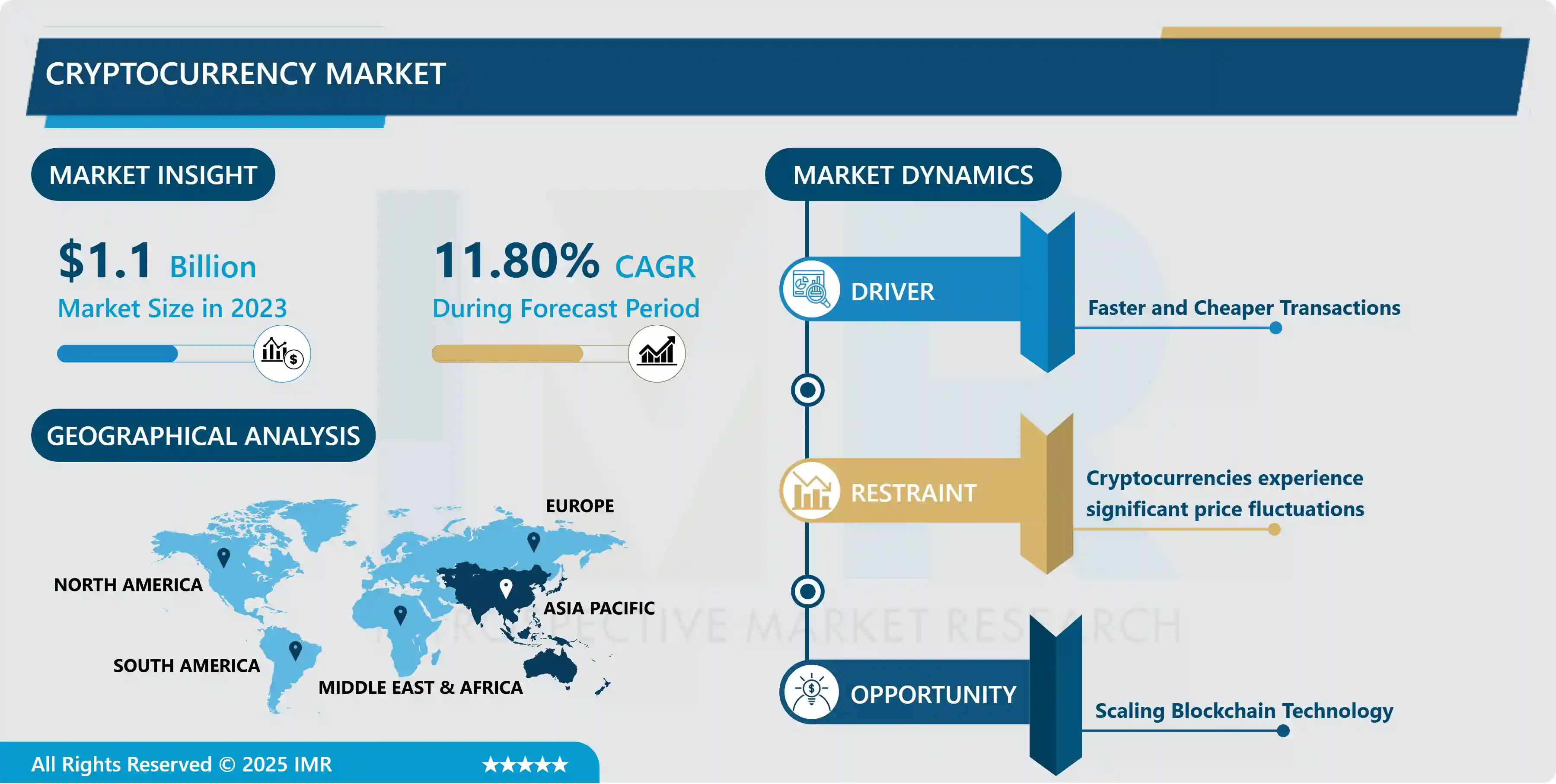
Cryptocurrency Market Trend Analysis
Rise of Decentralized Finance (DeFi)
- Decentralized finance is another promising trend within the cryptocurrency market that describes various services in the finance sector that do not involve intermediation of the banks or brokers. DeFi is built on blockchain technology, specifically smart contracts on a system like Ethereum and it aims at developing decentralized applications or ‘apps’ that provide services like lending, borrowing, trading, and earning returns on virtual currencies.
- These services are often available to anyone provided they have internet connection and a crypto wallet, which means the unbanked societies in the world would be better served with these services. The decentralized ecosystem is transparent as all the transactions are stored on the blockchain, and consumers keep full authority over their assets while leveraging DeFi applications without obtaining permission from any middleman.
- Further, it shows the continuous progress of DeFi, where the TVL of DeFi protocols went from several million dollars in early 2020 to more than tens of billions by 2023. This rise can be attributed to growing interest in decentralised financial assets, and greater user trust in them.
- The growth of DeFi projects originates from the new features like automated market makers (AMMs), decentralized exchanges (DEXs), and yield farming since utilizing such models brings users higher yields than the traditional finance ones.
- However, the DeFi markets continue to present certain disadvantages such as inadequate regulation, issues connected with smart contacts, and growing opportunities for frauds and scams. Still, the DeFi trend does not slow down and promises to open up a new world of decentralized financial instruments, democratic, and transparent.
Developing Secure Infrastructure
- In the case of cryptocurrency, the best chance is emerging out of the present fragmented and volatile market outfit, for the market to stabilize, and become more secure and popular among all. Today, more and more people are engaged in trading which leads to greater dangers typical of cyber threats, hacks, and fraud; thus, the security of markets must be efficient.
- Security is a multi-layered process in the contemporary world and it requires many layers such as modern cryptographic algorithms, secure storage options, and hardened blockchains immune to hacking attempts. In this aspect, security, or the lack thereof, puts the focus on user assets and their data, which is crucial for building trust from investors. Advances in the secure underpinnings, which secure the transactions, can also lead to safer dealings, decrease breach-related losses, and enhance stability of the markets.
- However, security does not end at assets, but also at all decentralized applications (dApps), exchanges, smart contracts, etc. If these components are built on solid security frameworks, one can avoid some of these risks which might be targeted by some selfish people. This involves checking for vulnerabilities, constant scanning, and following good practice when coding and designing applications.
- The cryptocurrency market needs to invest in adequate security infrastructure to overcome the regulatory hurdles, segregate from traditional investors, and provide a more secure outlet for individuals keen on adopting mainstream technologies. In the end, increasing security benefits not only the participants but also encourages development and the advancement of the cryptocurrency market, making it safer as a potential form of finance compared to the traditional ones.
Cryptocurrency Market Segment Analysis:
Cryptocurrency Market is Segmented Based on Applications.
By Applications, Trading is expected to dominate the market during the forecast period
- The trading segment remains the largest in the cryptocurrency market since it records more trade activities and has great reception from investors – large and small. The trading of cryptocurrencies involves the use of virtual assets in different platforms including the CEXs and DEXs where cryptocurrencies can be purchased, sold or exchanged. The two primary reasons that trading attract investors include the high volatility of cryptocurrencies that means one may make huge profits through trading.
- Moreover, the issuance of the derivatives, futures and other such investment facilities have provided even more trading options in the market. The use of trading bots, big data analysis, and high-frequency trading strategies also played a role in the development and preserves the position of this segment as the most virile and impactful part of the crypto world.
- In addition, the basic facilities surrounding the cryptocurrency trading have developed significantly thus improving on convenience and safety for users. Some of the popular trading platforms by market sentiment include Binance, Coibase, and Kraken, which provides enhanced trading products, depth of the marketplace, and broader coverage of trading pairs for millions of users across the globe.
- Decentralized exchanges have also expanded their usage as a P2P market where the trading of coins occurs directly with no middlemen thus increasing on security and transparency. For that reason, the trading segment appropriates not only the highest volumes of transactions but also the leading effectuation and creation in the remaining cryptocurrency market. This segment is especially apparent due to the major role that the segment plays in providing market liquidity, determining prices in the market, and in the overall development of the cryptocurrency market.
Cryptocurrency Market Regional Insights:
Asia Pacific is Expected to Dominate the Market Over the Forecast period
- Currently Asia-Pacific is seen as the most influential region of the Cryptocurrency Market, because of the rapid development and the increases in many states of the asia-pacific region, especially China, Japan, South Korea and Singapore . These nations have adopted an active role in trading physical and digital currencies as well as mining and advancing the development of blockchain technology.
- During its golden age, China was the most important hub for Bitcoin mining and to this day, despite the Chinese Government’s attempts to suppress the industry, the country boasts of fantastic technological progress and blockchain projects.
- Japan has been welcoming to cryptocurrencies with sound legal guidelines hence providing for a sound environment that is conducive for cryptocurrency trading and investment. A burgeoning community of Korean crypto enthusiasts and high trading volumes from the region contribute to its continuing dominance, supported by both retail purchasers and technological companies.
- Asia-Pacific’s continued dominance can also be attributed to the favorable support it attracts from government and various institutions in the region regarding blockchain technology as a tool that can spur financial innovation. For instance, Singapore has recently positioned itself as an important financial technology hub for the entire globe, and it offers favorable conditions for blockchain startups.
- Moreover, the extensive population and high levels of smart-phone adoption in the region help support high levels of demand for cryptocurrency trading and related platforms. This year-round supportive measures of regulation, advancement in IT structure, and pro-actively endeavoring partnership from the private and public sectors has made the Asia-Pacific region as the driving force for the global market to spread cryptocurrency adoption, create models, and grow the market.
Active Key Players in the Cryptocurrency Market
- Binance (Cayman Islands)
- Coinbase (San Francisco, USA)
- Kraken (San Francisco, USA)
- Bitfinex (Hong Kong)
- Huobi (Singapore)
- OKEx (Malta)
- Ripple Labs (San Francisco, USA)
- Bitmain (Beijing, China)
- Gemini (New York, USA)
- BlockFi (Jersey City, USA), Other Key Players
|
Global Cryptocurrency Market |
|||
|
Base Year: |
2023 |
Forecast Period: |
2024-2032 |
|
Historical Data: |
2017 to 2023 |
Market Size in 2023: |
USD 1.1 Bn. |
|
Forecast Period 2024-32 CAGR: |
11.8% |
Market Size in 2032: |
USD 3.0 Bn. |
|
Segments Covered: |
By Application |
|
|
|
By Region |
|
||
|
Key Market Drivers: |
|
||
|
Key Market Restraints: |
|
||
|
Key Opportunities: |
|
||
|
Companies Covered in the report: |
|
||
Chapter 1: Introduction
1.1 Scope and Coverage
Chapter 2:Executive Summary
Chapter 3: Market Landscape
3.1 Market Dynamics
3.1.1 Drivers
3.1.2 Restraints
3.1.3 Opportunities
3.1.4 Challenges
3.2 Market Trend Analysis
3.3 PESTLE Analysis
3.4 Porter's Five Forces Analysis
3.5 Industry Value Chain Analysis
3.6 Ecosystem
3.7 Regulatory Landscape
3.8 Price Trend Analysis
3.9 Patent Analysis
3.10 Technology Evolution
3.11 Investment Pockets
3.12 Import-Export Analysis
Chapter 4: Cryptocurrency Market by Application (2018-2032)
4.1 Cryptocurrency Market Snapshot and Growth Engine
4.2 Market Overview
4.3 Trading
4.3.1 Introduction and Market Overview
4.3.2 Historic and Forecasted Market Size in Value USD and Volume Units
4.3.3 Key Market Trends, Growth Factors, and Opportunities
4.3.4 Geographic Segmentation Analysis
4.4 Remittance
4.5 Payment
4.6 Others
Chapter 5: Company Profiles and Competitive Analysis
5.1 Competitive Landscape
5.1.1 Competitive Benchmarking
5.1.2 Cryptocurrency Market Share by Manufacturer (2024)
5.1.3 Industry BCG Matrix
5.1.4 Heat Map Analysis
5.1.5 Mergers and Acquisitions
5.2 BLUE ORIGIN
5.2.1 Company Overview
5.2.2 Key Executives
5.2.3 Company Snapshot
5.2.4 Role of the Company in the Market
5.2.5 Sustainability and Social Responsibility
5.2.6 Operating Business Segments
5.2.7 Product Portfolio
5.2.8 Business Performance
5.2.9 Key Strategic Moves and Recent Developments
5.2.10 SWOT Analysis
5.3 VIRGIN GALACTIC
5.4 SPACEX
5.5 AIRBUS
5.6 BOEING
5.7 ZERO GRAVITY CORPORATION
5.8 AXIOM SPACE
5.9 ROCKET LAB USA
5.10 SPACE ADVENTURES
5.11 SPACE PERSPECTIVE
5.12 WORLD VIEW ENTERPRISES INCZERO 2 INFINITY
5.13 OTHER KEY PLAYERS
Chapter 6: Global Cryptocurrency Market By Region
6.1 Overview
6.2. North America Cryptocurrency Market
6.2.1 Key Market Trends, Growth Factors and Opportunities
6.2.2 Top Key Companies
6.2.3 Historic and Forecasted Market Size by Segments
6.2.4 Historic and Forecasted Market Size by Application
6.2.4.1 Trading
6.2.4.2 Remittance
6.2.4.3 Payment
6.2.4.4 Others
6.2.5 Historic and Forecast Market Size by Country
6.2.5.1 US
6.2.5.2 Canada
6.2.5.3 Mexico
6.3. Eastern Europe Cryptocurrency Market
6.3.1 Key Market Trends, Growth Factors and Opportunities
6.3.2 Top Key Companies
6.3.3 Historic and Forecasted Market Size by Segments
6.3.4 Historic and Forecasted Market Size by Application
6.3.4.1 Trading
6.3.4.2 Remittance
6.3.4.3 Payment
6.3.4.4 Others
6.3.5 Historic and Forecast Market Size by Country
6.3.5.1 Russia
6.3.5.2 Bulgaria
6.3.5.3 The Czech Republic
6.3.5.4 Hungary
6.3.5.5 Poland
6.3.5.6 Romania
6.3.5.7 Rest of Eastern Europe
6.4. Western Europe Cryptocurrency Market
6.4.1 Key Market Trends, Growth Factors and Opportunities
6.4.2 Top Key Companies
6.4.3 Historic and Forecasted Market Size by Segments
6.4.4 Historic and Forecasted Market Size by Application
6.4.4.1 Trading
6.4.4.2 Remittance
6.4.4.3 Payment
6.4.4.4 Others
6.4.5 Historic and Forecast Market Size by Country
6.4.5.1 Germany
6.4.5.2 UK
6.4.5.3 France
6.4.5.4 The Netherlands
6.4.5.5 Italy
6.4.5.6 Spain
6.4.5.7 Rest of Western Europe
6.5. Asia Pacific Cryptocurrency Market
6.5.1 Key Market Trends, Growth Factors and Opportunities
6.5.2 Top Key Companies
6.5.3 Historic and Forecasted Market Size by Segments
6.5.4 Historic and Forecasted Market Size by Application
6.5.4.1 Trading
6.5.4.2 Remittance
6.5.4.3 Payment
6.5.4.4 Others
6.5.5 Historic and Forecast Market Size by Country
6.5.5.1 China
6.5.5.2 India
6.5.5.3 Japan
6.5.5.4 South Korea
6.5.5.5 Malaysia
6.5.5.6 Thailand
6.5.5.7 Vietnam
6.5.5.8 The Philippines
6.5.5.9 Australia
6.5.5.10 New Zealand
6.5.5.11 Rest of APAC
6.6. Middle East & Africa Cryptocurrency Market
6.6.1 Key Market Trends, Growth Factors and Opportunities
6.6.2 Top Key Companies
6.6.3 Historic and Forecasted Market Size by Segments
6.6.4 Historic and Forecasted Market Size by Application
6.6.4.1 Trading
6.6.4.2 Remittance
6.6.4.3 Payment
6.6.4.4 Others
6.6.5 Historic and Forecast Market Size by Country
6.6.5.1 Turkiye
6.6.5.2 Bahrain
6.6.5.3 Kuwait
6.6.5.4 Saudi Arabia
6.6.5.5 Qatar
6.6.5.6 UAE
6.6.5.7 Israel
6.6.5.8 South Africa
6.7. South America Cryptocurrency Market
6.7.1 Key Market Trends, Growth Factors and Opportunities
6.7.2 Top Key Companies
6.7.3 Historic and Forecasted Market Size by Segments
6.7.4 Historic and Forecasted Market Size by Application
6.7.4.1 Trading
6.7.4.2 Remittance
6.7.4.3 Payment
6.7.4.4 Others
6.7.5 Historic and Forecast Market Size by Country
6.7.5.1 Brazil
6.7.5.2 Argentina
6.7.5.3 Rest of SA
Chapter 7 Analyst Viewpoint and Conclusion
7.1 Recommendations and Concluding Analysis
7.2 Potential Market Strategies
Chapter 8 Research Methodology
8.1 Research Process
8.2 Primary Research
8.3 Secondary Research
|
Global Cryptocurrency Market |
|||
|
Base Year: |
2023 |
Forecast Period: |
2024-2032 |
|
Historical Data: |
2017 to 2023 |
Market Size in 2023: |
USD 1.1 Bn. |
|
Forecast Period 2024-32 CAGR: |
11.8% |
Market Size in 2032: |
USD 3.0 Bn. |
|
Segments Covered: |
By Application |
|
|
|
By Region |
|
||
|
Key Market Drivers: |
|
||
|
Key Market Restraints: |
|
||
|
Key Opportunities: |
|
||
|
Companies Covered in the report: |
|
||


