




Fresh Pet Food Market Synopsis:
Fresh pet food Market Size Was Valued at USD 3.14 Billion in 2024, and is Projected to Reach USD 5.43 Billion by 2035, Growing at a CAGR of Approximately 5.1% From 2025–2035.
Fresh pet food is pet food made from real, natural ingredients like meat, vegetables, and grains. It’s not processed like regular dry or canned pet food and doesn’t have artificial preservatives or fillers. This type of food is kept cold, just like fresh food for people, to keep it safe and tasty. Fresh pet food is made to be healthier and more natural, helping pets stay strong and happy. It usually comes ready to eat or in raw form, and it needs to be stored in the fridge or freezer to stay fresh.
The fresh pet food market is expanding quickly as more pet owners seek healthier and higher-quality food options for their pets. Fresh pet food refers to meals made from whole, natural ingredients that are minimally processed and kept refrigerated, much like fresh human food. Unlike traditional kibble or canned pet foods, fresh pet food contains no added preservatives, fillers, or artificial ingredients, making it a more natural and nutritious choice. This market primarily focuses on dog food, which accounts for the largest share of sales, especially in convenience stores where consumers look for easy access to fresh options.
The well-established brands like Fresh pet dominate the market, particularly in the Americas, which leads global sales. Europe and Asia are also growing markets but currently hold smaller shares. The increasing awareness among pet owners about the importance of pet health and nutrition is a key driver behind the market’s growth. More people now view pets as family members and want to provide them with food that supports their overall well-being, including special diets for allergies or health conditions. This shift in consumer mindset, combined with innovations in product offerings and distribution methods, positions the fresh pet food market for continued strong growth in the coming years.
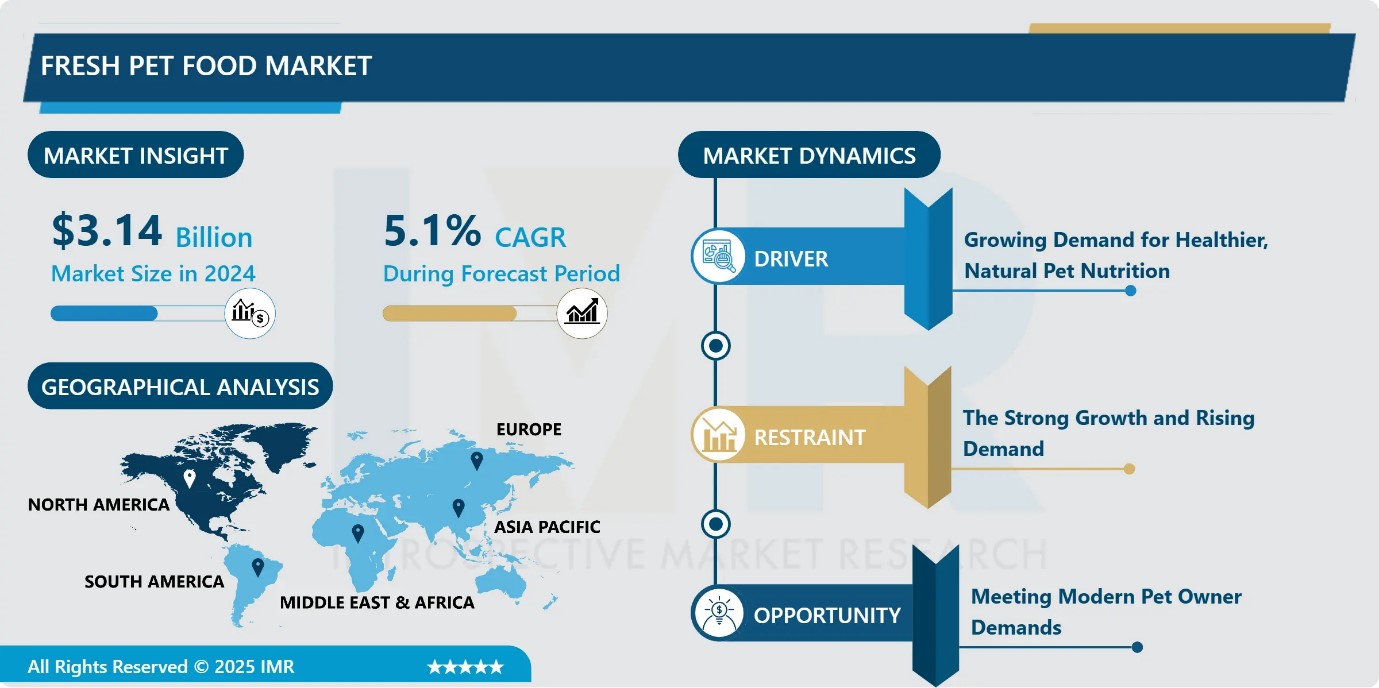
The Fresh Pet Food Market Growth And Trend Analysis:
Market Growth Driver- Growing Demand for Healthier, Natural Pet Nutrition
- The fresh pet food market is growing fast as more pet owners treat their pets like family and want to feed them healthier, more natural food. Fresh pet food includes meals made from real, human-grade ingredients like meat, vegetables, and grains, without artificial additives. People are choosing these foods to keep their pets healthier and happier. North America currently leads the market, but Europe and Asia are catching up quickly.
- The increased popularity of dog, cat, and fish adoption as a family pet is expected to drive product demand. In terms of pet humanization, dogs and cats are experiencing an upward trend. One of the key drivers of the market is expected to be the rising rate of pet ownership worldwide, particularly in emerging regions. One big trend is customized meals made for pets with specific health needs, like allergies or weight problems. Online shopping is also helping the market grow, with more people ordering pet food through subscriptions and delivery services. As more pet owners focus on quality and sustainability, the demand for fresh, eco-friendly pet food options is expected to keep rising. Overall, the market has strong potential, and companies that offer healthy, convenient, and trustworthy products are seeing major success.
Market Limiting Factor - The Strong Growth and Rising Demand
- The strong growth and rising demand in market, the fresh pet food market faces several significant restraints that could hinder its full potential. One of the main challenges is the relatively high cost of fresh pet food compared to conventional dry kibble or canned alternatives. These products often use high-quality, human-grade ingredients and require more complex preparation, packaging, and distribution, all of which contribute to their premium pricing. As a result, many pet owners especially those who have multiple pets or limited disposable income remain price sensitive.
- A survey by the American Veterinary Medical Association (AVMA) revealed that approximately 55% of pet owners are concerned about the affordability of premium pet food options.
- In addition to cost-related concerns, the industry must navigate complex regulatory environments. Fresh pet food requires strict safety standards, appropriate labelling, and proper cold chain logistics, including refrigeration and timely distribution. Inconsistent regulations across different regions add further complications for manufacturers, increasing operational costs and compliance risks. These factors not only challenge producers but can also lead to consumer hesitation due to food safety concerns. Together, these issues pose barriers to broader adoption and could slow the overall growth of the fresh pet food market.
Market Expansion Opportunity- Meeting Modern Pet Owner Demands
- The fresh pet food market has many chances to grow. As more people treat pets like family, companies can create new products that meet specific pet needs, such as food for pets with allergies, health problems, or special diets. The increase in pet adoptions during the COVID-19 pandemic has also expanded the number of pet owners, giving businesses a bigger audience to reach with personalized marketing.
- Another important opportunity is sustainability. Pet food brands can stand out by using responsibly sourced ingredients and eco-friendly packaging. Since more consumers care about the environment, companies that focus on green practices can attract loyal customers. Overall, focusing on pet health and sustainability can help fresh pet food brands succeed in a competitive market.
Market Challenge and Risk- Slowing Down for Growth of Fresh Pet Food Market
- One major challenge in the fresh pet food market is the strong competition between brands. As more new companies enter the market alongside well-known established brands, it becomes harder to stand out. To stay ahead, companies need to constantly come up with new ideas and improve their products. This could mean creating unique recipes, offering special ingredients, or developing personalized options that meet specific pet needs. Brands also have to find ways to connect with customers through marketing and build trust by showing the quality and safety of their food. Without ongoing innovation and clear differences from competitors, it’s difficult to attract and keep loyal customers in such a crowded market. This competitive pressure pushes companies to work harder to offer better products and services, which can be both challenging and costly.
Fresh Pet Food Market Segment Analysis:
Fresh Pet Food Market is segmented based on Type, Application, End-Users, and Region
By Type, Fresh Pet Food segment is expected to dominate the market during the forecast period
- Grain-free pet food is a type of food made without common grains like wheat, corn, rice, or barley. Instead of grains, it uses other ingredients such as sweet potatoes, peas, lentils, or chickpeas to provide energy and fibre. Many pet owners choose grain-free food because they believe it is easier for pets to digest and may help with food allergies, especially for dogs or cats with sensitive stomachs, itchy skin, or digestive problems.
- Grain-free food has become very popular in recent years as more people want to feed their pets high-quality and natural meals. It is often seen as a healthier option and is commonly found in both dry and fresh pet food products. Some fresh pet food brands offer grain-free meals that are gently cooked and delivered to homes, making it easy and convenient for pet owners.
- However, it's important to know that not all pets need a grain-free diet. Grains are not harmful to most pets unless they have specific allergies. Before switching to grain-free food, it's a good idea to talk to a vet. Still, grain-free food remains a top choice in the market, especially among owners looking for premium and tailored nutrition for their pets.
By Distribution, Fresh Pet Food segment held the largest share in 2024
- The global fresh pet food market is divided into two main types of distribution channels: online and offline. The offline segment includes places like supermarkets and hypermarkets, pet specialty stores, veterinary clinics, convenience stores, and other physical stores.
- Online shopping for pet food has become more popular in recent years. One major reason is that it is easy and convenient. Pet owners can order food from their homes without having to visit a store. Online platforms also offer a wider range of products to choose from. The growth of online sales is also driven by features like special discounts, membership deals, and free delivery, which make shopping more attractive and affordable.
- On the other hand, many customers still prefer offline shopping because they can see the products in person and get advice from store staff or vets. Pet specialty stores and vet clinics are especially helpful for customers looking for expert recommendations on the best food for their pets. Supermarkets and hypermarkets are also popular because people can buy pet food while doing their regular grocery shopping.
- However, the online segment is growing faster than the offline one. More people are getting used to digital platforms, and companies are focusing on improving their online services to meet customer needs. Features like scheduled deliveries, subscription plans, and easy return policies are helping to attract more pet owners to shop online. As a result, the online distribution channel is expected to become a major contributor to the growth of the fresh pet food market in the coming years, even though offline stores will continue to play an important role.
Fresh Pet Food Market Regional Insights:
- North America held the largest share of the global fresh pet food market. This dominance is mainly due to the increasing trend of pet humanization, where pet owners treat their animals as part of the family. Many consumers in the U.S. and Canada are now more conscious of their pets' health and prefer feeding them fresh, natural, and preservative-free food. This shift has significantly boosted the demand for premium fresh pet food products. Another major factor contributing to the market’s growth is the rise of subscription-based delivery services, which provide convenience, customization, and regularly scheduled meals tailored to a pet’s specific dietary needs. Brands like fresh pet, The Farmer’s Dog, and Nom Nom have gained strong traction by offering high-quality, ready-to-serve meals delivered directly to consumers' doors.
- This was mainly due to growing awareness among consumers about how pet food can positively impact their pets’ health, as well as the increasing trend of treating pets like family members. The United States was the biggest contributor in this region, thanks to many pet owners and a strong, well-established pet food industry. However, the COVID-19 pandemic caused disruptions in the supply of raw materials and affected transportation, especially in the U.S. This led to a temporary decline in product demand during the first half of 2020. Despite these challenges, North American manufacturers remained strong, and the wide availability of pet food and treats within the region is expected to help the market grow in the coming years.
- North America also benefits from a well-established distribution network that includes supermarkets, pet specialty stores, and robust e-commerce platforms. The region's advanced pet care industry, high pet adoption rates, and increased awareness about pet nutrition continue to fuel demand. Furthermore, growing concerns about pet obesity and allergies have pushed many pet parents to shift from traditional kibble to healthier fresh alternatives. With a strong focus on innovation and pet wellness, North America is expected to remain a key player in the fresh pet food industry for years to come.
Fresh Pet Food Market Active Players
- ADIMAX (Brazil)
- Agro industries Baires S.A. (Argentina)
- Alphia (United States)
- BARF India (India)
- Big Dog Pet Foods (Australia)
- Bühler Group (Switzerland)
- Canidae (United States)
- Dawgie Bowl (India)
- Deuerer (Germany)
- Diamond Pet Foods (United States)
- Edgard & Cooper (Belgium)
- Evermore Pet Food (United States)
- Farm Fresh Pet Foods (United States)
- Fresh pet (United States)
- GA Pet Food Partners (United Kingdom)
- Grocery Pup (United States)
- Hercosul (Brazil)
- Instinct (United States)
- Josera (Germany)
- JustFoodForDogs (United States)
- Kormotech LLC (Ukraine)
- Market Fresh Pet Foods (United States)
- Merrick Pet Care, Inc. (United States)
- My Perfect Pet, Inc (United States)
- Natures Menu Ltd (United Kingdom)
- NomNomNow (United States)
- NORMANDISE Pet Food (France)
- Ollie (United States)
- Open Farm (Canada)
- PetPlate (United States)
- Primal Pet Foods Inc (United States)
- Royal Canin (United Kingdom)
- Stella & Chewy's (United States)
- Sunshine Mills (United States)
- The Farmer's Dog (United States)
- The Honest Kitchen (United States)
- United Petfood (Belgium)
- Wellness Pet Company (United States)
- Whitebridge Pet (United States)
- Xiaoxianliang (China)
|
Fresh Pet Food Market |
|||
|
Base Year: |
2024 |
Forecast Period: |
2025-2035 |
|
Historical Data: |
2018 to 2023 |
Market Size in 2024: |
USD 3.14 Billion |
|
Forecast Period 2025-32 CAGR: |
5.1% |
Market Size in 2035: |
USD 5.43 Billion |
|
Segments Covered: |
By Type |
|
|
|
By Distribution |
|
||
|
By Types
|
|
||
|
By Sources
|
|
||
|
By Region |
|
||
|
Growth Driver: |
|
||
|
Limiting Factor |
|
||
|
Expansion Opportunity |
|
||
|
Challenge and Risk |
|
||
|
Companies Covered in the Report: |
|
||
Chapter 1: Introduction
1.1 Scope and Coverage
Chapter 2:Executive Summary
Chapter 3: Market Landscape
3.1 Market Dynamics and Opportunity Analysis
3.1.1 Growth Drivers
3.1.2 Limiting Factors
3.1.3 Growth Opportunities
3.1.4 Challenges and Risks
3.2 Market Trend Analysis
3.3 Industry Ecosystem
3.4 Industry Value Chain Mapping
3.5 Strategic PESTLE Overview
3.6 Porter's Five Forces Framework
3.7 Regulatory Framework
3.8 Pricing Trend Analysis
3.9 Intellectual Property Review
3.10 Technology Evolution
3.11 Import-Export Analysis
3.12 Consumer Behavior Analysis
3.13 Investment Pocket Analysis
3.14 Go-To Market Strategy
Chapter 4: Fresh Pet Food Market by Animal Type (2018-2035)
4.1 Fresh Pet Food Market Snapshot and Growth Engine
4.2 Market Overview
4.3 Cats
4.3.1 Introduction and Market Overview
4.3.2 Historic and Forecasted Market Size in Value USD and Volume Units
4.3.3 Key Market Trends, Growth Factors, and Opportunities
4.3.4 Geographic Segmentation Analysis
4.4 Dogs
4.5 Birds
4.6 Others
Chapter 5: Fresh Pet Food Market by Type (2018-2035)
5.1 Fresh Pet Food Market Snapshot and Growth Engine
5.2 Market Overview
5.3 Raw
5.3.1 Introduction and Market Overview
5.3.2 Historic and Forecasted Market Size in Value USD and Volume Units
5.3.3 Key Market Trends, Growth Factors, and Opportunities
5.3.4 Geographic Segmentation Analysis
5.4 Frozen Food
5.5 Grain-free
5.6 Pate
Chapter 6: Fresh Pet Food Market by Source (2018-2035)
6.1 Fresh Pet Food Market Snapshot and Growth Engine
6.2 Market Overview
6.3 Animal
6.3.1 Introduction and Market Overview
6.3.2 Historic and Forecasted Market Size in Value USD and Volume Units
6.3.3 Key Market Trends, Growth Factors, and Opportunities
6.3.4 Geographic Segmentation Analysis
6.4 Plant
Chapter 7: Fresh Pet Food Market by Distribution Channel (2018-2035)
7.1 Fresh Pet Food Market Snapshot and Growth Engine
7.2 Market Overview
7.3 Online
7.3.1 Introduction and Market Overview
7.3.2 Historic and Forecasted Market Size in Value USD and Volume Units
7.3.3 Key Market Trends, Growth Factors, and Opportunities
7.3.4 Geographic Segmentation Analysis
7.4 Offline
Chapter 8: Company Profiles and Competitive Analysis
8.1 Competitive Landscape
8.1.1 Competitive Benchmarking
8.1.2 Fresh Pet Food Market Share by Manufacturer/Service Provider(2024)
8.1.3 Industry BCG Matrix
8.1.4 PArtnerships, Mergers & Acquisitions
8.2 ADIMAX (BRAZIL)
8.2.1 Company Overview
8.2.2 Key Executives
8.2.3 Company Snapshot
8.2.4 Role of the Company in the Market
8.2.5 Sustainability and Social Responsibility
8.2.6 Operating Business Segments
8.2.7 Product Portfolio
8.2.8 Business Performance
8.2.9 Recent News & Developments
8.2.10 SWOT Analysis
8.3 AGRO INDUSTRIES BAIRES S.A. (ARGENTINA)
8.4 ALPHIA (UNITED STATES)
8.5 BARF INDIA (INDIA)
8.6 BIG DOG PET FOODS (AUSTRALIA)
8.7 BÜHLER GROUP (SWITZERLAND)
8.8 CANIDAE (UNITED STATES)
8.9 AND DAWGIE BOWL (INDIA). DEUERER (GERMANY)
8.10 DIAMOND PET FOODS (UNITED STATES)
8.11 EDGARD & COOPER (BELGIUM)
8.12 EVERMORE PET FOOD (UNITED STATES)
8.13 FARM FRESH PET FOODS (UNITED STATES)
8.14 FRESHPET (UNITED STATES)
8.15 GA PET FOOD PARTNERS (UNITED KINGDOM)
8.16 GROCERY PUP (UNITED STATES)
8.17 AND HERCOSUL (BRAZIL)
8.18 INSTINCT (UNITED STATES)
8.19 JOSERA (GERMANY)
8.20 JUSTFOODFORDOGS (UNITED STATES)
8.21 KORMOTECH LLC (UKRAINE)
8.22 MARKET FRESH PET FOODS (UNITED STATES)
8.23 MERRICK PET CARE
8.24 INC. (UNITED STATES)
8.25 AND MY PERFECT PET
8.26 INC. (UNITED STATES)
8.27 NATURES MENU LTD (UNITED KINGDOM)
8.28 NOMNOMNOW (UNITED STATES)
8.29 NORMANDISE PET FOOD (FRANCE)
8.30 OLLIE (UNITED STATES)
8.31 OPEN FARM (CANADA)
8.32 PETPLATE (UNITED STATES)
8.33 AND PRIMAL PET FOODS INC. (UNITED STATES)
8.34 ROYAL CANIN (UNITED KINGDOM)
8.35 STELLA & CHEWY'S (UNITED STATES)
8.36 SUNSHINE MILLS (UNITED STATES)
8.37 THE FARMER'S DOG (UNITED STATES)
8.38 THE HONEST KITCHEN (UNITED STATES)
8.39 UNITED PETFOOD (BELGIUM)
8.40 WELLNESS PET COMPANY (UNITED STATES)
8.41 WHITEBRIDGE PET (UNITED STATES)
8.42 AND XIAOXIANLIANG (CHINA)
8.43 OTHER AVTIVE PLAYERS.
Chapter 9: Global Fresh Pet Food Market By Region
9.1 Overview
9.2. North America Fresh Pet Food Market
9.2.1 Key Market Trends, Growth Factors and Opportunities
9.2.2 Top Key Companies
9.2.3 Historic and Forecasted Market Size by Segments
9.2.4 Historic and Forecast Market Size by Country
9.2.4.1 US
9.2.4.2 Canada
9.2.4.3 Mexico
9.3. Eastern Europe Fresh Pet Food Market
9.3.1 Key Market Trends, Growth Factors and Opportunities
9.3.2 Top Key Companies
9.3.3 Historic and Forecasted Market Size by Segments
9.3.4 Historic and Forecast Market Size by Country
9.3.4.1 Russia
9.3.4.2 Bulgaria
9.3.4.3 The Czech Republic
9.3.4.4 Hungary
9.3.4.5 Poland
9.3.4.6 Romania
9.3.4.7 Rest of Eastern Europe
9.4. Western Europe Fresh Pet Food Market
9.4.1 Key Market Trends, Growth Factors and Opportunities
9.4.2 Top Key Companies
9.4.3 Historic and Forecasted Market Size by Segments
9.4.4 Historic and Forecast Market Size by Country
9.4.4.1 Germany
9.4.4.2 UK
9.4.4.3 France
9.4.4.4 The Netherlands
9.4.4.5 Italy
9.4.4.6 Spain
9.4.4.7 Rest of Western Europe
9.5. Asia Pacific Fresh Pet Food Market
9.5.1 Key Market Trends, Growth Factors and Opportunities
9.5.2 Top Key Companies
9.5.3 Historic and Forecasted Market Size by Segments
9.5.4 Historic and Forecast Market Size by Country
9.5.4.1 China
9.5.4.2 India
9.5.4.3 Japan
9.5.4.4 South Korea
9.5.4.5 Malaysia
9.5.4.6 Thailand
9.5.4.7 Vietnam
9.5.4.8 The Philippines
9.5.4.9 Australia
9.5.4.10 New Zealand
9.5.4.11 Rest of APAC
9.6. Middle East & Africa Fresh Pet Food Market
9.6.1 Key Market Trends, Growth Factors and Opportunities
9.6.2 Top Key Companies
9.6.3 Historic and Forecasted Market Size by Segments
9.6.4 Historic and Forecast Market Size by Country
9.6.4.1 Turkiye
9.6.4.2 Bahrain
9.6.4.3 Kuwait
9.6.4.4 Saudi Arabia
9.6.4.5 Qatar
9.6.4.6 UAE
9.6.4.7 Israel
9.6.4.8 South Africa
9.7. South America Fresh Pet Food Market
9.7.1 Key Market Trends, Growth Factors and Opportunities
9.7.2 Top Key Companies
9.7.3 Historic and Forecasted Market Size by Segments
9.7.4 Historic and Forecast Market Size by Country
9.7.4.1 Brazil
9.7.4.2 Argentina
9.7.4.3 Rest of SA
Chapter 10 Analyst Viewpoint and Conclusion
Chapter 11 Our Thematic Research Methodology
11.1 Research Process
11.2 Primary Research
11.3 Secondary Research
Chapter 12 Case Study
Chapter 13 Appendix
13.1 Sources
13.2 List of Tables and figures
13.3 Short Forms and Citations
13.4 Assumption and Conversion
13.5 Disclaimer
|
Fresh Pet Food Market |
|||
|
Base Year: |
2024 |
Forecast Period: |
2025-2035 |
|
Historical Data: |
2018 to 2023 |
Market Size in 2024: |
USD 3.14 Billion |
|
Forecast Period 2025-32 CAGR: |
5.1% |
Market Size in 2035: |
USD 5.43 Billion |
|
Segments Covered: |
By Type |
|
|
|
By Distribution |
|
||
|
By Types
|
|
||
|
By Sources
|
|
||
|
By Region |
|
||
|
Growth Driver: |
|
||
|
Limiting Factor |
|
||
|
Expansion Opportunity |
|
||
|
Challenge and Risk |
|
||
|
Companies Covered in the Report: |
|
||


