




Key Market Highlights
Food Waste App Market Size Was Valued at USD 1.2 billion in 2024, and is Projected to Reach USD 6.62 billion by 2035, Growing at a CAGR of 16.8% from 2025-2035.
- Market Size in 2024: USD 1.2 billion
- Projected Market Size by 2035: USD 6.62 billion
- CAGR (2025–2035): 16.8 %
- Leading Market in 2024: North America
- Fastest-Growing Market: East Asia
- By Type: The consumer segment is anticipated to lead the market by accounting for 48% of the market share throughout the forecast period.
- By Application: The Mobile Application segment is expected to capture 62% of the market share, thereby maintaining its dominance over the forecast period.
- By Region: North America region is projected to hold 35% of the market share during the forecast period.
- Active Players: Bintec (Asia-Pacific), Bring Me Home (Australia), Copia (North America), Eet Smakelijk (Europe), Feedie (Europe), Other Active Players
Food Waste App Market Synopsis:
The Food Waste App Market includes digital platforms that reduce and repurpose surplus food through tracking, donations, and discount sales. Driven by global waste concerns and sustainability goals, the market is growing rapidly. High adoption in developed regions and innovations in AI and IoT boost growth, while regulatory, awareness, and infrastructure challenges persist, especially in developing countries
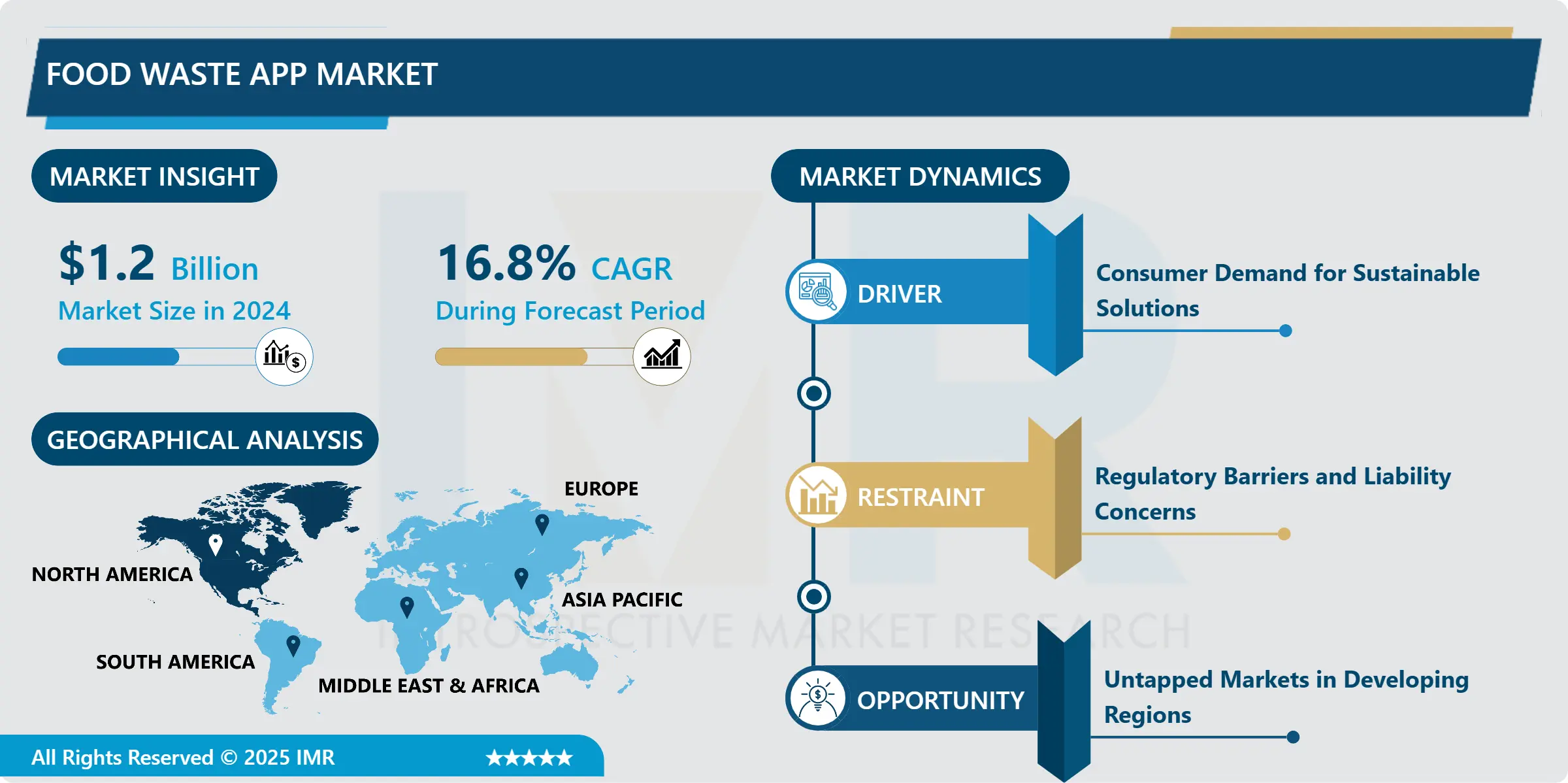
Food Waste App Market Dynamics and Trend Analysis:
Food Waste App Market Growth Driver - Consumer Demand for Sustainable Solutions
-
One of the major growth drivers of the food waste app market is the rising demand for sustainable solutions among consumers. Today’s consumers especially Millennials and Gen Z are more environmentally aware than previous generations. They actively seek products and services that align with their values, such as reducing waste, cutting carbon footprints, and promoting responsible consumption.
- Food waste apps directly support these goals by helping people prevent food from being wasted, whether at home or in restaurants and stores. These apps offer features like tracking expiry dates, sharing or donating leftovers, and buying surplus food at discounted prices from local businesses. This not only helps users save money but also contributes to a healthier planet by keeping food out of landfills, where it would produce harmful greenhouse gases.
- Many consumers are also motivated by the sense of community these apps create. Platforms like OLIO encourage neighbours to share food, while apps like Too Good To Go allow users to support local cafes and restaurants by purchasing unsold meals. This gives people a feeling that their small actions can make a big difference. As awareness of climate change and food insecurity continues to grow, more consumers are turning to these digital tools as part of their daily routines. This shift in behaviour is a key reason why the food waste app market is expanding rapidly and gaining popularity across different regions and demographics.
Food Waste App Market Limiting Factor - Regulatory Barriers and Liability Concerns
-
One of the main factors limiting the growth of the food waste app market is the presence of strict food safety regulations and legal concerns. Many restaurants, grocery stores, and food producers are willing to donate or sell surplus food. However, they often hesitate to do so because they fear they could face legal consequences if someone gets sick from consuming the food they provided even if it was still safe at the time of donation.
- In some regions, there are Good Samaritan laws that protect food donors from legal liability as long as the donation is made in good faith and the food is safe to eat. However, not all countries or regions have these protections, and where they do exist, many businesses are unaware of them or don’t fully understand what is allowed. As a result, businesses may prefer to throw food away rather than risk fines or lawsuits, which directly affects the amount of surplus food available to be shared or sold through food waste apps.
- Additionally, complex food labelling laws, health codes, and transport rules make it difficult for food waste apps to operate smoothly across different regions. Until clearer, more consistent laws and stronger legal protections are in place, these regulatory and liability concerns will continue to slow the adoption of food waste apps, especially among larger food businesses.
Food Waste App Market Expansion Opportunity - Untapped Markets in Developing Regions
-
A major growth opportunity for the food waste app market lies in expanding into developing and emerging economies. These regions often face high levels of food insecurity, with millions of people lacking regular access to nutritious meals. At the same time, large amounts of food go to waste due to poor storage, lack of coordination, and inefficiencies in the supply chain.
- While food waste is a global issue, digital tools to manage and reduce food waste are still underused in many developing countries. This opens up a significant opportunity for food waste apps to enter these markets and make a real impact. As smartphone usage and internet access continue to grow in places like South Asia, Africa, and parts of Latin America, more people can be reached through affordable, mobile-based solutions.
- Food waste apps can help connect local businesses, farmers, and communities to redistribute surplus food, promote local donations, and raise awareness about food conservation. These apps can also support local governments and non-profits in building more efficient food recovery networks. With the right local partnerships, language support, and low-cost access models, food waste apps have the potential to reach millions of new users in underserved areas helping to reduce hunger while also addressing food waste. This represents a powerful win-win opportunity for both social impact and market growth.
Food Waste App Market Challenge and Risk - User Adoption and Retention in Food Waste Apps
-
One of the biggest challenges for food waste apps is getting people to use the app regularly after downloading it. Many users may download the app out of curiosity, but they might stop using it after a short time. This is often because of existing consumer behaviour. People are used to their daily routines, and changing how they handle leftover food or surplus items can be hard. It takes effort to remember to check the app before throwing something away or buying new food.
- Another major reason why users don’t stick with food waste apps is the lack of immediate value. If the app doesn’t clearly show how, it can save them money, time, or food right away, users may lose interest. Some apps focus on long-term benefits like helping the environment, but for many users, this isn’t enough to keep them engaged. They want to see quick results like discounted meals, free food offers, or simple tools that help them manage their kitchen better.
- To overcome these challenges, food waste apps must offer a smooth and engaging experience. This could include reminders, gamification (like points or rewards), or success stories from other users. Clear benefits and useful features should be visible early on. By focusing on user habits and motivations, apps can improve both adoption and retention turning a one-time user into someone who regularly helps reduce food waste through the platform.
Food Waste App Market Segment Analysis:
Food Waste App Market is segmented based on Type, Application, End-Users, and Region
By Type, Food Waste App Market Segment is Expected to Dominate the Market During the Forecast Period
-
Consumers are individual users or families who use food waste apps to manage and reduce the amount of food they throw away at home. These users are becoming more aware of how much food goes to waste and how that affects their budget, health, and the environment. Food waste apps help them take simple steps to change their daily habits and make better use of what they already have in their kitchens.
- The features designed for consumers are practical and easy to use. Many apps offer meal planning tools, which help users organize what they will cook and eat during the week. This reduces the chances of overbuying or forgetting items in the fridge. Expiry date reminders alert users when food is close to going bad, helping them use it in time. Some apps also suggest recipes based on leftover ingredients, which is great for saving food that might otherwise be thrown away. Other helpful tools include shopping tips and portion control, to avoid buying or cooking too much.
- Most consumers prefer using the app on their mobile phones, which makes it easy to access anytime whether at home or while shopping. These apps support daily decision-making and promote more thoughtful food usage, helping users save money and support environmental goals through simple, everyday actions.
By Application, Food Waste App Market Segment Held the Largest Share in 2024
-
Mobile applications are apps that are designed specifically for smartphones and tablets. These platforms are the most popular choice for food waste apps because they offer easy, on-the-go access. Most users, especially consumers, prefer mobile apps because they can use them anytime and anywhere whether they’re at home, in a grocery store, or on the move.
- Food waste mobile apps are built to support quick and simple interactions. For example, users can scan products to track expiry dates, receive notifications when food is about to spoil, or check meal suggestions based on ingredients they already have. This helps people make smarter decisions without needing much time or effort.
- One of the biggest strengths of mobile apps is their personalized experience. Many of them offer reminders, custom tips, and real-time deals from local stores or restaurants. This makes the app feel more useful and engaging for users. The design is usually simple and user-friendly, which encourages regular use.
- Mobile apps are perfect for daily engagement. They fit into a person’s routine and make it easier to take small steps toward reducing food waste. Whether it’s planning meals, using up leftovers, or finding discounted food nearby, mobile platforms help users act quickly and conveniently, making food waste reduction a part of everyday life.
Food Waste App Market Regional Insights:
North America is Expected to Dominate the Market Over the Forecast Period
-
North America is one of the biggest and most active markets for food waste apps. This is mainly because people in this region use smartphones regularly, and there is a growing interest in living more sustainably. Many individuals, families, and businesses are becoming more aware of how much food is wasted every day and are looking for ways to reduce it. Food waste apps provide a simple and smart solution to this problem.
- In countries like the United States and Canada, both consumers and businesses are using these apps. Consumers use them for meal planning, recipe ideas, and reminders to use food before it expires. Restaurants, grocery stores, and cafes use them to track extra food and either sell it at a discount or donate it. This helps reduce waste and cut down on costs.
- The governments in North America also play a role by supporting food waste reduction campaigns. These efforts encourage people to change their habits and try digital tools that help save food. At the same time, many tech startups in the region are launching new food waste apps with creative features, which adds more options for users. Because of strong technology use, high awareness, and supportive policies, North America continues to lead the way in reducing food waste through innovative mobile and web-based solutions.
Food Waste App Market Active Players:
- Bintec (Singapore)
- Bring Me Home (Australia)
- Copia (United States)
- Eet Smakelijk (Netherlands)
- Feedie (United Kingdom)
- Flashfood (Canada)
- Food Cowboy (United States)
- Food Rescue Hero (United States)
- FoodCloud (Ireland)
- GoMkt (United States)
- Goodr (United States)
- Imperfect Foods (United States)
- Karma (Sweden)
- Love Food Hate Waste (United Kingdom)
- Lovin’ Scoopful (United States)
- Misfits Market (United States)
- NoWaste (United Kingdom)
- OLIO (United Kingdom)
- Phenix (France)
- Rally (United States)
- RecycleSmart (Australia)
- Replate (United States)
- ShareWaste (Australia)
- Spoiler Alert (United States)
- Too Good To Go (United States)
- Ubibene (France)
- Yindii (Thailand)
- YourLocal (Denmark)
- Zero Percent (United States)
- Zéro-Gâchis (France)
- Other Active Players
|
Food Waste App Market |
|||
|
Base Year: |
2024 |
Forecast Period: |
2025-2035 |
|
Historical Data: |
2018 to 2024 |
Market Size in 2024: |
USD 1.2 billion |
|
Forecast Period 2025-35 CAGR: |
16.8 % |
Market Size in 2035: |
USD 6.62 billion |
|
Segments Covered: |
By Type |
|
|
|
By Application
|
|
||
|
By Technology |
|
||
|
By Target |
|
||
|
By Pricing Model |
|
||
|
By Region |
|
||
|
Growth Driver: |
|
||
|
Limiting Factor |
|
||
|
Expansion Opportunity |
|
||
|
Challenge and Risk |
|
||
|
Companies Covered in the Report: |
|
||
Chapter 1: Introduction
1.1 Scope and Coverage
Chapter 2:Executive Summary
Chapter 3: Market Landscape
3.1 Market Dynamics and Opportunity Analysis
3.1.1 Growth Drivers
3.1.2 Limiting Factors
3.1.3 Growth Opportunities
3.1.4 Challenges and Risks
3.2 Market Trend Analysis
3.3 Industry Ecosystem
3.4 Industry Value Chain Mapping
3.5 Strategic PESTLE Overview
3.6 Porter's Five Forces Framework
3.7 Regulatory Framework
3.8 Pricing Trend Analysis
3.9 Intellectual Property Review
3.10 Technology Evolution
3.11 Import-Export Analysis
3.12 Consumer Behavior Analysis
3.13 Investment Pocket Analysis
3.14 Go-To Market Strategy
Chapter 4: Food Waste App Market by User Type (2018-2035)
4.1 Food Waste App Market Snapshot and Growth Engine
4.2 Market Overview
4.3 Consumers
4.3.1 Introduction and Market Overview
4.3.2 Historic and Forecasted Market Size in Value USD and Volume Units
4.3.3 Key Market Trends, Growth Factors, and Opportunities
4.3.4 Geographic Segmentation Analysis
4.4 Restaurants and Cafes
Chapter 5: Food Waste App Market by Feature Set (2018-2035)
5.1 Food Waste App Market Snapshot and Growth Engine
5.2 Market Overview
5.3 Waste Tracking and Reporting
5.3.1 Introduction and Market Overview
5.3.2 Historic and Forecasted Market Size in Value USD and Volume Units
5.3.3 Key Market Trends, Growth Factors, and Opportunities
5.3.4 Geographic Segmentation Analysis
5.4 Meal Planning and Recipe Suggestions
Chapter 6: Food Waste App Market by Technology Platform (2018-2035)
6.1 Food Waste App Market Snapshot and Growth Engine
6.2 Market Overview
6.3 Mobile Applications
6.3.1 Introduction and Market Overview
6.3.2 Historic and Forecasted Market Size in Value USD and Volume Units
6.3.3 Key Market Trends, Growth Factors, and Opportunities
6.3.4 Geographic Segmentation Analysis
6.4 Web-based Solutions
Chapter 7: Food Waste App Market by Target Market Segment (2018-2032)
7.1 Food Waste App Market Snapshot and Growth Engine
7.2 Market Overview
7.3 Environmentally Conscious Individuals
7.3.1 Introduction and Market Overview
7.3.2 Historic and Forecasted Market Size in Value USD and Volume Units
7.3.3 Key Market Trends, Growth Factors, and Opportunities
7.3.4 Geographic Segmentation Analysis
7.4 Health-conscious Households
Chapter 8: Food Waste App Market by Pricing Model (2018-2035)
8.1 Food Waste App Market Snapshot and Growth Engine
8.2 Market Overview
8.3 Subscription-based
8.3.1 Introduction and Market Overview
8.3.2 Historic and Forecasted Market Size in Value USD and Volume Units
8.3.3 Key Market Trends, Growth Factors, and Opportunities
8.3.4 Geographic Segmentation Analysis
8.4 Freemium Model
Chapter 9: Company Profiles and Competitive Analysis
9.1 Competitive Landscape
9.1.1 Competitive Benchmarking
9.1.2 Food Waste App Market Share by Manufacturer/Service Provider(2024)
9.1.3 Industry BCG Matrix
9.1.4 PArtnerships, Mergers & Acquisitions
9.2 BINTEC (SINGAPORE)
9.2.1 Company Overview
9.2.2 Key Executives
9.2.3 Company Snapshot
9.2.4 Role of the Company in the Market
9.2.5 Sustainability and Social Responsibility
9.2.6 Operating Business Segments
9.2.7 Product Portfolio
9.2.8 Business Performance
9.2.9 Recent News & Developments
9.2.10 SWOT Analysis
9.3 BRING ME HOME (AUSTRALIA)
9.4 COPIA (UNITED STATES)
9.5 EET SMAKELIJK (NETHERLANDS)
9.6 FEEDIE (UNITED KINGDOM)
9.7 FLASHFOOD (CANADA)
9.8 FOOD COWBOY (UNITED STATES)
9.9 FOOD RESCUE HERO (UNITED STATES)
9.10 FOODCLOUD (IRELAND)
9.11 GOMKT (UNITED STATES)
9.12 GOODR (UNITED STATES)
9.13 IMPERFECT FOODS (UNITED STATES)
9.14 KARMA (SWEDEN)
9.15 LOVE FOOD HATE WASTE (UNITED KINGDOM)
9.16 LOVIN’ SCOOPFUL (UNITED STATES)
9.17 MISFITS MARKET (UNITED STATES)
9.18 NOWASTE (UNITED KINGDOM)
9.19 OLIO (UNITED KINGDOM)
9.20 PHENIX (FRANCE)
9.21 RALLY (UNITED STATES)
9.22 RECYCLESMART (AUSTRALIA)
9.23 REPLATE (UNITED STATES)
9.24 SHAREWASTE (AUSTRALIA)
9.25 SPOILER ALERT (UNITED STATES)
9.26 TOO GOOD TO GO (UNITED STATES)
9.27 UBIBENE (FRANCE)
9.28 YINDII (THAILAND)
9.29 YOURLOCAL (DENMARK)
9.30 ZERO PERCENT (UNITED STATES)
9.31 ZÉRO-GÂCHIS (FRANCE)
9.32
Chapter 10: Global Food Waste App Market By Region
10.1 Overview
10.2. North America Food Waste App Market
10.2.1 Key Market Trends, Growth Factors and Opportunities
10.2.2 Top Key Companies
10.2.3 Historic and Forecasted Market Size by Segments
10.2.4 Historic and Forecast Market Size by Country
10.2.4.1 US
10.2.4.2 Canada
10.2.4.3 Mexico
10.3. Eastern Europe Food Waste App Market
10.3.1 Key Market Trends, Growth Factors and Opportunities
10.3.2 Top Key Companies
10.3.3 Historic and Forecasted Market Size by Segments
10.3.4 Historic and Forecast Market Size by Country
10.3.4.1 Russia
10.3.4.2 Bulgaria
10.3.4.3 The Czech Republic
10.3.4.4 Hungary
10.3.4.5 Poland
10.3.4.6 Romania
10.3.4.7 Rest of Eastern Europe
10.4. Western Europe Food Waste App Market
10.4.1 Key Market Trends, Growth Factors and Opportunities
10.4.2 Top Key Companies
10.4.3 Historic and Forecasted Market Size by Segments
10.4.4 Historic and Forecast Market Size by Country
10.4.4.1 Germany
10.4.4.2 UK
10.4.4.3 France
10.4.4.4 The Netherlands
10.4.4.5 Italy
10.4.4.6 Spain
10.4.4.7 Rest of Western Europe
10.5. Asia Pacific Food Waste App Market
10.5.1 Key Market Trends, Growth Factors and Opportunities
10.5.2 Top Key Companies
10.5.3 Historic and Forecasted Market Size by Segments
10.5.4 Historic and Forecast Market Size by Country
10.5.4.1 China
10.5.4.2 India
10.5.4.3 Japan
10.5.4.4 South Korea
10.5.4.5 Malaysia
10.5.4.6 Thailand
10.5.4.7 Vietnam
10.5.4.8 The Philippines
10.5.4.9 Australia
10.5.4.10 New Zealand
10.5.4.11 Rest of APAC
10.6. Middle East & Africa Food Waste App Market
10.6.1 Key Market Trends, Growth Factors and Opportunities
10.6.2 Top Key Companies
10.6.3 Historic and Forecasted Market Size by Segments
10.6.4 Historic and Forecast Market Size by Country
10.6.4.1 Turkiye
10.6.4.2 Bahrain
10.6.4.3 Kuwait
10.6.4.4 Saudi Arabia
10.6.4.5 Qatar
10.6.4.6 UAE
10.6.4.7 Israel
10.6.4.8 South Africa
10.7. South America Food Waste App Market
10.7.1 Key Market Trends, Growth Factors and Opportunities
10.7.2 Top Key Companies
10.7.3 Historic and Forecasted Market Size by Segments
10.7.4 Historic and Forecast Market Size by Country
10.7.4.1 Brazil
10.7.4.2 Argentina
10.7.4.3 Rest of SA
Chapter 11 Analyst Viewpoint and Conclusion
Chapter 12 Our Thematic Research Methodology
12.1 Research Process
12.2 Primary Research
12.3 Secondary Research
Chapter 13 Case Study
Chapter 14 Appendix
14.1 Sources
14.2 List of Tables and figures
14.3 Short Forms and Citations
14.4 Assumption and Conversion
14.5 Disclaimer
|
Food Waste App Market |
|||
|
Base Year: |
2024 |
Forecast Period: |
2025-2035 |
|
Historical Data: |
2018 to 2024 |
Market Size in 2024: |
USD 1.2 billion |
|
Forecast Period 2025-35 CAGR: |
16.8 % |
Market Size in 2035: |
USD 6.62 billion |
|
Segments Covered: |
By Type |
|
|
|
By Application
|
|
||
|
By Technology |
|
||
|
By Target |
|
||
|
By Pricing Model |
|
||
|
By Region |
|
||
|
Growth Driver: |
|
||
|
Limiting Factor |
|
||
|
Expansion Opportunity |
|
||
|
Challenge and Risk |
|
||
|
Companies Covered in the Report: |
|
||


