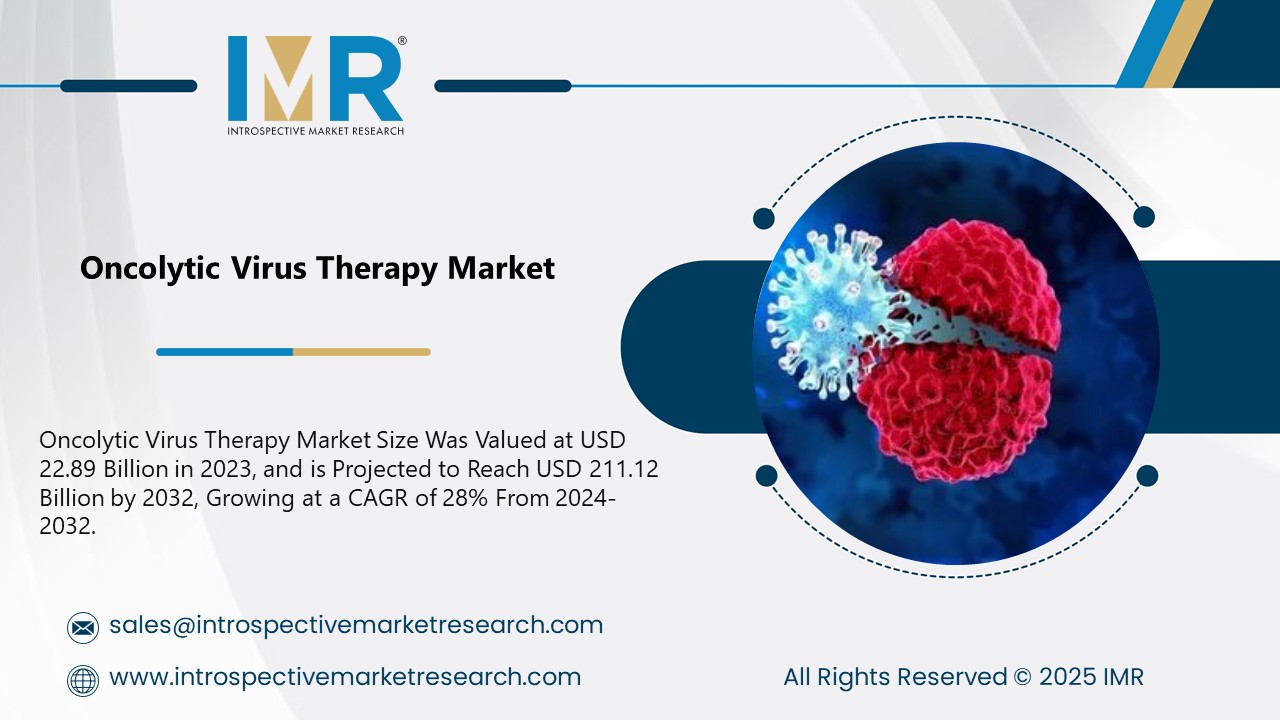
According to a new report published by Introspective Market Research, titled, Oncolytic Virus Therapy Market by Type, Therapy, Application, and End-User, The Global Oncolytic Virus Therapy Market Size Was Valued at USD 22.89 Billion in 2023 and is Projected to Reach USD 211.12 Billion by 2032, Growing at a CAGR of 28%. The Oncolytic Virus Therapy Market focuses on the development and application of viruses genetically modified to selectively infect and destroy cancer cells while sparing normal healthy cells. These oncolytic viruses (OVs) replicate within tumor cells, causing them to lyse and release tumor-associated antigens, thereby stimulating a systemic anti-tumor immune response. This innovative therapeutic approach represents a promising frontier in cancer treatment, offering a novel mechanism of action compared to traditional therapies like chemotherapy and radiation.
Oncolytic virus therapy provides several advantages, including high specificity for cancer cells, potential for systemic anti-tumor immunity, and fewer severe side effects compared to conventional treatments. They can also be combined with other cancer therapies to enhance efficacy. This treatment modality holds significant promise for a range of difficult-to-treat cancers, including melanoma, glioblastoma, and various solid tumors. Its main uses are in advanced cancer cases where other treatments have failed or are unsuitable, and increasingly, as part of combination therapies to improve patient outcomes.
One key growth driver for the Oncolytic Virus Therapy Market is the increasing prevalence of various types of cancer globally and the urgent need for more effective and less toxic treatment options. Despite advancements in conventional therapies, many cancers remain challenging to treat, leading to high recurrence rates and significant patient morbidity and mortality. Oncolytic virus therapy offers a unique, targeted, and immunomodulatory approach that addresses these unmet medical needs. The rising incidence of cancer worldwide, coupled with the limitations of existing treatments, fuels the demand for innovative therapies like OVs that can improve survival rates and quality of life for cancer patients.
A significant market opportunity for the Oncolytic Virus Therapy Market lies in the growing research and development efforts and the expansion of clinical trials to explore new virus platforms and combination therapies. Companies and academic institutions are heavily investing in identifying novel oncolytic viruses, improving their tumor selectivity and potency, and investigating their synergistic effects with immunotherapies, chemotherapy, and radiation. This extensive R&D pipeline promises to bring more OVs to market for a broader range of cancer indications, unlocking new treatment paradigms and expanding the therapeutic landscape beyond currently approved therapies, thus capturing a larger share of the oncology market.
Oncolytic Virus Therapy Market, Segmentation
The Oncolytic Virus Therapy Market is segmented on the basis of Type, Therapy, Application, and End-User.
Type
- The Type segment is further classified into HSV (Herpes Simplex Virus), Adenovirus, Vaccinia Virus, and Others. Among these, the HSV (Herpes Simplex Virus) sub-segment accounted for the highest market share in 2023. HSV-based oncolytic viruses, such as Talimogene Laherparepvec (T-VEC), have been at the forefront of OV therapy development due to their well-understood biology, large genome size for genetic modification, and proven safety profile in clinical settings. The success of T-VEC in treating melanoma has paved the way for further research and development in this area, solidifying HSV's leading position in the market.
Therapy
- The Therapy segment is further classified into Mono-therapy and Combination Therapy. Among these, the Combination Therapy sub-segment accounted for the highest market share in 2023. Oncolytic viruses are increasingly being explored and used in combination with other anti-cancer treatments, such as immune checkpoint inhibitors, chemotherapy, and radiation therapy. This approach leverages the ability of OVs to induce immunogenic cell death and enhance the anti-tumor immune response, making tumors more susceptible to other therapies. The synergistic effects observed in clinical trials underscore the potential for combination therapies to achieve superior clinical outcomes and broaden the applicability of OVs.
Some of The Leading/Active Market Players Are-
- Amgen Inc. (USA)
- Merck & Co., Inc. (USA)
- Bristol Myers Squibb Company (USA)
- Johnson & Johnson (USA)
- Pfizer Inc. (USA)
- Transgene SA (France)
- Oncolytics Biotech Inc. (Canada)
- Sillajen Inc. (South Korea)
- TILT Biotherapeutics (Finland)
- Takara Bio Inc. (Japan)
- PsiOxus Therapeutics Ltd (UK)
- DNAtrix, Inc. (USA)
- Cold Genesys, Inc. (USA)
- Replimune Group Inc. (USA)
- Vyriad, Inc. (USA)
- and other active players.
Key Industry Developments
- In March 2023, Oncolytics Biotech Inc. announced positive interim data from its GOBLET study, evaluating pelareorep in combination with atezolizumab and gemcitabine/nab-paclitaxel for metastatic pancreatic ductal adenocarcinoma. The results showed promising improvements in overall response rates and duration of response, further supporting the potential of oncolytic viruses in difficult-to-treat cancers and validating combination therapy approaches.
- In February 2023, Replimune Group Inc. presented updated clinical data for its lead product candidate, RP1, in combination with nivolumab, showing durable responses in patients with various solid tumors, including cutaneous squamous cell carcinoma. This continued positive data reinforces the efficacy of RP1, an enhanced oncolytic HSV-1, and highlights the ongoing progress in developing next-generation oncolytic viruses with improved therapeutic profiles.
Key Findings of the Study
- HSV-based oncolytic viruses dominate the market due to established efficacy and research.
- Combination therapy holds the largest market share, showcasing synergistic benefits with other treatments.
- The rising global cancer burden and need for novel therapies drive market growth.
- Extensive R&D and expanding clinical trials present significant market opportunities.
- Integration of OVs with immunotherapies is a key trend, enhancing anti-tumor responses.