




Smart Bottles Market Synopsis
Smart Bottles Market Size Was Valued at USD 197.29 Million in 2024 and is Projected to Reach USD 846.76 Million by 2035, Growing at a CAGR of 14.16% From 2025-2035.
Smart Bottles are high-tech drinking containers that often incorporate features such as hydration tracking, temperature control, weight sensing, and smart caps with embedded sensors. These features are designed to enhance the user experience by providing added functionalities like tracking water intake, maintaining the temperature of the liquid, and even syncing data with smartphones or other devices.
The surge in demand for Smart Bottles can be attributed to increasing health awareness among consumers, growing interest in fitness and wellness, and the rising adoption of smart and connected devices. In particular, the fitness and healthcare sectors have shown significant interest in these products, as they can aid in monitoring hydration levels – an essential aspect of health and wellness. Moreover, technological innovations in material science and the Internet of Things (IoT) have facilitated the development of more efficient, user-friendly, and versatile Smart Bottles.
The growing popularity of smart homes and gadgets, and environmental concerns prompting consumers to shift from single-use plastic bottles to reusable smart alternatives. Additionally, the market is segmented by various factors including technology type, material, distribution channel, and geography, allowing for a diverse range of products catering to different consumer needs. With technology constantly evolving, the Smart Bottles market is expected to continue expanding, introducing new functionalities and features that align with consumer lifestyles and preferences.
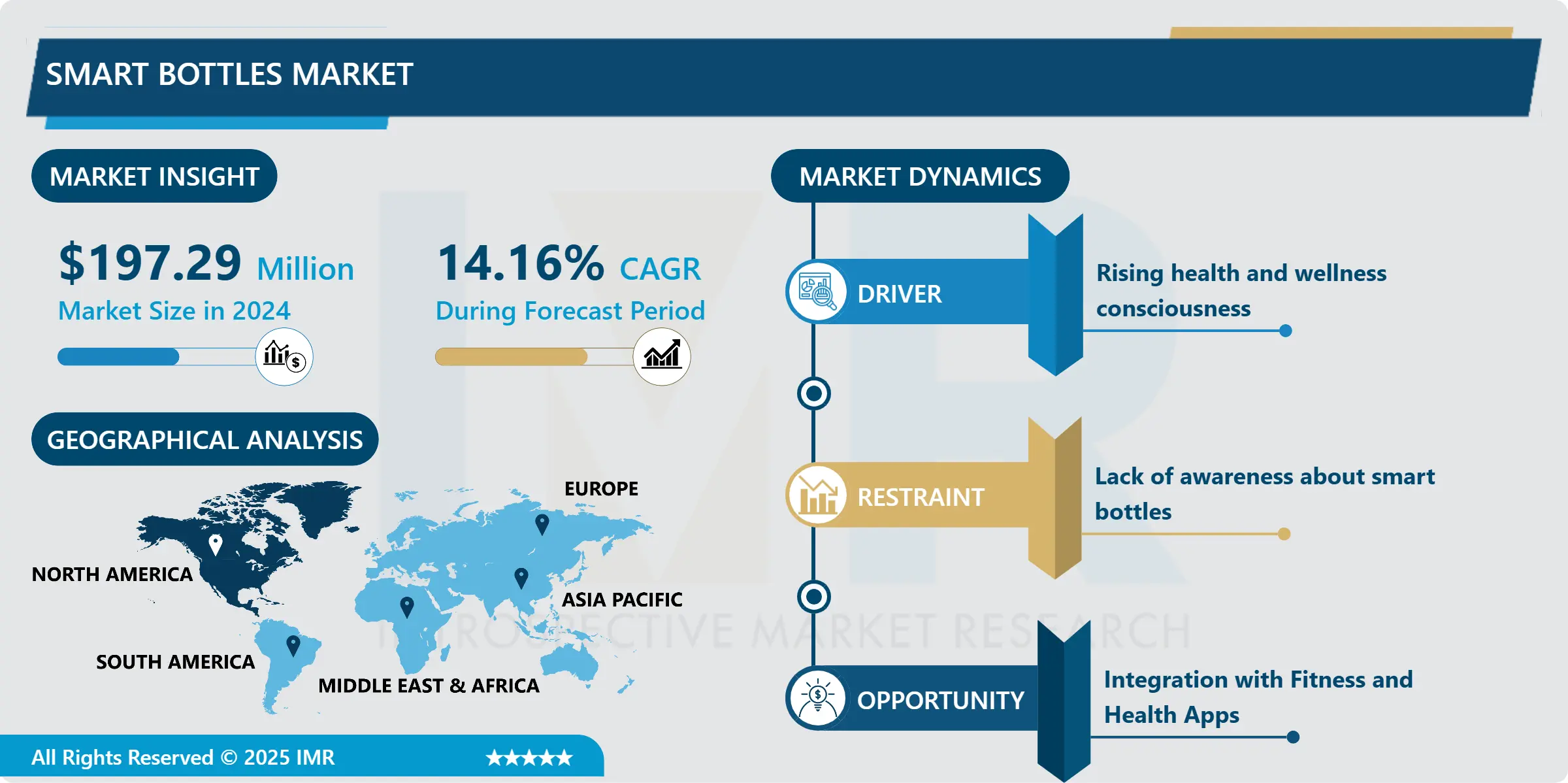

Smart Bottles Market Trend Analysis
Rising health and wellness consciousness
- Increased focus on health and wellness, consumers are more aware of the importance of staying hydrated. Smart Bottles cater to this awareness by offering features like hydration tracking and reminders. These functionalities help individuals monitor their water intake, ensuring they meet daily hydration goals, which is crucial for overall health, physical performance, and cognitive function. By linking hydration to wellness and health outcomes, Smart Bottles become an essential tool for health-conscious individuals.
- Smart Bottles can integrate with other health-tracking devices and apps, providing a comprehensive overview of an individual's health metrics. This integration allows for synchronized data on hydration levels alongside other health indicators like physical activity, caloric intake, and sleep patterns. Such comprehensive health tracking is appealing to consumers who are dedicated to maintaining or improving their health and wellness, making Smart Bottles an attractive choice for a health-centric lifestyle.
Integration with Fitness and Health Apps
- Syncing with fitness and health apps, Smart Bottles can provide users with a comprehensive overview of their hydration about their overall health and fitness goals. For instance, data on water intake from the Smart Bottle can be automatically logged into fitness apps, allowing users to track their hydration alongside other health metrics like calories burned, steps taken, and heart rate. This seamless integration simplifies the tracking process and enhances the user's ability to make informed decisions about their health.
- Smart Bottles can offer personalized hydration recommendations. These recommendations can be based on various factors, including the user's physical activity level, environmental conditions, and personal health goals. For example, after a strenuous workout, the app could suggest increased water intake to compensate for the fluids lost. Similarly, on days with higher temperatures or during travel, the app could adjust its recommendations to ensure optimal hydration.
Smart Bottles Market Segment Analysis:
Smart Bottles Market Segmented on the basis of type, Technology Type, Material, Distribution Channel, and Application.
By Technology Type, Hydration Tracking segment is expected to dominate the market during the forecast period
- Hydration Tracking technology in Smart Bottles addresses this by helping users monitor their water intake throughout the day. This feature is particularly appealing to health-conscious individuals, fitness enthusiasts, and people with specific hydration needs due to health conditions. The ability of these bottles to provide real-time feedback and reminders ensures that users maintain optimal hydration levels, which is crucial for various bodily functions, physical performance, and general well-being.
- The Hydration Tracking feature seamlessly integrates with the current trend of fitness tracking and health monitoring. People who use fitness trackers and apps find it beneficial to sync their hydration data with other health metrics. This integration allows for a comprehensive health management approach, where hydration is viewed as a key component of a healthy lifestyle.
By Application, Sports segment held the largest share of 38.9% in 2024
- The Sports segment's dominance in the Smart Bottles market is primarily due to the increased focus on sports and fitness activities, where hydration plays a crucial role. Athletes and sports enthusiasts are particularly conscious about maintaining optimal hydration levels for enhanced performance and recovery. Smart Bottles, with their ability to track and monitor hydration in real time, cater directly to this need. These bottles can alert users when it’s time to drink, track their water intake, and even adjust hydration recommendations based on the intensity and duration of their physical activity. This feature is especially important in sports, where even minor dehydration can significantly impact performance and endurance.
- These bottles can sync with various fitness tracking devices and apps, providing athletes with a comprehensive overview of their health metrics. This integration allows for a more holistic approach to training and recovery, where hydration data becomes a crucial part of the athlete's overall fitness regime. In sports, where marginal gains are often the difference between winning and losing, such detailed insights into one’s hydration and health can be precious.
Smart Bottles Market Regional Insights:
North America is Expected to Dominate the Market Over the Forecast period
- North America's dominant position in the Smart Bottles market can be largely attributed to a combination of high disposable income, a robust fitness culture, and rapid technological adoption. The region's strong economy and relatively high standard of living mean that consumers have more disposable income to spend on innovative health and wellness products. Smart Bottles, with their advanced features and health-tracking capabilities, fit well into the lifestyle of consumers who are willing to invest in premium products that enhance their daily routine and support their health goals.
- North America, particularly the United States, has a large population that is highly conscious about health, fitness, and overall well-being. This is reflected in the booming fitness and athleisure industries, where there is a continuous demand for products that can aid in health optimization. Smart Bottles align perfectly with this trend, as they offer features like hydration tracking and temperature control, which are valuable to individuals engaged in sports and fitness activities.
Smart Bottles Market Top Key Players:
- HidrateSpark(USA)
- Lumos Labs (USA)
- Ember (USA)
- Hydro Flask (USA)
- Trago Studio (USA)
- Gatorade Gx (USA)
- Nalgene Wide Mouth Oasis (USA)
- Camelbak Eddy(USA)
- Yeti Rambler Hydration Bottle (USA)
- Coca-Cola Smartbottle (USA)
- Pepsi Spire (USA)
- Evian Rehydration Coach (France)
- Lipton Ice Tea Smart Cap (USA)
- Starbucks Reusable Cup (USA)
- AdhereTech SmartDose Cap (USA)
- Equa SmartFlask (Germany)
- Lixada Smart Bottle (Spain)
- Thermos OneTouch Bottle (France)
- AooYoo Smart Water Bottle (Italy)
- MOSH Bottle (Sweden)
- Yunmai Smart Bottle (China)
- Minimo Water Bottle (Korea)
- Thermos Smart Hydration Bottle (Japan)
- HidrateMe Fruit Infuser Bottle (Australia)
- Equa Smart Cup (India)
Key Industry Developments in the Smart Bottles Market:
- In October 2023, HidrateSpark, a leading innovator in smart hydration technology, announced an exciting partnership with Peloton, the renowned fitness company. This collaboration integrates HidrateSpark's advanced smart bottles with Peloton’s bikes and treadmills. This pioneering move allows for real-time hydration tracking during workouts, offering Peloton users an enhanced and more holistic fitness experience.
- In October 2023, Hydro Flask unveiled an exciting new limited-edition smart bottle collection featuring Disney characters. This fresh initiative aims to attract younger consumers by blending the appeal of iconic Disney figures with the innovative functionality of Hydro Flask's smart bottles. This creative approach showcases Hydro Flask's dedication to expanding its market reach and engaging with a youthful audience through a delightful combination of technology and popular culture.
|
Global Smart Bottles Market |
|||
|
Base Year: |
2024 |
Forecast Period: |
2025-2035 |
|
Historical Data: |
2018 to 2023 |
Market Size in 2024: |
USD 197.29 Mn. |
|
Forecast Period 2025-35 CAGR: |
14.16% |
Market Size in 2035: |
USD 846.76 Mn. |
|
Segments Covered: |
By Type |
|
|
|
By Technology Type |
|
||
|
By Material |
|
||
|
By Distribution Channel |
|
||
|
By Application |
|
||
|
By Region |
|
||
|
Key Market Drivers: |
|
||
|
Key Market Restraints: |
|
||
|
Key Opportunities: |
|
||
|
Companies Covered in the report: |
|
||
Chapter 1: Introduction
1.1 Scope and Coverage
Chapter 2:Executive Summary
Chapter 3: Market Landscape
3.1 Market Dynamics
3.1.1 Drivers
3.1.2 Restraints
3.1.3 Opportunities
3.1.4 Challenges
3.2 Market Trend Analysis
3.3 PESTLE Analysis
3.4 Porter's Five Forces Analysis
3.5 Industry Value Chain Analysis
3.6 Ecosystem
3.7 Regulatory Landscape
3.8 Price Trend Analysis
3.9 Patent Analysis
3.10 Technology Evolution
3.11 Investment Pockets
3.12 Import-Export Analysis
Chapter 4: Smart Bottles Market by Type (2018-2032)
4.1 Smart Bottles Market Snapshot and Growth Engine
4.2 Market Overview
4.3 Water Bottle
4.3.1 Introduction and Market Overview
4.3.2 Historic and Forecasted Market Size in Value USD and Volume Units
4.3.3 Key Market Trends, Growth Factors, and Opportunities
4.3.4 Geographic Segmentation Analysis
4.4 Pharmaceutical Bottle
4.5 Alcoholic Beverage Bottle
4.6 Other
Chapter 5: Smart Bottles Market by Technology Type (2018-2035)
5.1 Smart Bottles Market Snapshot and Growth Engine
5.2 Market Overview
5.3 Temperature Control
5.3.1 Introduction and Market Overview
5.3.2 Historic and Forecasted Market Size in Value USD and Volume Units
5.3.3 Key Market Trends, Growth Factors, and Opportunities
5.3.4 Geographic Segmentation Analysis
5.4 Weight Sensing
5.5 Smart Caps with Embedded Sensors
Chapter 6: Smart Bottles Market by Material (2018-2035)
6.1 Smart Bottles Market Snapshot and Growth Engine
6.2 Market Overview
6.3 Plastic
6.3.1 Introduction and Market Overview
6.3.2 Historic and Forecasted Market Size in Value USD and Volume Units
6.3.3 Key Market Trends, Growth Factors, and Opportunities
6.3.4 Geographic Segmentation Analysis
6.4 Stainless Steel
6.5 Glass
6.6 Composite Materials
Chapter 7: Smart Bottles Market by Distribution Channel (2018-2035)
7.1 Smart Bottles Market Snapshot and Growth Engine
7.2 Market Overview
7.3 Direct Sales
7.3.1 Introduction and Market Overview
7.3.2 Historic and Forecasted Market Size in Value USD and Volume Units
7.3.3 Key Market Trends, Growth Factors, and Opportunities
7.3.4 Geographic Segmentation Analysis
7.4 Specialty Stores
7.5 Department Stores
Chapter 8: Smart Bottles Market by Application (2018-2035)
8.1 Smart Bottles Market Snapshot and Growth Engine
8.2 Market Overview
8.3 Food & Beverages
8.3.1 Introduction and Market Overview
8.3.2 Historic and Forecasted Market Size in Value USD and Volume Units
8.3.3 Key Market Trends, Growth Factors, and Opportunities
8.3.4 Geographic Segmentation Analysis
8.4 Pharmaceutical
8.5 Sports
8.6 Other
Chapter 9: Company Profiles and Competitive Analysis
9.1 Competitive Landscape
9.1.1 Competitive Benchmarking
9.1.2 Smart Bottles Market Share by Manufacturer (2024)
9.1.3 Industry BCG Matrix
9.1.4 Heat Map Analysis
9.1.5 Mergers and Acquisitions
9.2 AQUALUNG (U.S.)
9.2.1 Company Overview
9.2.2 Key Executives
9.2.3 Company Snapshot
9.2.4 Role of the Company in the Market
9.2.5 Sustainability and Social Responsibility
9.2.6 Operating Business Segments
9.2.7 Product Portfolio
9.2.8 Business Performance
9.2.9 Key Strategic Moves and Recent Developments
9.2.10 SWOT Analysis
9.3 OCEANIC WORLDWIDE (U.S.)
9.4 ATOMIC AQUATICS (U.S.)
9.5 ZEAGLE SYSTEMS (U.S.)
9.6 OCEAN REEF INC. (U.S.)
9.7 AQUATEC (U.S.)
9.8 HOLLIS REBREATHERS (U.S.)
9.9 DIVE RITE (U.S.)
9.10 POSEIDON DIVING SYSTEMS (CANADA)
9.11 XDEEP (POLAND)
9.12 MARES (ITALY)
9.13
Chapter 10: Global Smart Bottles Market By Region
10.1 Overview
10.2. North America Smart Bottles Market
10.2.1 Key Market Trends, Growth Factors and Opportunities
10.2.2 Top Key Companies
10.2.3 Historic and Forecasted Market Size by Segments
10.2.4 Historic and Forecasted Market Size by Type
10.2.4.1 Water Bottle
10.2.4.2 Pharmaceutical Bottle
10.2.4.3 Alcoholic Beverage Bottle
10.2.4.4 Other
10.2.5 Historic and Forecasted Market Size by Technology Type
10.2.5.1 Temperature Control
10.2.5.2 Weight Sensing
10.2.5.3 Smart Caps with Embedded Sensors
10.2.6 Historic and Forecasted Market Size by Material
10.2.6.1 Plastic
10.2.6.2 Stainless Steel
10.2.6.3 Glass
10.2.6.4 Composite Materials
10.2.7 Historic and Forecasted Market Size by Distribution Channel
10.2.7.1 Direct Sales
10.2.7.2 Specialty Stores
10.2.7.3 Department Stores
10.2.8 Historic and Forecasted Market Size by Application
10.2.8.1 Food & Beverages
10.2.8.2 Pharmaceutical
10.2.8.3 Sports
10.2.8.4 Other
10.2.9 Historic and Forecast Market Size by Country
10.2.9.1 US
10.2.9.2 Canada
10.2.9.3 Mexico
10.3. Eastern Europe Smart Bottles Market
10.3.1 Key Market Trends, Growth Factors and Opportunities
10.3.2 Top Key Companies
10.3.3 Historic and Forecasted Market Size by Segments
10.3.4 Historic and Forecasted Market Size by Type
10.3.4.1 Water Bottle
10.3.4.2 Pharmaceutical Bottle
10.3.4.3 Alcoholic Beverage Bottle
10.3.4.4 Other
10.3.5 Historic and Forecasted Market Size by Technology Type
10.3.5.1 Temperature Control
10.3.5.2 Weight Sensing
10.3.5.3 Smart Caps with Embedded Sensors
10.3.6 Historic and Forecasted Market Size by Material
10.3.6.1 Plastic
10.3.6.2 Stainless Steel
10.3.6.3 Glass
10.3.6.4 Composite Materials
10.3.7 Historic and Forecasted Market Size by Distribution Channel
10.3.7.1 Direct Sales
10.3.7.2 Specialty Stores
10.3.7.3 Department Stores
10.3.8 Historic and Forecasted Market Size by Application
10.3.8.1 Food & Beverages
10.3.8.2 Pharmaceutical
10.3.8.3 Sports
10.3.8.4 Other
10.3.9 Historic and Forecast Market Size by Country
10.3.9.1 Russia
10.3.9.2 Bulgaria
10.3.9.3 The Czech Republic
10.3.9.4 Hungary
10.3.9.5 Poland
10.3.9.6 Romania
10.3.9.7 Rest of Eastern Europe
10.4. Western Europe Smart Bottles Market
10.4.1 Key Market Trends, Growth Factors and Opportunities
10.4.2 Top Key Companies
10.4.3 Historic and Forecasted Market Size by Segments
10.4.4 Historic and Forecasted Market Size by Type
10.4.4.1 Water Bottle
10.4.4.2 Pharmaceutical Bottle
10.4.4.3 Alcoholic Beverage Bottle
10.4.4.4 Other
10.4.5 Historic and Forecasted Market Size by Technology Type
10.4.5.1 Temperature Control
10.4.5.2 Weight Sensing
10.4.5.3 Smart Caps with Embedded Sensors
10.4.6 Historic and Forecasted Market Size by Material
10.4.6.1 Plastic
10.4.6.2 Stainless Steel
10.4.6.3 Glass
10.4.6.4 Composite Materials
10.4.7 Historic and Forecasted Market Size by Distribution Channel
10.4.7.1 Direct Sales
10.4.7.2 Specialty Stores
10.4.7.3 Department Stores
10.4.8 Historic and Forecasted Market Size by Application
10.4.8.1 Food & Beverages
10.4.8.2 Pharmaceutical
10.4.8.3 Sports
10.4.8.4 Other
10.4.9 Historic and Forecast Market Size by Country
10.4.9.1 Germany
10.4.9.2 UK
10.4.9.3 France
10.4.9.4 The Netherlands
10.4.9.5 Italy
10.4.9.6 Spain
10.4.9.7 Rest of Western Europe
10.5. Asia Pacific Smart Bottles Market
10.5.1 Key Market Trends, Growth Factors and Opportunities
10.5.2 Top Key Companies
10.5.3 Historic and Forecasted Market Size by Segments
10.5.4 Historic and Forecasted Market Size by Type
10.5.4.1 Water Bottle
10.5.4.2 Pharmaceutical Bottle
10.5.4.3 Alcoholic Beverage Bottle
10.5.4.4 Other
10.5.5 Historic and Forecasted Market Size by Technology Type
10.5.5.1 Temperature Control
10.5.5.2 Weight Sensing
10.5.5.3 Smart Caps with Embedded Sensors
10.5.6 Historic and Forecasted Market Size by Material
10.5.6.1 Plastic
10.5.6.2 Stainless Steel
10.5.6.3 Glass
10.5.6.4 Composite Materials
10.5.7 Historic and Forecasted Market Size by Distribution Channel
10.5.7.1 Direct Sales
10.5.7.2 Specialty Stores
10.5.7.3 Department Stores
10.5.8 Historic and Forecasted Market Size by Application
10.5.8.1 Food & Beverages
10.5.8.2 Pharmaceutical
10.5.8.3 Sports
10.5.8.4 Other
10.5.9 Historic and Forecast Market Size by Country
10.5.9.1 China
10.5.9.2 India
10.5.9.3 Japan
10.5.9.4 South Korea
10.5.9.5 Malaysia
10.5.9.6 Thailand
10.5.9.7 Vietnam
10.5.9.8 The Philippines
10.5.9.9 Australia
10.5.9.10 New Zealand
10.5.9.11 Rest of APAC
10.6. Middle East & Africa Smart Bottles Market
10.6.1 Key Market Trends, Growth Factors and Opportunities
10.6.2 Top Key Companies
10.6.3 Historic and Forecasted Market Size by Segments
10.6.4 Historic and Forecasted Market Size by Type
10.6.4.1 Water Bottle
10.6.4.2 Pharmaceutical Bottle
10.6.4.3 Alcoholic Beverage Bottle
10.6.4.4 Other
10.6.5 Historic and Forecasted Market Size by Technology Type
10.6.5.1 Temperature Control
10.6.5.2 Weight Sensing
10.6.5.3 Smart Caps with Embedded Sensors
10.6.6 Historic and Forecasted Market Size by Material
10.6.6.1 Plastic
10.6.6.2 Stainless Steel
10.6.6.3 Glass
10.6.6.4 Composite Materials
10.6.7 Historic and Forecasted Market Size by Distribution Channel
10.6.7.1 Direct Sales
10.6.7.2 Specialty Stores
10.6.7.3 Department Stores
10.6.8 Historic and Forecasted Market Size by Application
10.6.8.1 Food & Beverages
10.6.8.2 Pharmaceutical
10.6.8.3 Sports
10.6.8.4 Other
10.6.9 Historic and Forecast Market Size by Country
10.6.9.1 Turkiye
10.6.9.2 Bahrain
10.6.9.3 Kuwait
10.6.9.4 Saudi Arabia
10.6.9.5 Qatar
10.6.9.6 UAE
10.6.9.7 Israel
10.6.9.8 South Africa
10.7. South America Smart Bottles Market
10.7.1 Key Market Trends, Growth Factors and Opportunities
10.7.2 Top Key Companies
10.7.3 Historic and Forecasted Market Size by Segments
10.7.4 Historic and Forecasted Market Size by Type
10.7.4.1 Water Bottle
10.7.4.2 Pharmaceutical Bottle
10.7.4.3 Alcoholic Beverage Bottle
10.7.4.4 Other
10.7.5 Historic and Forecasted Market Size by Technology Type
10.7.5.1 Temperature Control
10.7.5.2 Weight Sensing
10.7.5.3 Smart Caps with Embedded Sensors
10.7.6 Historic and Forecasted Market Size by Material
10.7.6.1 Plastic
10.7.6.2 Stainless Steel
10.7.6.3 Glass
10.7.6.4 Composite Materials
10.7.7 Historic and Forecasted Market Size by Distribution Channel
10.7.7.1 Direct Sales
10.7.7.2 Specialty Stores
10.7.7.3 Department Stores
10.7.8 Historic and Forecasted Market Size by Application
10.7.8.1 Food & Beverages
10.7.8.2 Pharmaceutical
10.7.8.3 Sports
10.7.8.4 Other
10.7.9 Historic and Forecast Market Size by Country
10.7.9.1 Brazil
10.7.9.2 Argentina
10.7.9.3 Rest of SA
Chapter 11 Analyst Viewpoint and Conclusion
11.1 Recommendations and Concluding Analysis
11.2 Potential Market Strategies
Chapter 12 Research Methodology
12.1 Research Process
12.2 Primary Research
12.3 Secondary Research
|
Global Smart Bottles Market |
|||
|
Base Year: |
2024 |
Forecast Period: |
2025-2035 |
|
Historical Data: |
2018 to 2023 |
Market Size in 2024: |
USD 197.29 Mn. |
|
Forecast Period 2025-35 CAGR: |
14.16% |
Market Size in 2035: |
USD 846.76 Mn. |
|
Segments Covered: |
By Type |
|
|
|
By Technology Type |
|
||
|
By Material |
|
||
|
By Distribution Channel |
|
||
|
By Application |
|
||
|
By Region |
|
||
|
Key Market Drivers: |
|
||
|
Key Market Restraints: |
|
||
|
Key Opportunities: |
|
||
|
Companies Covered in the report: |
|
||


