




Chicory Extract Market Synopsis
Chicory Extract Market Size Was Valued at USD 857.31 Million in 2024 and is Projected to Reach USD 1624.06 Million by 2035, Growing at a CAGR of 5.98% From 2025-2035.
Chicory extract is derived from the roots of the chicory plant, scientifically known as Cichorium intybus. It is commonly used in food and beverage products for its various health benefits and flavor-enhancing properties. Chicory extract is rich in inulin, a type of soluble fiber, and is often used as a natural sweetener or flavoring agent in coffee substitutes, baked goods, and dietary supplements.
Chicory extract plays a crucial role in various industries due to its versatile applications. Extracted from the roots of the chicory plant, it serves as a natural food additive, flavoring agent, and dietary supplement. In the food and beverage industry, chicory extract is commonly used as a coffee substitute or additive, imparting a rich, roasted flavor to beverages. Additionally, it is utilized as a natural sweetener in products such as baked goods, dairy products, and confectionery items. Its ability to enhance flavor profiles while offering health benefits makes it a popular choice for manufacturers seeking natural alternatives to synthetic additives.
Chicory extract offers numerous advantages and benefits. Rich in inulin, a soluble fiber, it promotes digestive health by acting as a prebiotic, supporting the growth of beneficial gut bacteria. This makes chicory extract a valuable ingredient in dietary supplements aimed at improving gut health and digestion. Moreover, its antioxidant properties contribute to overall wellness by combating oxidative stress and inflammation in the body. Incorporating chicory extract into one's diet may help lower blood sugar levels, reduce cholesterol, and support weight management efforts
Chicory extract is prized for its potential medicinal uses. Studies suggest that it may possess anti-inflammatory, antimicrobial, and liver-protective properties, making it a subject of interest in pharmaceutical research. From promoting gastrointestinal comfort to potentially aiding in the management of chronic conditions like diabetes and obesity, chicory extract continues to garner attention for its multifaceted health benefits. Overall, its diverse applications, nutritional value, and therapeutic potential underscore its significance in various sectors, from food production to healthcare.
.webp)
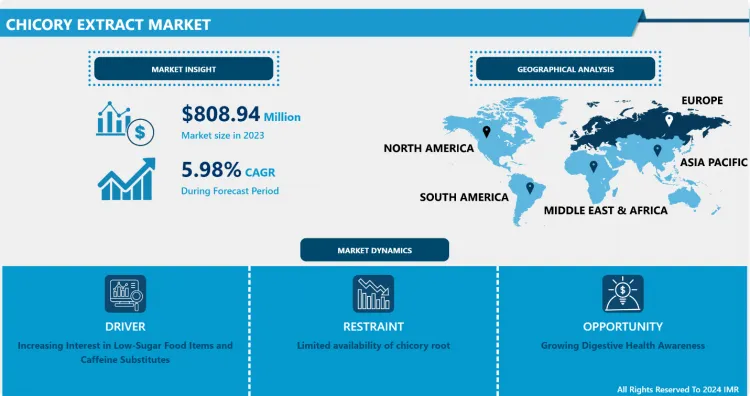
Chicory Extract Market Segment Analysis:
Increasing Interest in Low-Sugar Food Items and Caffeine Substitutes
- In recent years, there has been a significant increase in demand for low-sugar foods and caffeine substitutes, particularly in the chicory extract market. This trend is being driven primarily by increased consumer awareness of the negative effects of excessive sugar and caffeine consumption on health. As people become more health-conscious, they are actively looking for alternatives that allow them to consume their favorite foods and beverages without sacrificing taste or experience.
- Chicory extract has emerged as a promising solution, providing a natural sweetener and coffee substitute that meets the needs of health-conscious consumers. Chicory extract is a versatile ingredient that can be used to sweeten a wide range of food and beverage products, from baked goods to hot beverages, as well as providing a caffeine-free option for those looking to reduce their intake.
- Chicory extract suppliers are forming strategic partnerships and collaborations with food and beverage companies to expand distribution channels and increase market penetration. As the demand for healthier alternatives grows, the chicory extract market is poised for further expansion and diversification, providing exciting opportunities for industry players to capitalize on this emerging trend.
Growing Awareness of Chicory Extract's Versatility
- The growing popularity of natural and plant-based ingredients, as well as the recognition of chicory extract's numerous functional and nutritional benefits. Consumers are becoming more discerning about the ingredients they consume, looking for alternatives that provide both health benefits and culinary versatility. Chicory extract has emerged as a standout ingredient, valued for its ability to improve the flavor, texture, and nutritional value of a variety of food and beverage products.
- Chicory extract is naturally high in fiber, inulin, and antioxidants, making it an excellent addition to a wide range of diet plans, including those aimed at weight loss, digestive health, and blood sugar control. Furthermore, chicory extract is low in calories and free of cholesterol and saturated fats, making it appealing to health-conscious consumers who are increasingly looking for clean-label, nutrient-dense ingredients in their food.
- Chicory extract can be used as a natural sweetener, flavor enhancer, texturizer, and even a caffeine-free coffee substitute, giving manufacturers a wide range of options across multiple product categories. Chicory extract can be used in a variety of recipes to improve taste, texture, and shelf life, as well as meet the demand for healthier, more natural ingredients.
Bitter Taste and Potential Side Effects
Chicory Extract Market Segmented on the basis of Grade, Form, Source, and Application,
By Source, Root segment is expected to dominate the market during the forecast period
- The root segment dominates the chicory extract market due to chicory roots being the primary source of inulin, a prebiotic fiber that provides a variety of health benefits such as improved digestion, gut health, and blood sugar management. As consumers become more health-conscious and seek out functional ingredients with proven nutritional benefits, demand for chicory root extract is expected to increase.
- Chicory roots contain numerous bioactive compounds, including polyphenols and antioxidants, which contribute to their health-promoting properties. This makes chicory root extract a versatile ingredient that can be used in a variety of food and beverage applications, such as dairy products, baked goods, beverages, and nutritional supplements. The growing popularity of natural and plant-based ingredients drives up the demand for chicory root extract as a clean-label alternative to synthetic additives and sweeteners.
- Advancements in extraction technologies have made it easier and less expensive to extract bioactive compounds from chicory roots while retaining their nutritional value. This has increased chicory root extract production capacity, driving down costs and making it more affordable to food and beverage manufacturers. As a result, the root segment is expected to continue to dominate the chicory extract market.
By Grade, Inulin segment held the largest share
- The soluble fiber called inulin, which is present in chicory root, has attracted a lot of interest due to its prebiotic qualities, which help the digestive system and gut health. It is anticipated that demand for inulin-rich products will rise steadily as consumers become more conscious of the significance of gut health and its influence on overall well-being.
- Digestive disorders and gastrointestinal issues are becoming increasingly common worldwide. Inulin's ability to promote the growth of beneficial gut bacteria, improve bowel regularity, and increase nutrient absorption makes it a popular ingredient in functional foods, dietary supplements, and digestive health products. Furthermore, inulin's low-calorie content and minimal impact on blood sugar levels make it an appealing option for people looking to lose weight or control their blood glucose levels.
- Inulin is easily incorporated into a variety of food and beverage products, such as dairy alternatives, baked goods, cereals, and beverages, without affecting taste or texture. Its ability to improve product mouthfeel, stability, and shelf life while also providing health benefits makes it a popular choice among manufacturers looking to meet the growing demand for clean-label, natural ingredients.
Chicory Extract Market Regional Insights:
Europe is Expected to Dominate the Market Over the Forecast Period
- Europe's dominance in the chicory extract market is expected to continue due to the region's rich history and tradition of chicory cultivation and consumption. Countries such as France, Belgium, and the Netherlands have long been known for producing high-quality chicory, both for culinary purposes and as a source of inulin, a key component of chicory extraction.
- This established industry infrastructure, combined with a growing preference for natural and plant-based ingredients, propels Europe to the forefront of the global chicory extract market. Belgium is well-known for its chicory root production, thanks to the country's mild climate and fertile soil, which make it ideal for growing this versatile crop. Belgian companies have invested heavily in research and development to realize the full potential of chicory extract, investigating new applications and formulations to meet consumers' changing needs and preferences.
- The regulatory environment and consumer preferences in Europe support the use of chicory extract as a natural, sustainable, and health-promoting ingredient. Stringent food safety regulations and labeling requirements ensure the quality and purity of chicory extract products, boosting consumer confidence and facilitating market expansion. With its rich history, technological advancements, and favorable market conditions, Europe is poised to maintain its dominance in the chicory extract market.
Chicory Extract Market Top Key Players:
- Starwest Botanicals (US)
- NP Nutra (US)
- Cargill Incorporated (US)
- Reily Foods Company (US)
- STOKROS Company Ltd (Russia)
- Cosucra Groupe Warcoing (Belgium)
- BENEO GmbH (Germany)
- Sensus (Netherlands)
- Nature’s Gold Production (Netherlands)
- Leroux (France)
- Organic Herb Trading Co (UK)
- Pioneer Chicory (India)
- PMV Nutrient Products Pvt Ltd (India)
- Farmvilla Food Industries Pvt Ltd (India)
- Murlikrishna Foods Pvt Ltd (India)
- Jamnagar Chicory Industries (India)
- Herbs & Crops Overseas (India)
- Narasu’s Coffee Company (India)
- Delecto Foods Pvt Ltd (India)
- Shaanxi Sciphar Natural Product Co Ltd. (China), and Other Active Players
Key Industry Developments in the Chicory Extract Market:
- In November 2023, Associated British Foods (ABF) successfully acquired Beneo, a leading producer of chicory extract. This strategic acquisition bolsters ABF's position in the sugar alternatives market, expanding its product offerings in chicory-derived ingredients such as inulin and oligofructose.
- In October 2023, Sensus, a notable player in the chicory extract industry, joined forces with Chr. Hansen, is a prominent producer of enzymes and microbial cultures. This partnership is geared towards the development of cutting-edge prebiotic solutions designed for use in dietary supplements and functional food applications.
|
Global Chicory Extract Market |
|||
|
Base Year: |
2024 |
Forecast Period: |
2025-2035 |
|
Historical Data: |
2018 to 2023 |
Market Size in 2024: |
USD 857.31 Mn. |
|
Forecast Period 2025-35 CAGR: |
5.98% |
Market Size in 2035: |
USD 1624.06 Mn. |
|
Segments Covered: |
By Grade |
|
|
|
By Form |
|
||
|
By Source |
|
||
|
By Application |
|
||
|
By Region |
|
||
|
Key Market Drivers: |
|
||
|
Key Market Restraints: |
|
||
|
Key Opportunities: |
|
||
|
Companies Covered in the report: |
|
||
Chapter 1: Introduction
1.1 Scope and Coverage
Chapter 2:Executive Summary
Chapter 3: Market Landscape
3.1 Market Dynamics
3.1.1 Drivers
3.1.2 Restraints
3.1.3 Opportunities
3.1.4 Challenges
3.2 Market Trend Analysis
3.3 PESTLE Analysis
3.4 Porter's Five Forces Analysis
3.5 Industry Value Chain Analysis
3.6 Ecosystem
3.7 Regulatory Landscape
3.8 Price Trend Analysis
3.9 Patent Analysis
3.10 Technology Evolution
3.11 Investment Pockets
3.12 Import-Export Analysis
Chapter 4: Chicory Extract Market by Grade (2018-2032)
4.1 Chicory Extract Market Snapshot and Growth Engine
4.2 Market Overview
4.3 Inulin
4.3.1 Introduction and Market Overview
4.3.2 Historic and Forecasted Market Size in Value USD and Volume Units
4.3.3 Key Market Trends, Growth Factors, and Opportunities
4.3.4 Geographic Segmentation Analysis
4.4 Fructooligosaccharides (FOS)
4.5 Chicoric Acid
Chapter 5: Chicory Extract Market by Form (2018-2032)
5.1 Chicory Extract Market Snapshot and Growth Engine
5.2 Market Overview
5.3 Powder
5.3.1 Introduction and Market Overview
5.3.2 Historic and Forecasted Market Size in Value USD and Volume Units
5.3.3 Key Market Trends, Growth Factors, and Opportunities
5.3.4 Geographic Segmentation Analysis
5.4 Liquid
5.5 Granulated
Chapter 6: Chicory Extract Market by Source (2018-2032)
6.1 Chicory Extract Market Snapshot and Growth Engine
6.2 Market Overview
6.3 Root
6.3.1 Introduction and Market Overview
6.3.2 Historic and Forecasted Market Size in Value USD and Volume Units
6.3.3 Key Market Trends, Growth Factors, and Opportunities
6.3.4 Geographic Segmentation Analysis
6.4 Leaves
Chapter 7: Chicory Extract Market by Application (2018-2032)
7.1 Chicory Extract Market Snapshot and Growth Engine
7.2 Market Overview
7.3 Nutraceuticals & Pharmaceuticals
7.3.1 Introduction and Market Overview
7.3.2 Historic and Forecasted Market Size in Value USD and Volume Units
7.3.3 Key Market Trends, Growth Factors, and Opportunities
7.3.4 Geographic Segmentation Analysis
7.4 Food & Beverages
7.5 Cosmetics
7.6 Animal Feed
Chapter 8: Company Profiles and Competitive Analysis
8.1 Competitive Landscape
8.1.1 Competitive Benchmarking
8.1.2 Chicory Extract Market Share by Manufacturer (2024)
8.1.3 Industry BCG Matrix
8.1.4 Heat Map Analysis
8.1.5 Mergers and Acquisitions
8.2 BASF
8.2.1 Company Overview
8.2.2 Key Executives
8.2.3 Company Snapshot
8.2.4 Role of the Company in the Market
8.2.5 Sustainability and Social Responsibility
8.2.6 Operating Business Segments
8.2.7 Product Portfolio
8.2.8 Business Performance
8.2.9 Key Strategic Moves and Recent Developments
8.2.10 SWOT Analysis
8.3 DOWDUPONT
8.4 COVESTRO
8.5 HUNTSMAN INTERNATIONAL
8.6 LANXESS
8.7 MITSUI CHEMICALS
8.8 TOSOH CORPORATION
8.9 COIM GROUP
8.10 CHEMLINE INCORPORATION
8.11 ERA POLYMERS
8.12 SYNTHESIA INTERNACIONAL
8.13 OTHER KEY PLAYERS
Chapter 9: Global Chicory Extract Market By Region
9.1 Overview
9.2. North America Chicory Extract Market
9.2.1 Key Market Trends, Growth Factors and Opportunities
9.2.2 Top Key Companies
9.2.3 Historic and Forecasted Market Size by Segments
9.2.4 Historic and Forecasted Market Size by Grade
9.2.4.1 Inulin
9.2.4.2 Fructooligosaccharides (FOS)
9.2.4.3 Chicoric Acid
9.2.5 Historic and Forecasted Market Size by Form
9.2.5.1 Powder
9.2.5.2 Liquid
9.2.5.3 Granulated
9.2.6 Historic and Forecasted Market Size by Source
9.2.6.1 Root
9.2.6.2 Leaves
9.2.7 Historic and Forecasted Market Size by Application
9.2.7.1 Nutraceuticals & Pharmaceuticals
9.2.7.2 Food & Beverages
9.2.7.3 Cosmetics
9.2.7.4 Animal Feed
9.2.8 Historic and Forecast Market Size by Country
9.2.8.1 US
9.2.8.2 Canada
9.2.8.3 Mexico
9.3. Eastern Europe Chicory Extract Market
9.3.1 Key Market Trends, Growth Factors and Opportunities
9.3.2 Top Key Companies
9.3.3 Historic and Forecasted Market Size by Segments
9.3.4 Historic and Forecasted Market Size by Grade
9.3.4.1 Inulin
9.3.4.2 Fructooligosaccharides (FOS)
9.3.4.3 Chicoric Acid
9.3.5 Historic and Forecasted Market Size by Form
9.3.5.1 Powder
9.3.5.2 Liquid
9.3.5.3 Granulated
9.3.6 Historic and Forecasted Market Size by Source
9.3.6.1 Root
9.3.6.2 Leaves
9.3.7 Historic and Forecasted Market Size by Application
9.3.7.1 Nutraceuticals & Pharmaceuticals
9.3.7.2 Food & Beverages
9.3.7.3 Cosmetics
9.3.7.4 Animal Feed
9.3.8 Historic and Forecast Market Size by Country
9.3.8.1 Russia
9.3.8.2 Bulgaria
9.3.8.3 The Czech Republic
9.3.8.4 Hungary
9.3.8.5 Poland
9.3.8.6 Romania
9.3.8.7 Rest of Eastern Europe
9.4. Western Europe Chicory Extract Market
9.4.1 Key Market Trends, Growth Factors and Opportunities
9.4.2 Top Key Companies
9.4.3 Historic and Forecasted Market Size by Segments
9.4.4 Historic and Forecasted Market Size by Grade
9.4.4.1 Inulin
9.4.4.2 Fructooligosaccharides (FOS)
9.4.4.3 Chicoric Acid
9.4.5 Historic and Forecasted Market Size by Form
9.4.5.1 Powder
9.4.5.2 Liquid
9.4.5.3 Granulated
9.4.6 Historic and Forecasted Market Size by Source
9.4.6.1 Root
9.4.6.2 Leaves
9.4.7 Historic and Forecasted Market Size by Application
9.4.7.1 Nutraceuticals & Pharmaceuticals
9.4.7.2 Food & Beverages
9.4.7.3 Cosmetics
9.4.7.4 Animal Feed
9.4.8 Historic and Forecast Market Size by Country
9.4.8.1 Germany
9.4.8.2 UK
9.4.8.3 France
9.4.8.4 The Netherlands
9.4.8.5 Italy
9.4.8.6 Spain
9.4.8.7 Rest of Western Europe
9.5. Asia Pacific Chicory Extract Market
9.5.1 Key Market Trends, Growth Factors and Opportunities
9.5.2 Top Key Companies
9.5.3 Historic and Forecasted Market Size by Segments
9.5.4 Historic and Forecasted Market Size by Grade
9.5.4.1 Inulin
9.5.4.2 Fructooligosaccharides (FOS)
9.5.4.3 Chicoric Acid
9.5.5 Historic and Forecasted Market Size by Form
9.5.5.1 Powder
9.5.5.2 Liquid
9.5.5.3 Granulated
9.5.6 Historic and Forecasted Market Size by Source
9.5.6.1 Root
9.5.6.2 Leaves
9.5.7 Historic and Forecasted Market Size by Application
9.5.7.1 Nutraceuticals & Pharmaceuticals
9.5.7.2 Food & Beverages
9.5.7.3 Cosmetics
9.5.7.4 Animal Feed
9.5.8 Historic and Forecast Market Size by Country
9.5.8.1 China
9.5.8.2 India
9.5.8.3 Japan
9.5.8.4 South Korea
9.5.8.5 Malaysia
9.5.8.6 Thailand
9.5.8.7 Vietnam
9.5.8.8 The Philippines
9.5.8.9 Australia
9.5.8.10 New Zealand
9.5.8.11 Rest of APAC
9.6. Middle East & Africa Chicory Extract Market
9.6.1 Key Market Trends, Growth Factors and Opportunities
9.6.2 Top Key Companies
9.6.3 Historic and Forecasted Market Size by Segments
9.6.4 Historic and Forecasted Market Size by Grade
9.6.4.1 Inulin
9.6.4.2 Fructooligosaccharides (FOS)
9.6.4.3 Chicoric Acid
9.6.5 Historic and Forecasted Market Size by Form
9.6.5.1 Powder
9.6.5.2 Liquid
9.6.5.3 Granulated
9.6.6 Historic and Forecasted Market Size by Source
9.6.6.1 Root
9.6.6.2 Leaves
9.6.7 Historic and Forecasted Market Size by Application
9.6.7.1 Nutraceuticals & Pharmaceuticals
9.6.7.2 Food & Beverages
9.6.7.3 Cosmetics
9.6.7.4 Animal Feed
9.6.8 Historic and Forecast Market Size by Country
9.6.8.1 Turkiye
9.6.8.2 Bahrain
9.6.8.3 Kuwait
9.6.8.4 Saudi Arabia
9.6.8.5 Qatar
9.6.8.6 UAE
9.6.8.7 Israel
9.6.8.8 South Africa
9.7. South America Chicory Extract Market
9.7.1 Key Market Trends, Growth Factors and Opportunities
9.7.2 Top Key Companies
9.7.3 Historic and Forecasted Market Size by Segments
9.7.4 Historic and Forecasted Market Size by Grade
9.7.4.1 Inulin
9.7.4.2 Fructooligosaccharides (FOS)
9.7.4.3 Chicoric Acid
9.7.5 Historic and Forecasted Market Size by Form
9.7.5.1 Powder
9.7.5.2 Liquid
9.7.5.3 Granulated
9.7.6 Historic and Forecasted Market Size by Source
9.7.6.1 Root
9.7.6.2 Leaves
9.7.7 Historic and Forecasted Market Size by Application
9.7.7.1 Nutraceuticals & Pharmaceuticals
9.7.7.2 Food & Beverages
9.7.7.3 Cosmetics
9.7.7.4 Animal Feed
9.7.8 Historic and Forecast Market Size by Country
9.7.8.1 Brazil
9.7.8.2 Argentina
9.7.8.3 Rest of SA
Chapter 10 Analyst Viewpoint and Conclusion
10.1 Recommendations and Concluding Analysis
10.2 Potential Market Strategies
Chapter 11 Research Methodology
11.1 Research Process
11.2 Primary Research
11.3 Secondary Research
|
Global Chicory Extract Market |
|||
|
Base Year: |
2024 |
Forecast Period: |
2025-2035 |
|
Historical Data: |
2018 to 2023 |
Market Size in 2024: |
USD 857.31 Mn. |
|
Forecast Period 2025-35 CAGR: |
5.98% |
Market Size in 2035: |
USD 1624.06 Mn. |
|
Segments Covered: |
By Grade |
|
|
|
By Form |
|
||
|
By Source |
|
||
|
By Application |
|
||
|
By Region |
|
||
|
Key Market Drivers: |
|
||
|
Key Market Restraints: |
|
||
|
Key Opportunities: |
|
||
|
Companies Covered in the report: |
|
||


